YouTube co-founder calls for global access to TV online
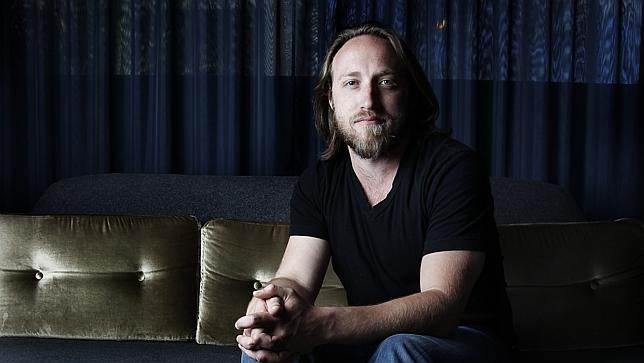 He said online players such as YouTube were likely to become more aggressive in their pursuit of rights for live sports and events, putting further pressure on national free to air broadcasters and pay TV channels. “I definitely think we are in a global consumer environment now,” Mr Hurley said.
Mr Hurley no longer runs YouTube, but remains a consultant to the company after Google acquired it for $US1.65 billion in late 2006. The company, perhaps more than any other, forced television networks to reconsider their global business models due to the amount of content being shared.
In recent times YouTube has been making a move on sports broadcasting rights, which in many ways have been the lifeblood of pay TV stations. It has taken rights to an array of minor sports around the world, including some Australian basketball matches.
Read the full story here: http://www.afr.com/p/technology/youtube_co_founder_calls_for_global_sFVUIKr17luhpnJYBwCOLM?curator=MediaREDEF
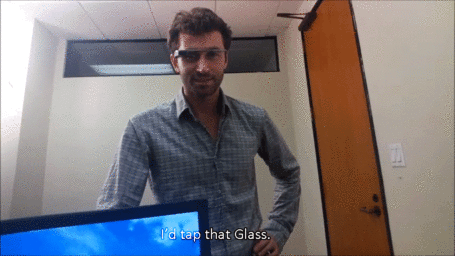
‘I’d tap that Glass’: James Deen releases first Google Glass porno
 [Philip Lelyveld comment; there is a long story in today's (8/4/13) LA Times about The Canyons, an ultra low budget legitimate movie staring James Deen and Lindsey Lohan written by Brett Easton Ellis.]
Given that Glass has been in the wild for some time, we're extremely doubtful this is the first X-rated video made with it. It is, however, the first professionally-made one we're aware of, especially with breakout star Deen involved. The glasses themselves were apparently obtained from Motherboard's Arikia Millikan, who attended the shooting, and adult app company MiKandi — whose first attempt at working with Glass was abruptly stymied when Google pulled its "Tits and Glass" app after only a few hours.
... as the scene progressed, Glass itself started to heat up. That's not innuendo. That's what happens when you record for too long.
Here is the link to the censored version of the trailer; http://www.youtube.com/watch?v=Xxt24JoLlPE
Read the full story here: http://www.theverge.com/2013/7/23/4549416/id-tap-that-glass-james-deen-releases-first-google-glass-porno
This is what the sorry state of Android fragmentation looks like (in charts)
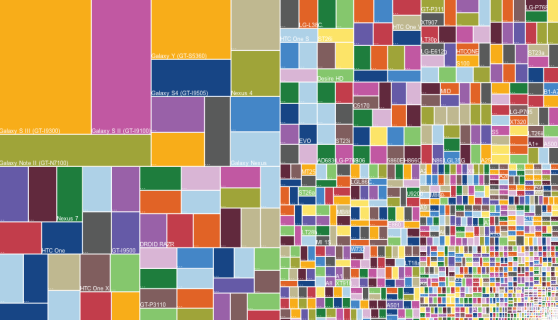 [Philip Lelyveld comment: if nothing else, this graphic works really well to communicate the point.]
The latest data is in, and Android fragmentation is worse than ever.
So says app maker OpenSignal, which has spelled out in dizzying detail just how many different Android devices are being used today.
Via its eponymous app, OpenSignal helps users find the best Wi-Fi networks and cell signals for their devices. After looking at the 682,000 Android devices that downloaded the app this year, OpenSignal found that 11,868 them were completely distinct. That’s a big increase over last year, when the company saw only 3,997 distinct devices.
Read the full story here: http://venturebeat.com/2013/07/30/android-fragmention-2013/
Google Glass Heading to Film School Class
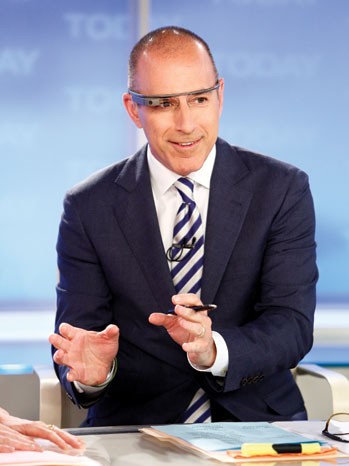 The tech giant has revealed to The Hollywood Reporterits plans for the Glass Collective, a partnership with film schools including USC, CalArts, RISD, UCLA and AFI, which will each be loaned three sets of Google Glasses for the fall semester. The goal is to get curious students to check them out, become comfortable with their voice-activated interface and built-in video cameras.
"We got Google Glass just before the opening of the new Interactive Media Building on June 12," says USC School of Cinematic Arts dean Elizabeth Daley. "That's when George Lucas and Steven Spielberg and Don Mattrick, the president of Microsoft's interactive entertainment business, told us about how not all entertainment, but certainly some entertainment, is going to become more immersive. And Glass is quite wonderful because you get that immersive experience without elaborate headsets."
Read the full story here: http://www.hollywoodreporter.com/news/google-glass-heading-film-school-595151
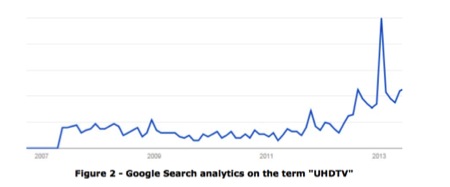
UHDTV google searches
[Philip Lelyveld comment: I guess a whole lot of media executives saw reports from CES and had to look it up. If the public was interested, it wouldn't have come crashing down again.]
From a Digdia market research report; 4K / Ultra HD Ecosystem. Learn more at www.digdia.com