3D Video: High-Efficiency Coding
[Philip Lelyveld comment: this is part of the abstract. Contact go to the link for more info]
In cooperation with the Image & Video Coding Group, we have developed efficient 3D video coding methods for depth-enhanced 3D video formats, ranging from conventional stereo video (CSV) to multi-view video plus depth (MVD) with two or more views and associated depth data components. This format scalability is achieved by coding each video and depth map component by a conventional 2D video codec structure, based on the high-efficiency video coding technology (HEVC), as shown in Figure 1.

Vu flashes 3D cameras (India)
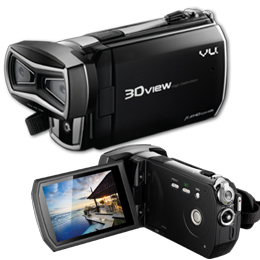
Hoping to give impetus to 3D television market in India, luxury TV brand, Vu Technologies, has launched a Vu 3D camera. The company feels that while market is full of 3D TVs, there is very little content for the viewers.
The Vu 3D camera can be used on any 3D TV and it can be used as a handy-cam as well as a still lens, and is targeted at both amateurs and professionals alike, who want to capture memories in 3D.
Commenting on the launch, Devita Saraf, CEO, Vu Technologies, said, “There has been a huge sale of 3D TVs in India with very little access or availability to true 3D content. Second, conversion of 2D to 3D in conventional 3D TV doesn’t really give the real effect of 3D. Through this introduction (Vu 3D Camera), we aim to bridge the market gap and offer a solution, no product in the current market scenario offers.”
As of now, the company has launched only pone model and is competitively priced at Rs 19,900, which will available at all Vu Stores, across the country.
To promote the product, the company plans to engage the professionals and amateurs on digital and social media.
See the original post here
Star Wars And Disney Boosting 3D Printing Industry Craze
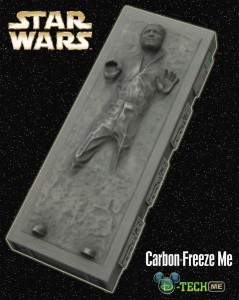 Han Solo would have wanted you to share the carbon freezing experience with him. That’s just the kind of guy he was. You can now, thanks to Disney, Star Wars, and its D-Tech 3D Printing technology. During the special Star Wars Weekend series at Disney World, fans of the movie can experience the “carbon freeze me” technology.
Using new imaging technology (probably not unlike the Autodesk 123D Catch app I wrote about last week), you are scanned and your likeness cast via three-dimensional printing methods. I won’t be surprised to see a RepRap, MakerBotor the new MakerGear M-series user leveraging both the Autodesk 123D Catch app and a 3D printer to create their own Han Solo versions. I’d watch Thingiverse.com for productions. ...
See the full post here:
Space station cosmonauts to make 3D photo report
The crew members at the International Space Station (ISS) will make a photo report about life onboard the orbital complex, with a 3D camera sent by Russian news agency RIA Novosti.
"Russian cosmonauts Gennady Padalka and Sergei Revin who on Tuesday left for the ISS onboard Soyuz TMA-04M space shuttle, took a special stereo camera to make a 3D report about their life and work on the orbital complex," said Vladimir Baranov, chief of the news agency's image department.
The camera is a FujiFilm Real 3D W3 with dual lens and twin 10-megapixel CCD technology. It not only captures 10-megapixel 3D photos, but is also the world's first digital camera that can capture 3D HD movies.
The photos captured during this ISS mission will be delivered back to Earth by the previous 31st ISS crew, which will return June 1.
The camera itself will never get back to Earth. "Most likely, it will remain onboard the ISS and, perhaps, be used by future crews," Baranov said.
See the original post here:
This is what native 4K home cinema looks like on Sony’s VPL-VW1000ES projector
 Why are folks so keyed up about 4K? At first glance, that's the type of question that answers itself: by definition, a 4096-pixel wide image delivers around four times the resolution of 1920 x 1080, and that's a healthy multiple. It's actually of a broadly similar magnitude to the difference between 1080p and old-fashioned analog NTSC video, and nobody these days questions the value of that upgrade. On the other hand, there must come a point where pixels cease to be visible in a home theater environment, such that buying more of them at inflated prices stops being worth it. Sure, 4K can be a big help with 3D footage, because it boosts the resolution to each eye -- something we experienced with the REDray projector. But what about regular 2D material, which is still very much the default viewing option? That question's been nagging at us, so when Sony invited us back for a second look at its 4K projector, the VPL-VW1000ES, this time with full-throttle native 4K source material rather than just upscaled 1080p, we turned up with a tape measure. Read on for what came next. ...
Nevertheless, we have the beginnings of an answer to our original question: if your screen is around three or four meters wide, and if you sit less than six meters away from it, you'll notice a clear benefit in switching from 1080p to 4K for 2D material. Interestingly, you'll also see a significant impact from upscaling your footage through the Sony projector's processing engine -- which makes 'Reality Creation' one of the stars of this show, not least because 4K content is so hard to find. ...
See the full story here:
War of the Worlds Tour [“Hologram”]
 Jeff Wayne’s War of the Worlds musical has announced another UK stadium tour, which will kick off in December 2012 featuring Liam Neeson in the role of George Herbert, The Journalist.
Wayne described the use of 3D holography to present Neeson’s character as a “technological leap forward”, and confirmed that, ahead of the tour, a new double album will be released in the summer. ...
Neeson, who declared himself a fan of the original album, will appear in three ways during the show: as an 11-foot high hologram; within CGI sequences on a 100-foot ‘animation wall’; and as a ‘full body interacting holographically with the show’s live performers’. He won't be singing though - "I only do that in the bath", he said. ...
See the full storyhere:
Cannes 2012: 3D Comes Into Sharper Focus
 ...Despite the format’s troubles, 2011 marked another record year for 3D, with total box office revenue from 3D movies hitting $6.9 billion, an 18 percent jump, according to provisional figures from Screen Digest.
But in North America, still the largest 3D market, revenue actually was down, to $1.9 billionfrom $2.1 billion in 2010. While part of that drop was Avatar-related — no 3D release has come close to the take of Cameron’s record-breaking blockbuster — there are also clear signs of 3D fatigue.
“While 3D definitely isn’t going away, the audience is becoming a lot more selective,” says Screen Digest senior analyst Charlotte Jones, who points out that in North America, the 3D/2D split — the percentage of box office a 3D title generates from 3D screens — was down to 56 percent last year, after garnering 66 percent in 2010 and a whopping 70 percent back in 2008. ...
There are still plenty of 3D titles cramming the halls of Cannes’ Marche du Film. ...
“Actually, I spent a lot of my time in the past few years discouraging filmmakers from making their movies in 3D,” says Caroline Stern, director of international sales and acquisitions at Kaleidoscope. “3D is costly and it doesn’t necessarily have a value. There has to be a reason to shoot in 3D.” ...
Wildlife documentaries seem to be one genre that is benefiting from 3D, particularly as 3D cameras and rigs get smaller and lighter, allowing documentary filmmakers to get places they could never have gone before. ...
“If you look at the success of films like Wim Wenders’ Pina, it totally proves there is a market for indie product in 3D,” Horley says, “But you have to create an event that audiences are willing to pay a premium for.” ...
Read the full story here:
AlloSphere Leads The Way In Integrated Multimedia Systems Research (May 29 open house!)
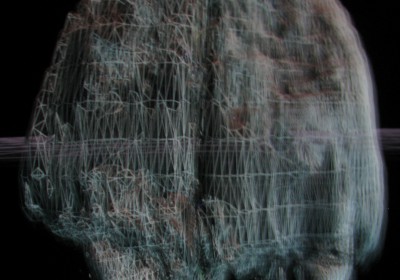
[Philip Lelyveld comment: the Allosphere is a walk-in 3D video, 3D audio fully immersive interactive environment at UC Santa Barbara]
“This is kind of like where video gaming meets high-performance computing,” said Dr. JoAnn Kuchera-Morin as she led awestruck onlookers through the AlloSphere, a virtual environment housed in University of California Santa Barbara’s Elings Hall.
The AlloSphere, which is a product of 26 years of Kuchera-Morin’s research and labor, is a spherical, three-story anechoic chamber that uses multiple projectors, speakers and a super computer to visually and sonically represent data. The multi-sensory display that characterizes the AlloSphere is derived from complex mathematical algorithms mapped by Kuchera-Morin and teams of researchers, and has been. ...
The AlloSphere is not merely a demonstration; it offers an immersion of a highly complex mathematical visualization and anatomical data that would be frustrating for scientists to explore otherwise. ...
The AlloSphere will be featured in the annual Media Art Technology End of Year Show “Bits and Pieces” onTuesday, May 29 from 6 to 9 p.m. Those in attendance will have the opportunity to tour the instrument, which is rarely exhibited because it costs about $3,000 an hour to run.
“We’ll have all of our labs open and all of the Ph.D.’s will be exhibiting their work. We’ll show the AlloSphere as well. We’re anticipating hundreds of people,” Kuchera-Morin said about the annual display.
See the full story here:
Flexible Displays Landing in 2012, But Not in Apple Gear
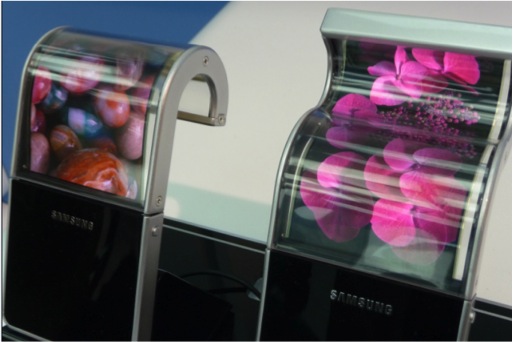 ...In early March, Samsung announced it would be mass-producing its flexible OLED displays, like the one seen above, by the end of this year. Now flash-forward to this Monday: According to a report from the Korea Times, Samsung is seeing “huge” orders for this display, and Apple is “likely” to be one of the major players.
Such a display could be useful in a number of applications, such as in a device with a gently curved screen. Ultimately, the display could even be deployed in a flexible, bendable phone or tablet. But that’s probably not on the horizon — especially Apple’s horizon — anytime soon. ...
Samsung’s flexible OLED display certainly has some advantages over current display tech. For one, it’s basically unbreakable because it doesn’t use glass, but rather a type of plastic called polyamide. ...
Colegrove said there are two reasons why Samsung’s flexible OLED is attractive to device manufacturers. First, the display is thin, lightweight and difficult to break — this offers immediate design benefits. Second, any type of new, novel technology offers marketing benefits. You can hear the commercial spiel now: “We have the first flexible AMOLED display devices in human history!” ...
And if you’re looking to find a flexible display in an iDevice, you’ll probably have to wait until the 2013-2014 time frame, says Colgrove — with truly bendy iDevices appearing in 2015 at the earliest.
See the full story here:
Red Bull Developing 3D Parkour Version of “Oliver Twist”
 Red Bull Media House has signed on toproduce"Twist," a 3D re-telling of Charles Dickens' "Oliver Twist" that's set in thepresentday. Theplanis to go into pre-production this January.
Story will center around the novel's Fagin Gang, which will use parkour to carry out a series of art thefts in the film. The original idea comes from brothers Lynch and Simon Thomas.
Austria-based energy giant Red Bull launched its media and content business in 2007.Companyowns television channel ServusTV channeland last year released "The Art ofFlight
Read the original story here: