Technology: Disparity-aware Stereo 3D Production Tools
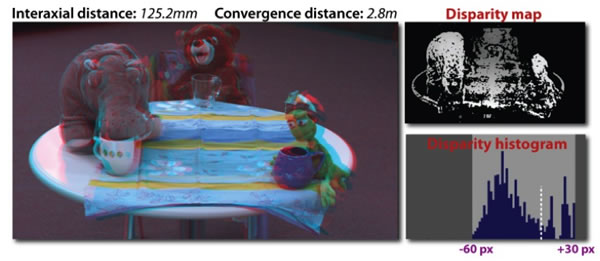 Stereoscopic 3D (S3D) has reached wide levels of adoption by consumer and professional markets. The current success of S3D technology is due to the fact that technology and understanding about content creation has reached a high level of maturity. However, production of high-quality S3D content is still a difficult and expensive art.
S3D production has to consider fundamentals of human 3D perception as well as capabilities and limitations of 3D displays, and combine them with artistic intent. To help with this, Disney Research Zurich has developed advanced S3D production tools, algorithms, and systems, a key component of which is awareness of disparity or depth composition of the input S3D content
Fundamentals and limitations of stereo 3D perception
Computational stereo camera
Stereoscopic analyser
Nonlinear disparity mapping by image-domain warping
Stereo to multiview conversion
Interactive 2D-to-3D conversion using discontinuous warps
Automatic 2D-to-3D conversion for sports
Conclusion
Producing high-quality S3D requires highly-skilled and experienced individuals, and can be an expensive and difficult process. By developing tools for estimating disparity, either by involving some user interaction or being fully automatic, we are confident that we can help in the drive to make the production process easier and keep costs down, while ensuring the best possible experience for the audience.
See the full article with many illustrations here:
3D in Advertising – Bringing the Wow Factor to Campaigns
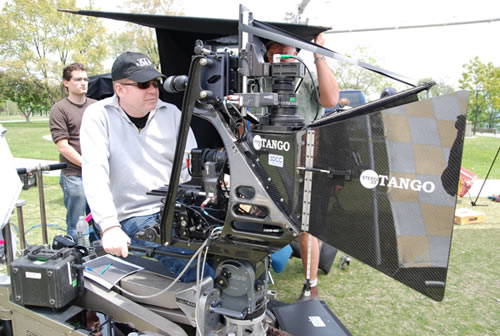 As far as cost, for live-action 3D production, my estimate is 10 to 25 percent above shooting a typical spot in 2D (or a ‘flattie’). For bigger-budget campaigns, 3D will cost less because you have already invested in higher production value. Given the entire workflow is digital (acquisition to post to projection), you can expect some upfront costs here too.
This article is adapted from the article ’3D: It Is Where The Puck Is Headed’, first published in Strategy Magazine.
See the original post here:
Madam Butterfly in 3D, fresh angles
 It is the most subtle of facial gestures that matter when you go to see a live performance. However, when you go to a grand venue and your seat is not at the front of the house for reasons of being tardy in obtaining your ticket or lack of inclination to pay a premium, you will suffer a major blow. You will miss those crucial details.
...
That is why I say opera in 3D cinemas is a good experience and removes the obstacle of distance that is a common opera house problem. And it’s more accessible because of its lower price tag.
Madam Butterfly 3D is such an example. The 3D format – if you can forgive the clunky glasses – creates an intimacy that resembles front row viewing. It goes one level up when the camera hovers overhead and pans across, giving a sensation that wouldn’t be possible for a human being without powers of flying in low speed.
...
This is the second collaboration between London’s Royal Opera House and RealD that captures a live performance with 3D cameras and brings it for worldwide cinema screenings. The first experience was Carmen 3D.
...
Madam Butterfly 3D is directed for cinema by Julian Napier and produced by Phil Streather. The original stage production was directed by Moshe Leiser and Patrice Caurier with costume designs by Agostino Cavalca and set designs by Christian Fenouillat. The music is by Giacomo Puccini and the libretto by Giuseppe Giacosa and Luigi Illica. It was filmed in RealD 3D during live performances at the Royal Opera House in July 2011. It will be released in the UK March 5.
See the full story here
NPD DisplaySearch Finds 3D TV Gaining Momentum in Western Europe and China
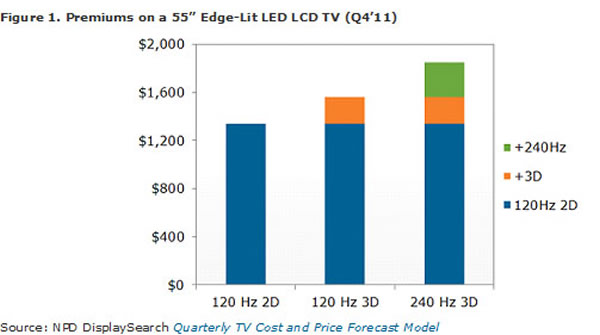 Premiums Falling for LED, 120/240Hz and 3D, but Still High, NPD DisplaySearch Reports
... ”We were surprised to find that 3D appears to be a far more popular feature in China than North America,and the penetration rate was two times higher in the last quarter,” said Paul Gray, Director of TV Electronics Research, NPD DisplaySearch. “Our report also indicates that North American and Japanese 3D penetration is lower than the Middle East.”
The report finds that North American consumers favor large, inexpensive TV sets with fewer features, unlike other regions. Chinese consumers are enthusiastic about richly-featured sets with 3D, LED backlighting and smart TV capabilities. ...
This theme of simultaneous new technology adoption is also clear in digital broadcasting. While developed markets have not only introduced digital terrestrial and largely completed analog switch-off, a second generation of digital broadcast (DVB-T2) is now being adopted in Europe, the Middle East and Asia. ...
”By 2015 the number of DVB-T and DVB-T2 sets shipped will be equal,” added Gray. “The decision by the Russian and Indian governments to move to T2 has given the industry a huge boost in confidence, and it will kick-start a virtuous cycle of rapid adoption and cost reduction.” ...
Read the full story here:
3D PRODUCTION GUIDE (free download)
3net released its free 50 pages "3D Production Guide" in pdf format together with Sony Pictures Entertainment, IMAX, and Discovery. This guide was written for the producers of 3D content for television. Its goal is to help prepare them as they plan for and create a 3D program.
- Introduction
- Planning a 3D workflow
- 2D to 3D conversion
- Production and specific tools
- stereoscopic displays.
- 3D picture errors and discomfort
- postproduction
- Masters delivery of the masters
- Glossary
Download it for free here: http://press.discovery.com/media/ugc/press/3DTV-Production-Guide_3net.pdf
Perceiving in Depth, Volume 2: Stereoscopic Vision (Oxford Psychology Series) [Hardcover]
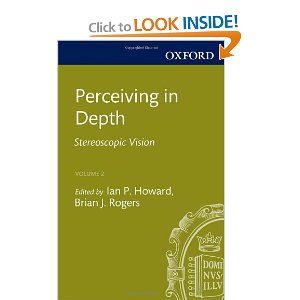
The three-volume work Perceiving in Depth is a sequel to Binocular Vision and Stereopsis and to Seeing in Depth, both by Ian P. Howard and Brian J. Rogers. This work is much broader in scope than the previous books and includes mechanisms of depth perception by all senses, including aural, electrosensory organs, and the somatosensory system. Volume 1 reviews sensory coding, psychophysical and analytic procedures, and basic visual mechanisms. Volume 2 reviews stereoscopic vision. Volume 3 reviews all mechanisms of depth perception other than stereoscopic vision. The three volumes are extensively illustrated and referenced and provide the most detailed review of all aspects of perceiving the three-dimensional world.
Volume 1 reviews sensory coding, psychophysical and analytic procedures, and basic visual mechanisms.
Volume 2 deals with stereoscopic vision.
Volume 3 covers all mechanisms of depth perception other than stereoscopic vision. Together, these three volumes provide the most detailed review of all aspects of perceiving the three-dimensional world.
| Price: | $205.22 |
See the original post here: at Amazon.com
3D HDR (HIGH DYNAMIC RANGE) IS COMING
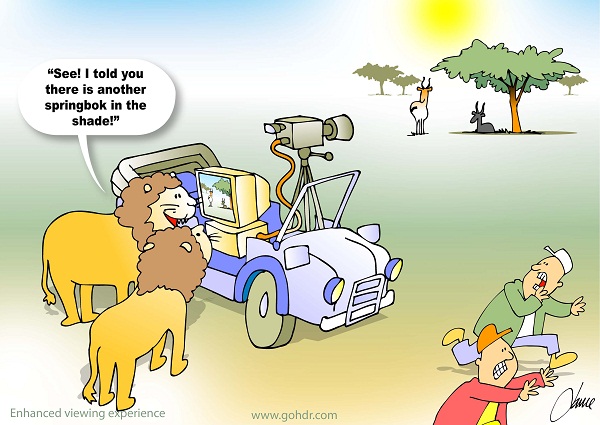
What is 3D-HDR ?
Traditional imaging techniques are incapable of capturing accurately or displaying the wide range of lighting in the real world. Some areas may be under-exposed and others over-exposed. High Dynamic Range (HDR) imaging technologies are an exception: HDR can capture and deliver a wider range of real-world lighting to provide a significantly enhanced viewing experience.
3D Stereoscopy, on the other hand, is an imaging technique which enables or improves the illusion of depth by presenting two offset images to each of the viewer’s eyes. It has been shown to provide a strong cue for distance judgements and is capable of improving task performance.
3D-HDR, also known as Stereoscopic High Dynamic Range (SHDR), has the potential of bringing these diverse technologies together, exploiting the advantages of both. This novel imaging method with an unprecedented level of realism has the potential to deliver both improved depth perception and a realistic representation of the scene lighting.
Read the full post here:
Go to the source page here:
Acoustic3D takes sound to the third dimension
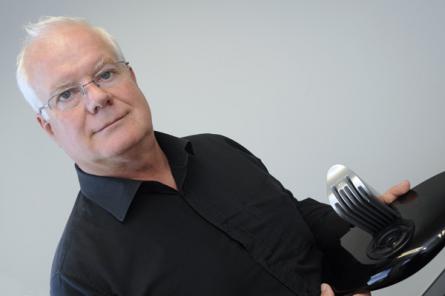
Following 21 years of research and development, Acoustic3D’s founder and managing director, Joe Hayes, has transformed the concept of 3D sound into a range of 70 watt ‘acoustic hologram generators’, as he prefers to call them. ...
Hayes said, “It works by removing the immediate environments acoustics – it negates this room and stops all echoes – and then unpacks the acoustics and space within the recording itself.”
During a brief test drive, we found that it is able to produce a contextual experience based on the environment of the recording.
For example, during a sound clip of a neighbourhood park, its depth of field allowed us to distinguish between nearby chatter, distant birds, and passing vehicles, and with an opera song, it generated a concert-like feel, as if we were at a performance. ...
Read the full story here:
Mad rush to market hurt 3D TV sales, prices are stabilising, claims CES VP
In the frantic rush to get 3D TVs out onto the market, leading suppliers made mistakes that led to disappointing sales results, according to Brian Markwalter, the senior vice president, research and standards, of the Consumer Electronics Association, the industry group that organises the annual CES conference in Las Vegas.
In Sydney to speak at the Australia Broadcasting Summit and to promote the 2013 International CES, Markwalter said the extreme competitiveness of the major suppliers compelled them to act too quickly, resulting in confusion and a lack of a clear message about 3D.
“Because it’s such a competitive industry, once they all know what the other one was doing, they all rushed headlong into 3D — and then the reality hit: we need content, we need glasses, we need retailers to understand how to show this stuff,” Markwalter told Current.com.au.
As a result of this passionate intensity, the hype surrounding 3D outweighed the ability of the suppliers to deliver hardware, a problem exacerbated by the paucity of native 3D content at the time. Markwalter used the phrase “over amplified” to describe the prevailing sentiment.
When asked for specific errors made by the major suppliers, Markwalter identified a lack of standardisation across the category, ...
Read the full story here:
Augmented reality set to enhance London Eye’s pods
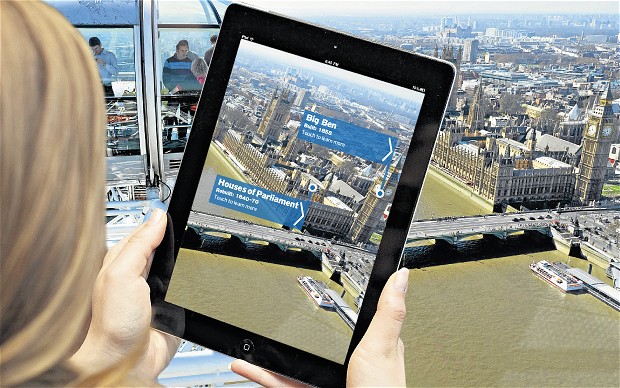
Visitors to the London Eye will, from next month, be able use a new app for tablets and phones based on Google’s Android operating system, and subsequently for Apple’s iPhones and iPads.
The app works by enabling users to “see” right through the bottom of the Eye capsule to the Thames below. The aim is to enhance the sense of being above London, rather than being stuck inside a pod. On-screen information tells users about the workings of the Eye itself, and about the sites you can see as you point your phone’s camera towards them. To further promote the app, there are audio guides from three perspectives and in five languages. Wi-Fi, too, will be free for all in the area around the Eye itself. ...
Yesterday supermodel Helena Christensen was at Selfridges, in London, to unveil the “Fantasy Mirror” in association with lingerie brand Triumph. The company plans to do away with the need for shoppers to try on clothes by deploying a full-size high-resolution TV screen to give the illusion of standing in front of a mirror in a changing room. Motion sensors scan anyone standing directly in front of it, and infra-red technology creates what the company describes as “a highly accurate 3D reconstruction of the environment”. It says “the camera tracks the viewers’ body which is then translated on to the screen as a 3D silhouette of a female avatar that moves in real time to the viewers’ own motion”. ...
Read the full story here: