Win WWII in 3D (Blu-ray)
 Incredibly, during WWII both the Allies and the Nazi propaganda machine were using 3D technology to produce colour photographs, and even films, in stereoscopic 3D. These historical gems were locked away in secret archives until now, when today’s 3D consumer technology allows us to view these incredible artefacts in our own homes, bringing images from history to life in a way few have ever seen before.
3D content contained in this treasure trove of rare and dramatic material includes: reconnaissance photos shot by the Allies; a collection of revealing images shot by the Nazis that detail the rise and fall of the Third Reich from within; stunning photos secretly taken by a civilian in occupied France; and an amazing 3D motion picture filmed by the Nazis in 1943. These have not been adapted or artificially upgraded into 3D, they were actually shot using 3D technology.
Whatever footage you may have seen before, nothing will prepare you for seeing history come alive in a totally new dimension! ...
Read the full story here: http://www.hornseyjournal.co.uk/hornsey-life/competitions/win_wwii_in_3d_blu_ray_1_1207457
MushABellies Come to Life With 3D Augmented-Reality Game
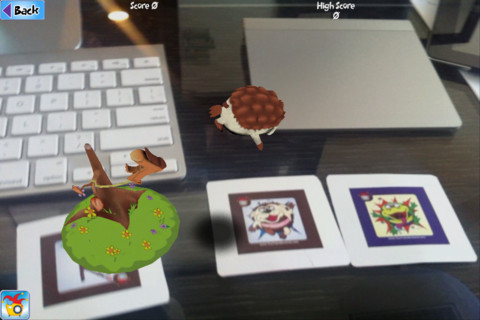 More than 4.5 million MushABelly® plush collectibles have already captured hearts worldwide. Now all new MushABelly collectibles will include a cutting-edge 3D augmented-reality game that makes kids' favorite MushABellies come to life, right in their own living room, as they watch "Magic Before Your Eyes"™.
Augmented-reality (AR) technology is the hottest trend in apps, and Jay@Play is the first toy manufacturer to combine plush with a game experience for the entire family. MushABellies' new 3D augmented-reality game, powered by Jay@Play's ToyTube Network™, blends the game world and the real world using a smartphone device and exclusive, patented augmented reality from Gravity Jack. ...
Using a Toy Tube Tracker Card, launch MushABelly Mungo Monkey at the target barrel to score lots of banana points. Quickly tap them with your fingertip to earn more points. Move the Toy Tube Tracker Cards to make the game more challenging. ...
Read the full article here:
Ten Technology Trends that Will Change the World in the Next Ten Years
 Dave Evans, Cisco's Chief Futurologist:
The number of Internet-connected things will reach 50 billion by 2020
By 2015, 91% of Internet data will be Video
By 2020, one-third of all data will live in or pass through the cloud
Network speeds will increase three million times in the next 10 years
Middle East - February 12, 2012: At Cisco Live 2012, an annual flagship event in Europe, Dave Evans, Cisco's chief futurist and chief technologist for the Cisco Internet Business Solutions Group (IBSG), outlined what he sees to be the top 10 technology trends that will change the world in the next decade. According to him, 3D printers, sensor networks, virtual humans, and other technologies under development will drastically change our world in the decade to come.
Trend 1: The Internet of Things
The Internet is the most powerful communications tool in history. The Web has evolved from informational and transactional mediums, to a social web that enables immediate knowledge sharing and wisdom of a crowd. Today, more things are connected to the Internet than people on the planet. We are at an inflection point-a new beginning-an era of dramatic and accelerated innovation of new technology applications that will benefit humanity.
The number of Internet-connected things will reach 50 billion by 2020, which equates to more than six devices for every person on Earth. Many people in the developed world already have three or more full-time devices connected to the Internet when factoring in PCs, smartphones, tablets, television devices and the like. Next up are sensor networks, using low-power sensors that "collect, transmit, analyze and distribute data on a massive scale.
Trend 2: The Zettaflood Is Coming
About 5 exabytes of unique information were created in 2008. That's one billion DVDs. Currently 1.2 zettabytes are being created, with one zettabyte equal to 1,024 exabytes. This is the same as every person on Earth tweeting for 100 years, or 125 million years of your favorite one-hour TV show. The love of high-definition video accounts for much of the increase. By Cisco's count, 91% of Internet data in 2015 will be video.
Trend 3: Wisdom of the cloud
By 2020, one-third of all data will live in or pass through the cloud. Global cloud services revenue will jump 20% per year, and IT spending on innovation and cloud computing could top $1 trillion by 2014. With the cloud comes the ability to mine human knowledge and to put an intelligent front on it.
In addition to video, the computing power of the cloud delivered to endpoint devices changes our ability to communicate with things like real-time translation. More intelligence is expected to be built into communication. Things like contextual and location-based information.
With an always-connected device, the network can be more granular with presence information, tapping into a personal sensor to know that a person's asleep, and route an incoming call to voicemail. Or knowing that person is traveling at 60 mph in a car, and that this is not the time for a video call.
Trend 4: The Next Net
Network speeds in the home have increased by 170,000 times since 1990, they will continue to increase three million times in the next 10 years. In line with this, networks will scale to meet future demands.
Trend 5: The World is Flat... So Is Your Technology
With always-on connectivity, social networking has the power to change cultures. Social influences will continue to move rapidly between cultures. In 10 years anyone will be able to broadcast anywhere on any device, providing unprecedented transparency.
Trend 6: The Power of Power
The human population also continues to grow, and Evans estimates that a city with one million inhabitants will be built every month over the next two decades. More efficient methods to power those cities are becoming a necessity, particularly solar energy.
In the next decade people will be able to harness alternative energy and become smarter in our use of power.
Trend 7: It's All About You
More items will move from physical to virtual. Today, people download e-books and movies, rather than bound books and DVDs.
Examples on that are gesture-based computing, interactive TV, facial recognition, and always on technologies that will soon be able to be incorporated into glasses and contact lenses - all of which will be connected to the cloud and our social graphs for personalized content streaming.
Trend 8: The Next Dimension
Virtual humans, both physical (robots) and online avatars will be added to the workforce.
Between now and then, augmented reality and gesture-based computing will enter classrooms, medical facilities and communications, and transform them as well.
Trend 9: Another Family Tree
In the next 10 years, medical technologies will grow vastly more sophisticated as computing power becomes available in smaller forms. It is predicted that it will be possible to make a conscious computer with super human intelligence before 2020.
Trend 10: You... Only Better
According to Evans, humans are crossing the threshold from discovery into controlling our own destiny, where technology results in fundamental changes to us as a society and species.
In July 2009 -- Spanish researchers discovered substance for photographic memory. In October 2009 -- Italian and Swedish scientists developed the first artificial hand with feeling. In March 2010 -- Retina implanted restore vision to blind patients. In June 2011 -- Texas Heart Institute developed a "spinning" heart with no pulse, no clogs and no breakdowns.
While the early use of these technologies were to repair unhealthy tissue or fix the consequences of brain injury, eventually designer enhancements will be available to all. Ultimately, humans will use so much technology to mend, improve or enhance their bodies to live much longer - up to 200 years in the near future.
Read the original post here:
Luxurious cinemas mushroom in Hanoi
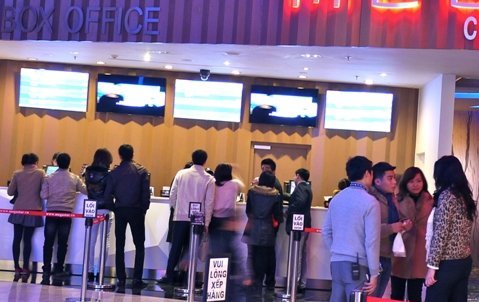 Six years ago, Hanoi did not have just a single cinema that meets international standards, but now the number of modern box offices is five.
In late April 2006, the first MegaStar cinema complex in Vietnam inaugurated in Hanoi, with eight projection rooms. The appearance of this cinema, with American investors, has made a great change in Vietnam’s movie market. Most importantly, it has helped form a new habit: enjoying movies at box offices, not on television.
Though the ticket prices are high, compared to Vietnamese average incomes, and increase annually, MegaStar has drawn a large number of audiences. MegaStar has become a big rival of other cinemas in Hanoi. Some cinemas had to close and the remaining have had to upgrade their facilities to compete with the new rival. ...
Read the full story here:
How close are we to truly photorealistic, real-time games?
Every graphical and technical advance the game industry has seen from Pong to Crysis has been a small step toward the end goal of a real-time, photorealistic 3D world that is truly indistinguishable from a real-world scene. Speaking at the DICE Summit Thursday, Epic Games founder and programmer Tim Sweeney examined the speed and direction of computing improvements and determined that we "might expect, over the course of our lifetime, we'd get to amounts of computing power that come very close to simulating reality."
The necessary bounds for true photorealism are set by the physical limits of the human eye, Sweeney explained, which can only process the equivalent of a 30 megapixel image at about 70 frames per second. Given current trends, monitor display technology should be able to handle that level of detail for a small area in just a few more generations. Projecting that level of detail across a larger, 90 degree field of vision would take an 8000 x 6000 pixel display, which is still quite far off but "within sight," Sweeney said. ...
But simply pushing polygons isn't enough to get true realism. The ability to trace the subtle interplay of light on various surfaces is also key to creating a realistic scene. ...
Outside of raw computing and algorithmic power, the future may also hold further revelations in the way we interact with virtual environments. Sweeney pointed to upcoming Sony sunglasses with transparent lenses that allow for hands-free image projection in a way that hasn't seemed cool since the '80s. He also predicted that increasing scarcity in real goods may drive up the value of increasingly realistic virtual goods, to the point where the market rivals the $25 trillion worldwide trade in real estate. ...
See the full story here:
To 3D Or Not To 3D: Is The Phantom Menace In 3D Worth It?
| 3D Fit | 5 |
| P&E | 5 |
| Before The Window | 1 |
| Beyond The Window | 4 |
| Brightness | 5 |
| The Glasses Off Test | 3 |
| Audience Health | 5 |
| Total Score | 28 (out of a possible 35) |
Final Verdict: If you're looking for further reason to hate The Phantom Menace, I'm sorry to say you won't find it here. The 3D conversion isn't going to change your opinion on the movie or give you a whole new moviegoing experience, but it's not bad either-- it seems to mainly be serving the purpose of giving George Lucas something else to tinker with and giving more people an excuse to see it in theaters, and who can argue with that? If you've watched The Phantom Menace100 times at home already, don't go to this expecting something brand new. But if you've seen enough terrible 3D conversions, you might want to check this out as an example of it done pretty well.
See the full story here:
CAMERON’S 10 RULES FOR GOOD STEREO
1 There is no screen
2 Stereo is very subjective
3 Analyzing stereospace on freeze frames can be misleading
4 Convergence CANNOT fix stereo-space problems
5 Convergence is almost always set on the eyes of the actor talking
6 Interocular distance varies in direct proportion to subject distance from the lensshots
7 Interocular and convergence should both vary dynamically throughout moving shots
8 In a composite, the foreground and background may want to have different interoculars
9 When stereo looks bad to the eye (visual cortex) it is important to eliminate the problems sequentially:
Sync, reverse stereo, Vertical mismatch, color/density mismatch, render errors, highlights, image warping, vibrations
10 Some shots just can't be fixed
Source
Read all ten rules in greater details in the 3Dcinecast paper from Olivier Amato on July 27, 2009.
Read also
The "Ten Commandments of Stereoscopy" by Benoit Michel. They are available in 8 different languages.
See the full story, as well as links to the source material, here: http://stereoscopynews.com/hotnews/history/digital/2166-camerons-10-rules-for-good-stereo.html
The rise of digital in motion pictures – Beyond the tipping point for film (part 2 of 2)
In the second part of our look at the uptake of digital technology in the movie business we explore filmmaking innovators who are taking digital filming and post production to new levels of excellence.
Filmmakers and post-production specialists are breaking new ground in visual storytelling facilitated by the increase in technological capabilities during acquisition, post and exhibition. The advances in Stereo3D are inextricably linked to developments in digital capture: James Cameron pioneered shooting on digital cameras that were custom built for Ghosts of the Abyss – the first feature length 3D IMAX production released in 2003. Then Avatar set the bar for 3D features; however Vince Pace, co-chairman of CAMERON | PACE Group recently told The Hollywood Reporter that they “were experimenting with Avatar” and that they “could have gone further, but we wanted to make sure we found ourselves somewhere in the middle of concentrating on a good film and focusing on 3D elements. We didn’t want to compromise the actual film by taking away from the story for the sake of 3D.” ...
Digital drives quality
The Case for Film
Read the full story here: http://blog.quantel.eu/2012/02/the-rise-of-digital-in-motion-pictures-beyond-the-tipping-point-for-film-part-2-of-2/
The rise of digital in motion pictures – Beyond the tipping point for film (part 1 of 2)
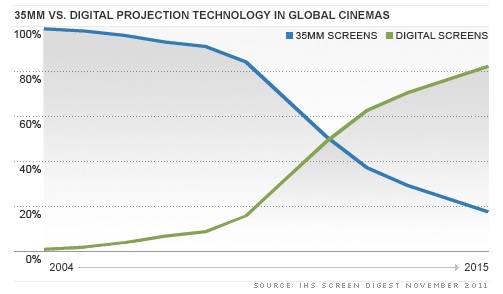
After 120 years of entertaining audiences, countless movies and pioneering works on the format, celluloid 35mm film looks to be on the way out as the industry picks up the pace to adopt digital for major motion picture capturing, post and distribution.
This month, the IHS Screen Digest claim that 63% of the world’s cinema screens will be digital compared to 2010 where 67% of global screens were still projecting 35mm. This dramatic increase highlights the speed at which the industry is moving toward to digital innovations.
“Since 1889, 35mm has been the principal film projection technology, however, after 10 years of market priming, movie theaters now are undergoing a rapid transition to digital technology, spurred initially by the rising popularity of 3D films,” said David Hancock, head of film research at IHS. ...
Read the full story here: http://blog.quantel.eu/2012/02/the-rise-of-digital-in-motion-pictures-beyond-the-tipping-point-for-film-part-1-of-2/
Penetration rates of 3D and LED TVs continue to rise in January

[Philip Lelyveld comment: these numbers seem incredibly high. Has anyone seen data to corroborate them?]
Market research showed that the penetration of 3D TV and LED TV reached 40% and 70% respectively in January 2012.
Taiwan-based brands such as Sampo, Chimei, and Tatung all believe 3D display technology for TVs is not difficult, in addition, the technology costs have decreased. Hence there will be more 3D-featured TVs in the market in 2012.
Digitimes Research indicated that the global penetration rate of 3D LCD TVs in January 2012 grew to 39.2%. The penetration rate of 3D TVs under 46-inch was 33%. The penetration of models above 46-inch (47-,52-, 55-, and 60-inch) reached beyond 50%.
Global penetration rate of LED-backlit TVs was 67% in 2011 and increased to 76% in January 2012. The same trend applies that LED TV penetration rate is higher in large-size models.
Industry sources are optimistic about direct-lit LED TVs due to low prices.
See the original post here: