Verge Fiction: The Empathy Machine / Hands-on with the PathoGlyph Wavelength
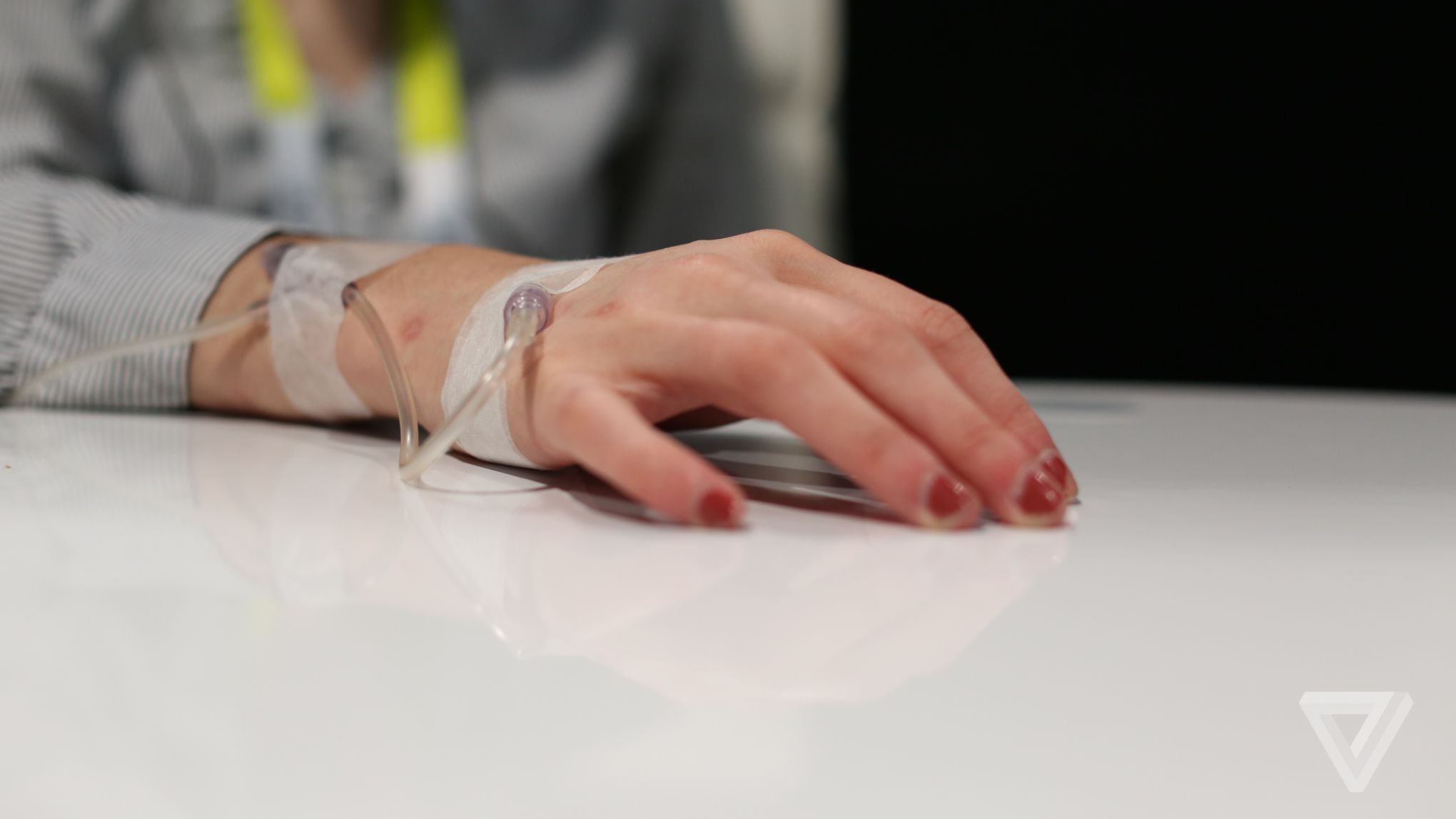 I don’t usually cry at CES. But then again, I’ve also never watched a film while being dosed with pharmaceuticals and lightly electrocuted — which is exactly what’s happening at virtual reality startup PathoGlyph’s tiny booth.
Based on a Samsung Gear VR paired with an IV drip, an electrode array, and some other tubes I don’t quite understand, it looks like someone described the basic concept of virtual reality to a mad scientist and let them loose in a hospital.
For most of the Wavelength’s "tracks," PathoGlyph developers construct and place different feelings at key places in the story, the way a film editor might layer audio cues. Nor are these feelings a precise translation of real human experience. They’re electrochemical cocktails that produce generic sensations — approximations of sadness, joy, or even complex concepts like jealousy, which White describes as the combination of anger, anxiety, despair, and desire.
The centerpiece of PathoGlyph’s demo is a companion track to Henry, Oculus Story Studio’s second animated film. ... This time, as Henry sighs at the sight of his empty birthday party, something clenches in my chest. ...
The Wavelength’s artificiality oscillates between the feelings of alcoholic magnanimity, major depressive episode, and crying at a montage set to Leonard Cohen’s "Hallelujah" — all those times where your conscious mind can’t stop your body from expressing something it knows is false.
The very real side effects of antidepressants and similar medications are balanced against potential health benefits, but the Wavelength is almost purely recreational, though White says that it could augment more established virtual reality treatments for phobias and PTSD.
See the full story here: http://www.theverge.com/2016/1/12/10742114/verge-fiction-pathoglyph-wavelength-hands-on?curator=MediaREDEF