Archaeology’s Information Revolution
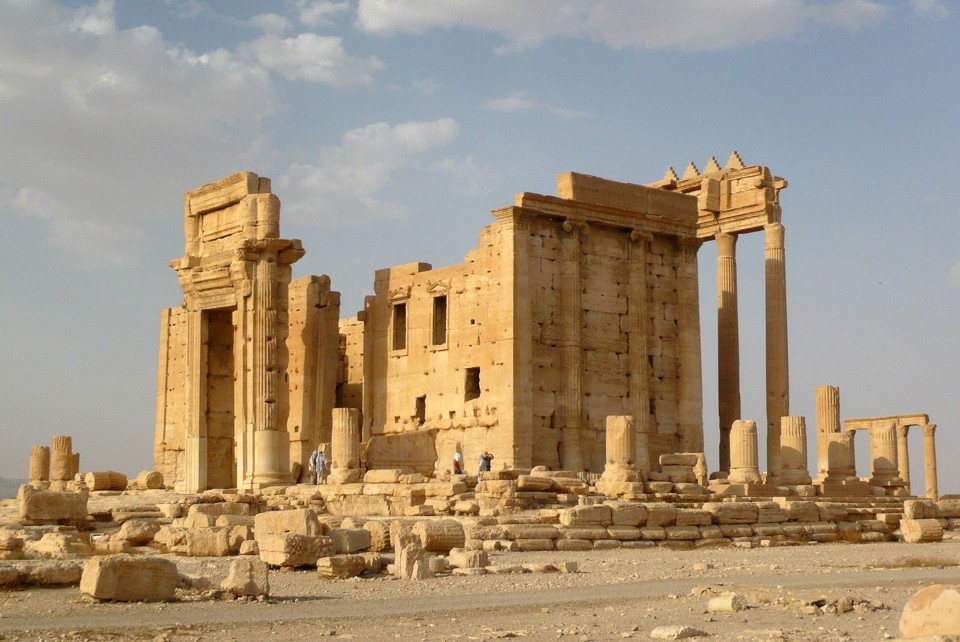
A general view shows the Temple of Bel in the historical city of Palmyra, Syria, August 4, 2010. The hardline Islamic State group has destroyed part of an ancient temple in Syria's Palmyra city, a group monitoring the conflict said on August 30, 2015. The militants targeted the Temple of Bel, a Roman-era structure in the central desert city, the Syrian Observatory for Human Rights said. Picture taken August 4, 2010. REUTERS/Sandra Auger TPX IMAGES OF THE DAY - RTX1QFZ9
“I’ve lived through this data transition,” said Thomas Levy, an archaeologist and anthropology professor at the University of California, San Diego. “We still dig like our 19th-century predecessors—with trowels, rubber buckets, shovels, toothbrushes, and so on. But we used to be really encumbered by our ability to record data. We had to be more selective. Now, with these digital tools—with GPS, total stations, laser scanning, and structure from motion photography—we can elect an unlimited amount of data.”
Thanks to satellite data, those data points can now be embedded within a topography of the entire planet. For instance, Sarah Parcak, a space archaeologist, analyzes satellite imagery of Earth, looking for telltale features that might signal a long-lost historical site.
Georgia Tech is in the midst of a major renovation of its library system, an overhaul that will include removing many of the books from public spaces.
“The huge issue now is data,” she said. “It’s probably more important than text.
“Having Palmyra real is much more important than having 3-D models of it, obviously,” Levy told me, referring to the ancient city where several historic sites have been destroyed by ISIS in recent months. “But in a world where we have so much intentional destruction of cultural heritage, we’re in a position now to record it in ways that were impossible even a decade ago.”
See the full story here: http://www.theatlantic.com/technology/archive/2016/03/digital-material-worlds/471858/?curator=MediaREDEF