How Long Before We See Virtual Reality Headsets in Our Mental Health Wards?
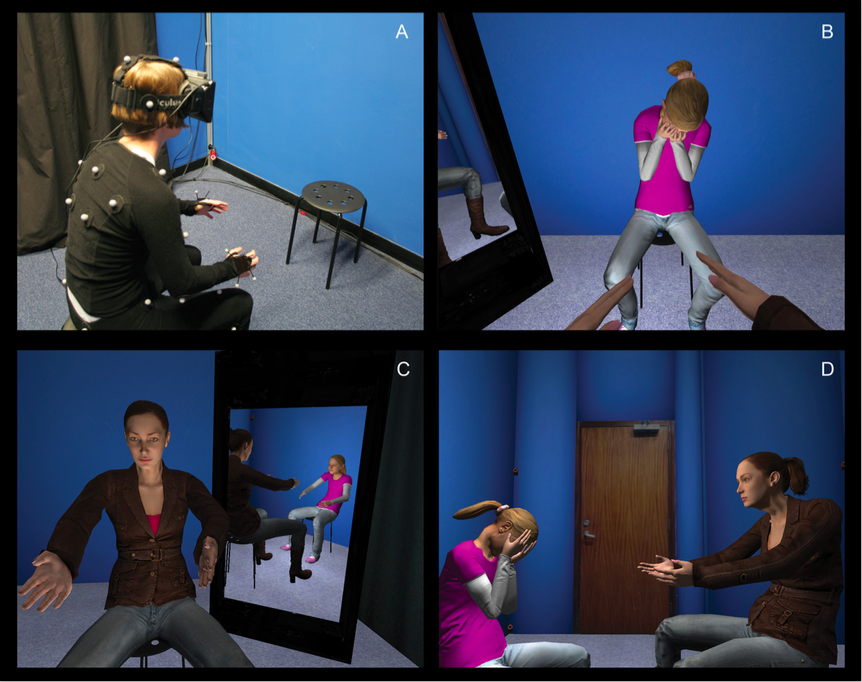 So far, therapeutic VR has mostly treated PTSD and anxiety disorders through exposure therapy—where you try to desensitize a patient by gradually re-exposing them to their fear or trauma. But recent studies have shown VR could also be applied as a therapy for people with bipolar disorder, autism spectrum disorders, eating disorders, addiction, and depression.
A paper from the British Journal of Psychiatry's online publication, for example, found in February that immersive VR could encourage people suffering from depression to be simultaneously less self-critical—a crucial depressive trait—and more compassionate towards themselves.
If this trial's successful, it's still unclear where such therapies might fit into the NHS: In a GP surgery? Or a specialist mental health service? For the moment, they just don't know. "There's still a lot of work to be done within the NHS," says Falconer. "Some people there aren't comfortable with the technology—maybe because their tech or computer literacy isn't quite up to scratch—so that's something else we need to tackle." She also stresses that she sees VR more as a complement to existing therapies like cognitive behavioral therapy (CBT) than a treatment in itself. "From my perspective, this isn't about replacing. It's about trying to enhance what's already there, and also having something that's really engaging for patients."
See the full story here: http://www.vice.com/read/virtual-reality-mental-health-treatment-uk