VR motion sickness alleviated with field of view alterations
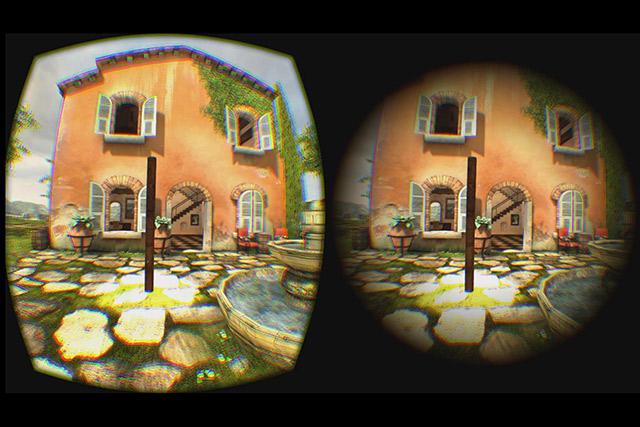 The approach changes the FOV in a way that many participants found imperceptible. "I was aware of work on change blindness--a concept in perceptual psychology that explains why people sometimes do not notice what would seem to be an obvious change in a scene," explains Fernandes, who himself has suffered from VR sickness. "So I wondered if this could be applied to VR: could we change a participant's FOV without them noticing?"
The team specifically targeted scenarios in which users move in the virtual environment in a way that intentionally differs from how they move in the real world.
These include games in which they are physically standing or sitting on a couch in their living room, while walking, running, driving, or flying in the virtual world.
Most of the participants who used the more subtle restrictors did not notice them, and all those who did notice them said they would prefer to have them in future VR experiences.
See the full story here: http://eandt.theiet.org/news/2016/jun/vr-motion-sickness-alleviated.cfm?utm_source=MIT+TR+Newsletters&utm_campaign=bf505b2c66-The_Download_2016_06_13&utm_medium=email&utm_term=0_997ed6f472-bf505b2c66-153894145