How Virtual Reality Is Changing the Way the UN Thinks
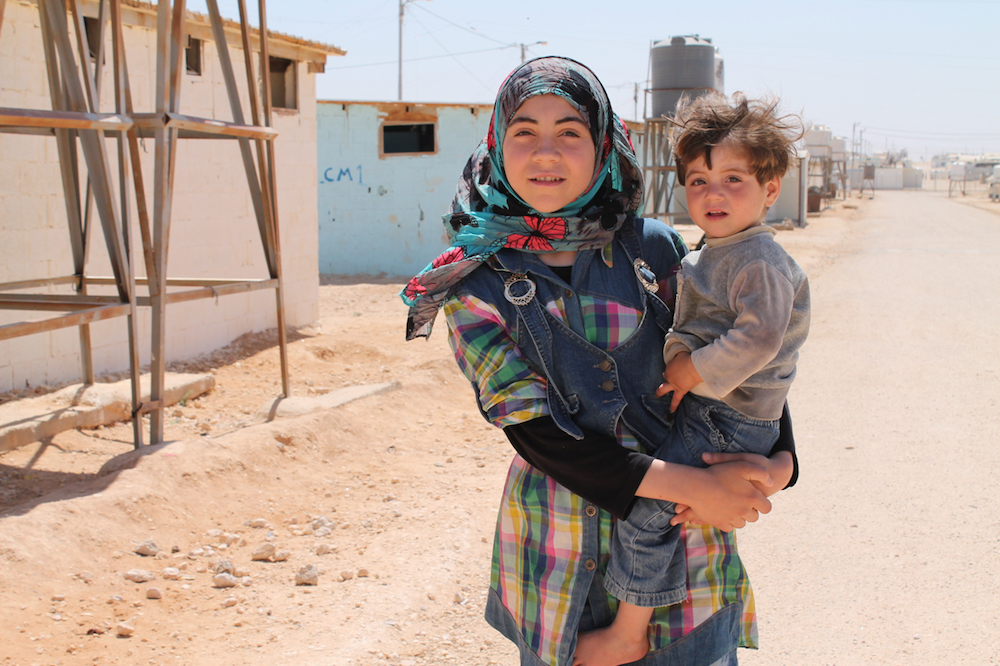 While politicians were making bold speeches about a proposal that may or may not be enforced, the first ever United Nations Creative Director Gabo Arora was quietly introducing delegates to the new media technology that is changing how the 71-year-old institution makes decisions.
When I visit Arora's team on the first day of the General Assembly, they're tucked into a corner of the UN Headquarters' ornate entrance hall greeting delegates with virtual reality goggles. Representatives from all over the world—the Netherlands, Nigeria, Jordan—load up the UNVR app and follow. In the back, there's a full-scale two-way video chat screen Arora calls the Portal, allowing the powers that be to talk to refugees in real time.
In just two years, Arora's advocacy for VR has proven to be a powerful tool for the UN. It's well-documented that charities can make a lot more money by incorporating VR experiences.
When measuring a subject's likelihood to compromise during negotiation, researchers at their Virtual Interations Lab found that, of 842 participants, "those who experientially learned about the other party’s perspective felt more positive about their relationships and made greater concessions during the negotiation than those who were simply provided information about the other party’s perspective." Pamphlets, YouTube videos, and hard stats—the evidence shows—just aren't as good at raising money as VR.
When I ask if he thinks virtual reality is more effective than other mediums, he excitedly cuts me off—"Of course. It makes a really positive impact on the whole crisis because it shows how people live... They can get into the story better than the usual videos and photographs."
Arora wants make the UN a place where people from all over the world can document their lives. He's currently developing an ultra cost-effective VR film kit to make the medium available to artists in every member state. "The Scorsese of virtual reality could be living in Uganda," Arora says excitedly. If his plan succeeds, UNVR could simultaneously spawn an international VR film boom and give artists a chance to bring their problems directly to the people who can solve them.
See the full story here: http://thecreatorsproject.vice.com/blog/virtual-reality-unvr-refugees