Strapping on the Sacred: When Religion Enters Virtual Reality
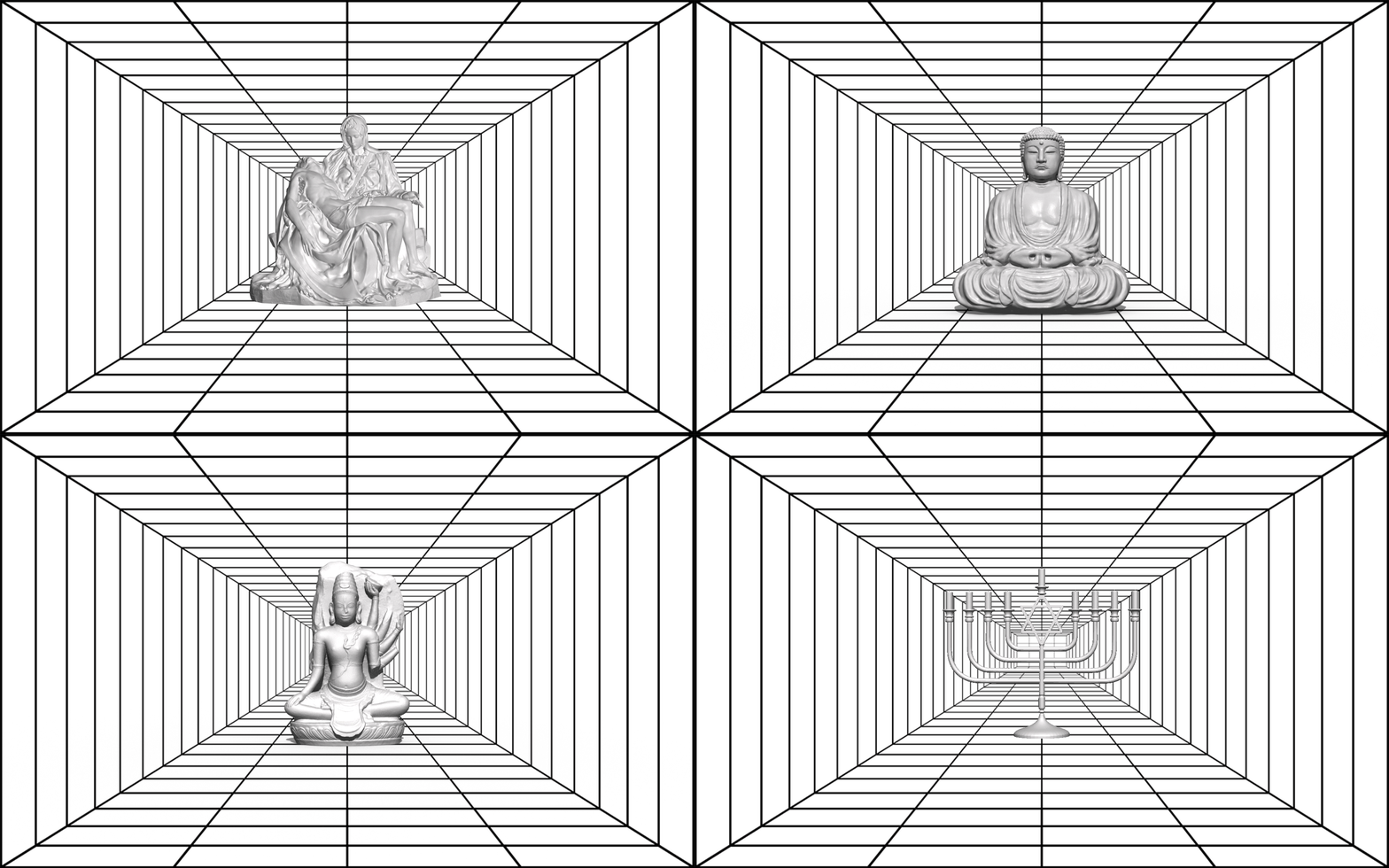 For Benek, the primary ecclesiastical service VR will enable is remote church attendance. He imagines that with the addition of augmented reality, or AR, a community could gather regardless of physical location. Although the pews may be mainly empty, with AR contact lenses, they would appear filled with all those who could not make it in person.
But the possibilities of virtual religiosity extend beyond increasing church attendance. It is easy to imagine entirely virtual chapels; spaces that defy physics and approach the divine. For centuries, religions have employed architecture to induce spiritual experiences or represent the glory of a deity; imagine the possibilities of a space untethered by the strictures of reality. Of course, different religions deal with representation and transubstantiation differently, so VR spaces would differ as much as physical sacred spaces. You can take a VR tour of the Masjid Al-Haram mosque, but don't expect recreations of the Prophet's life. Likewise, the Second Temple is being recreated in virtual reality, but Judaism's strong anticonist tradition would prohibit any depictions of YHWH.
One could argue that rituals like the Stations of the Cross already constitute a virtual reality. As one passes by a series of stained glass windows, they imagine movements layered on the glazed surface. Inherited stories take on life through their visual representation. But VR blows that open. Instead of imagining the Passions of the Christ, one could theoretically experience them—perhaps even from the vantage point Jesus himself (although that might constitute blasphemy).
See the full story here: http://archinect.com/features/article/149982444/strapping-on-the-sacred-when-religion-enters-virtual-reality