Virtual reality, one year out: What went right, what didn’t
 But the biggest problem for the Rift was that even at launch its days already felt numbered—not a vibe you want from $600 hardware. The Rift was designed primarily as a seated VR experience, with a controller in your hands. By the time it launched on March 28, enthusiasts and industry press had already spent time playing with the SteamVR-powered HTC Vive, which used made-for-VR controllers and dedicated tracking stations to enable room-scale VR experiences that let you wander around and actually touch things. After trying Vive, going back to the Rift’s sedentary experience felt far less satisfying.
...we recommend passing on the Rift and the Vive, and for very good reason. While VR can be nothing short of awe-inspiring, these first-gen products also have some obvious flaws.
Man, virtual-reality headsets are expensive.
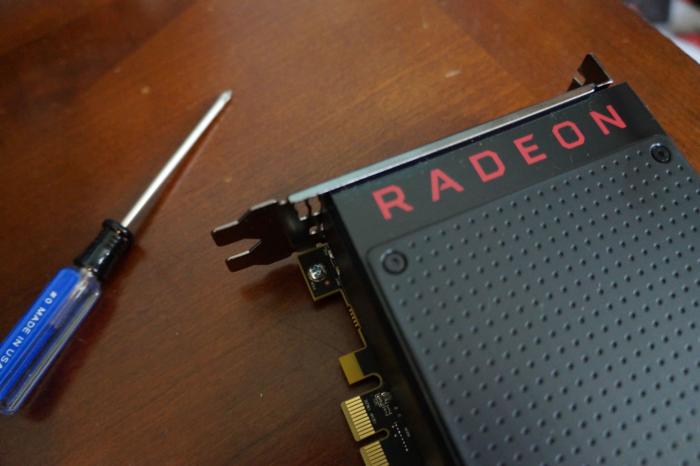
The plunge began with the launch of AMD’s Radeon RX 480, which revolutionized what’s possible with a $200 graphics card. Before its release, VR-capable graphics cards cost nearly twice that amount. (Nvidia quickly followed suit with the $250 GeForce GTX 1060.) Jumping forward two full technological generations paid major dividends for graphics cards.
Software tricks helped democratize VR just as much. At the Oculus Connect conference in October, the company revealed a new feature dubbed “Asynchronous Spacewarp” that used technical tricks to drive the barrier to entry for Rift VR way, way down—all the way to an AMD AM4 or Intel Core i3-6100 processor, and a GeForce GTX 960 graphics card. In March, a Rift-ready PC cost at least $1,000; after Oculus Connect, Rift-ready PCs started at $500, and as I write this there’s a Best Buy promotion offering a full PC and the Rift itself for $999.
Hot damn, prices plunged fast. And another pesky PC VR problem is already in everybody’s sights.
Wired woes
...headsets need to be physically tethered to your PC in order to work.
And you can already see that wireless future on the horizon, with Oculus testing a fully self-contained mobile Rift prototype pictured above and HTC backing a $220 add-on kitthat makes the Vive wireless.
Beyond PCs
While powerful PC-based VR experiences may be tethered, the more modest world of phone-driven mobile VR has already left cords far behind.
The Future
Intel and Microsoft’s Project Evo partnership aims to change how computers “think, see, and hear,” with a specific goal of driving mixed reality forward.
The cost of VR-capable PCs will only keep going down. Expect augmented reality to continue making inroads in car tech.
See the full story here: http://www.pcworld.com/article/3148754/virtual-reality/the-messy-magical-birth-of-virtual-reality.html