Stanford researchers personalize virtual reality displays to match a user’s eyesight
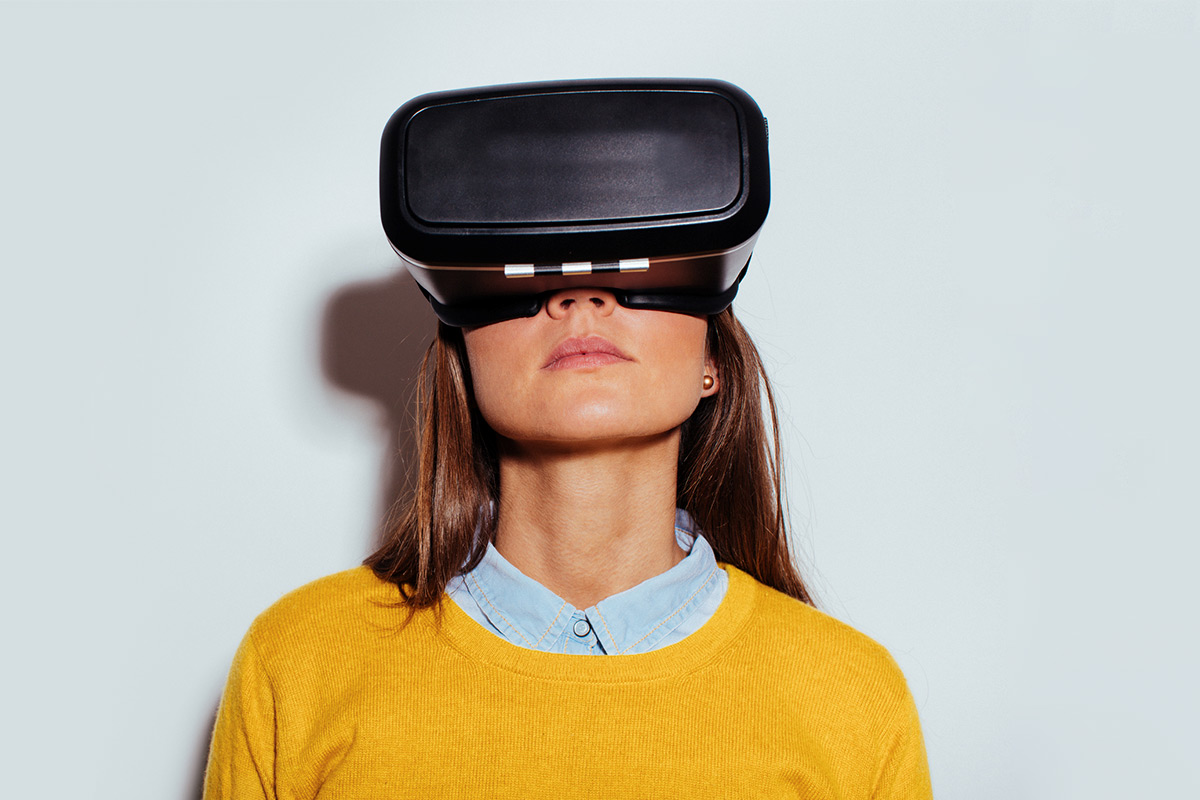 Now researchers at Stanford’s Computational Imaging Lab, working with a Dartmouth College scientist, are developing VR headsets that can adapt how they display images to account for factors like eyesight and age that affect how we actually see.
“Every person needs a different optical mode to get the best possible experience in VR,” said Gordon Wetzstein, assistant professor of electrical engineering and senior author of research published in Proceedings of the National Academy of Sciences.
The problem that the researchers set out to solve is that the display screens on VR headsets don’t let our eyes focus naturally.
The researchers are testing hardware and software fixes designed to change the focal plane of a VR display. They call this technology adaptive focus display.
The group tested two different hardware options. One relies on focus-tunable liquid lenses. Twisting a dial squeezes the liquid lenses inside the headset to change the screen display even though the lens itself remains in place. The other option involves mechanically moving the display screen back or forth, like adjusting a pair of binoculars. The system also incorporates eye-tracking technology to determine where on the screen the user is looking.
The software can account for whether a person is nearsighted or farsighted but cannot yet correct for another vision issue called astigmatism.
“It’s important because people who are nearsighted, farsighted or presbyopic – these three groups alone – they account for more than 50 percent of the U.S. population,” said Robert Konrad
The researchers tested prototypes of these personalized VR displays at last year’s SIGGRAPH conference. Tal Stramer, a Stanford graduate student in computer science, was involved in this phase. The team tested their adaptive focus display on 173 participants aged 21 to 64 and found that the technology provided improved viewing experiences across a wide range of vision characteristics.
See the full story here: http://news.stanford.edu/2017/02/13/personalized-virtual-reality-displays-match-eyesight/