Microsoft’s VR headsets now up for pre-order, launching October 17 / Google’s new VR headset is still a prototype — but it really works
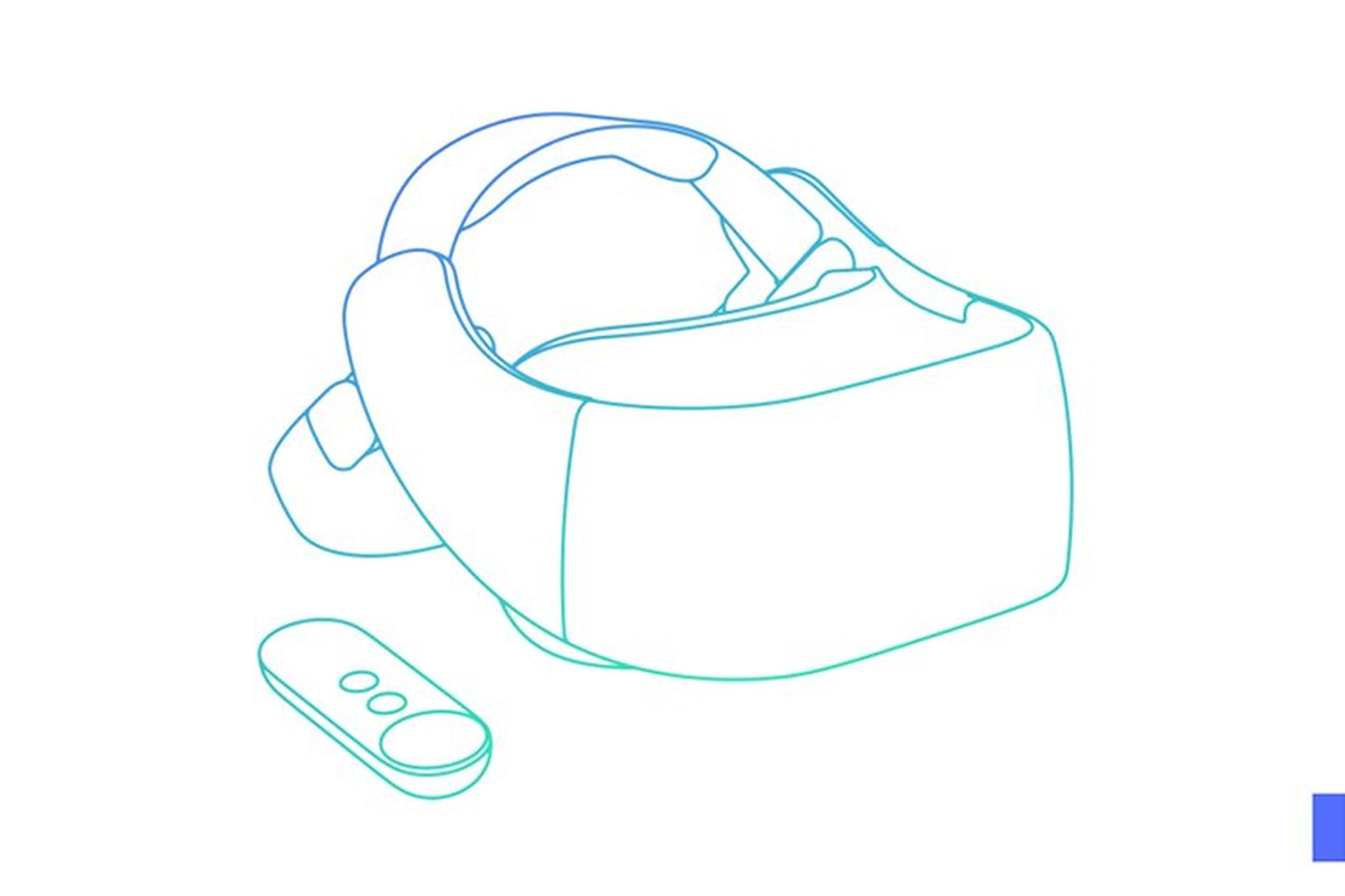 Google’s standalone VR headset, announced yesterday at I/O, was both obvious and unexpected. People have been talking about a self-contained Google headset for over a year, and speculating (quite confidently) that the company would eventually use Tango augmented reality tracking in lieu of outside cameras. But Google head of VR Clay Bavor didn’t just announce the existence of new hardware — he promised a reference design and two commercial versions, made by HTC and Lenovo, by the end of the year.
That’s an aggressive timeline, suggesting that Google’s already got something in pretty good shape. Despite this, Bavor didn’t show much on stage besides a line drawing of the planned hardware. After the keynote, though, I was part of a small group that got to check out an early prototype — and while it’s too early to say whether Google can pull off a fully self-contained VR headset, the core technology really does work.
Anyone hoping for some Microsoft-style inside-out motion controllers from Google will have to wait a while. The first generation of Google’s standalone headsets will use an ordinary Daydream controller, which offers only limited motion tracking.
The operative element we were supposed to be trying was the WorldSense tracking system, which is indeed based on Tango.
In the first of two demos, wearers could walk around a virtual ocean floor, complete with wandering jellyfish and a circling sea turtle. The second put them in a large Imperial hanger from Rogue One, complete with a dour K-2SO.
See the full story here: https://www.theverge.com/2017/5/18/15656290/google-io-prototype-standalone-vr-headset-hands-on-htc-lenovo-qualcomm
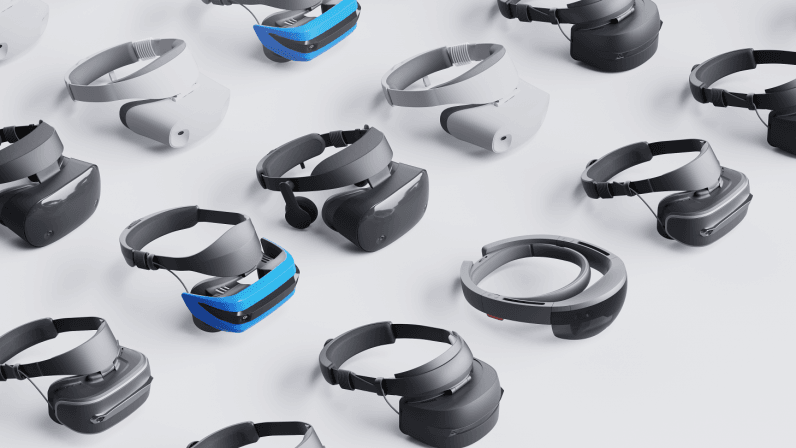 At an event in San Francisco today, the company announced you can pre-order any of Microsoft’s partner headsets today, almost all of which will arrive on October 17 (with one exception). That’s the same day Microsoft is dropping the Windows 10 Fall Creator’s update, which finally brings the company’s mixed reality hub to the masses.
Those models are from Acer, Dell, HP, Lenovo, and as of today, Samsung. They all hover around $400-$500, including Microsoft’s Oculus-like mixed reality controllers, or $300-$400 without them. You can find out more about prices and the features of each individual headset here.
The Samsung headset looks particularly interesting, as the only headset with OLED displays and ‘premium’ AKG headphones. You’ll have to wait longer for that one – it launches on November 6.
Microsoft’s has two main advantages over the competition its hoping to leverage. Its partner headsets don’t need external camera to track six degrees of movement, for one, and they can run on lower spec machines – even integrated graphics. And though the company is emphasizing games to start, it’s preparing for a world where mixed reality could be our primary way of interacting with computers.
See the full story here: https://thenextweb.com/microsoft/2017/10/03/microsofts-vr-headsets-now-pre-order-launching-october-17/#.tnw_wznhwH8z