Augmented Reality Reference Designs at CES Show New Promise for Smart Glasses and HMDs
 OmniVision's ASTRI
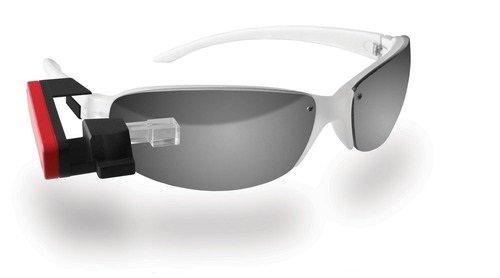
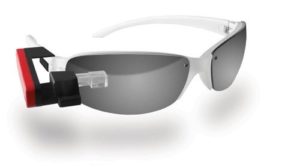
First, OmniVision has joined hands with Hong Kong Applied Science and Technology Research Institute (ASTRI) to create a complete turnkey design solution for AR glasses with Wi-Fi connectivity to any mobile device or personal computer.
The reference design employs ASTRI’s expertise in optics and sensing technologies to facilitate a 60-degree-wide field of view (FOV) immersive solution. While the immersive AR designs have the potential for a 110° FOV, the current designs have been able to accomplish the FOV of 60°.
On the imaging front, OmniVision brings to table a single-chip, 1080-pixel high definition (HD) liquid crystal on silicon (LCOS) display that features integrated driver and memory buffer. OmniVision claims that its OP02220 LCOS display simplifies design, shrinks form factor, and lowers power consumption by up to 40 percent as compared to display systems that use two or three separate driver and memory-buffer chips.
The AR design, which emulates reality with a greater level of visual details, requires a display that nears the resolution of the human eye. Here, OmniVision contributes the OV9282 image sensor that can capture 1280x800-pixel images at 120 frames per second with low latency.
These two devices from OmniVision enable inside-out tracking tasks like simultaneous localization and mapping (SLAM), 3D room scanning, and hand-and-tool tracking. ASTRI’s reference design has also integrated the 802.11ac Wi-Fi link to connect AR glasses to other devices like a smartphone.
Flex's HMD Reference Design
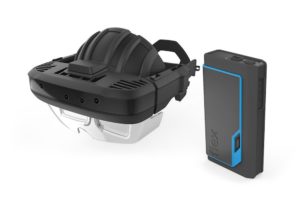
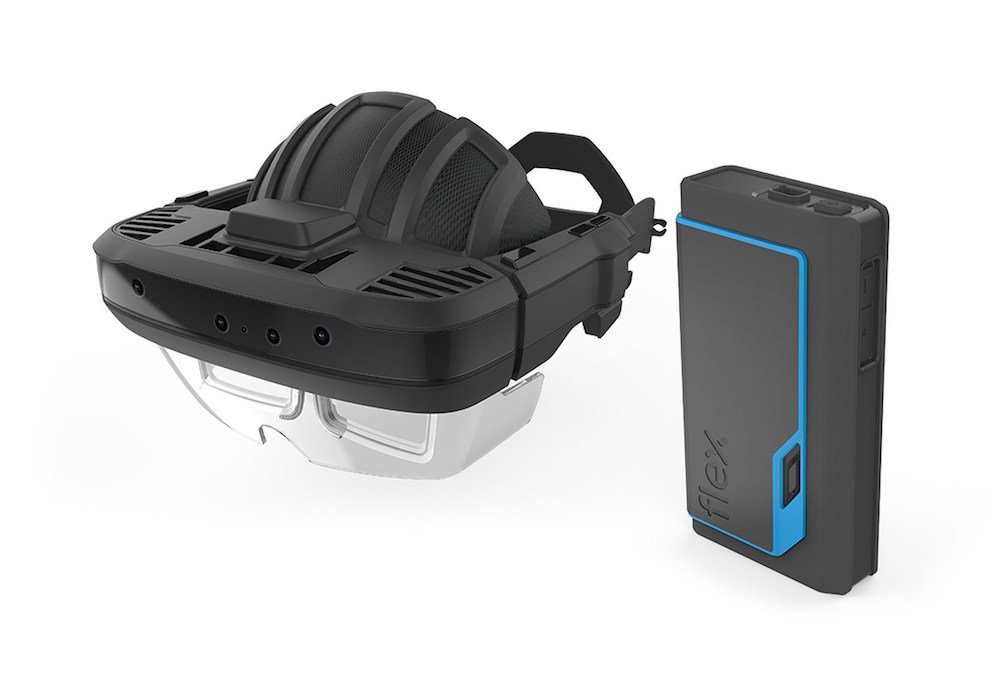
Another notable effort to reduce development costs and accelerate time-to-market for AR glasses comes from Flex, which calls itself the sketch-to-scale solutions provider. At the CES 2018, the company unveiled an AR reference design that encompasses an HMD, an external processing unit (EPU), and a gesture-based software platform to manage interaction.
The AR design is powered by Qualcomm's Snapdragon 835 processor that's built on 10nm process and facilitates full-color, 1080-pixel augmented reality experiences. And it's complemented by AR interaction module and enterprise software from Atheer.
See the full story here: https://www.allaboutcircuits.com/news/CES-2018-augmented-reality-reference-designs-smart-glasses-HMD/