Oculus Go Is the $200 Headset That Could Make You Try VR
In the middle, a new kind of headset is finally appearing. Devices like the Oculus Go and Mirage Solo don’t need a PC and don’t steal your phone. They have no cables. They can’t play intense games, but they’re great for casual use. And with web browsers and video players, they satisfy needs that border on the practical.
The Go reminds me of my first Amazon Echo. I owned better speakers, but I gravitated to the Echo because asking Alexa to play a song was so easy. Similarly, the Go is so simple I found myself using it most—more than the Vive Pro and Sony Corp.’s PlayStation VR, even though both have more impressive tech and better games. The Go makes VR feel less like an event you have to schedule and more like just picking up your phone.
The tech makes it possible to “hang out” in a more intimate and real-feeling way than a phone call or video chat. I like the premise, and was impressed by a demo of Oculus Rooms, where you join up with your friends to play games or watch videos. My room got a bit lonely, though. None of my friends was ever online.
Yes, the Go lacks crucial features. It doesn’t have controllers that track and mimic your hand motion like the Vive Pro or the Go’s expensive, PC-dependent sibling, the Oculus Rift. Instead, the Go uses a simple remote, similar to what you get with Nintendo Co.’s Wii consoles.
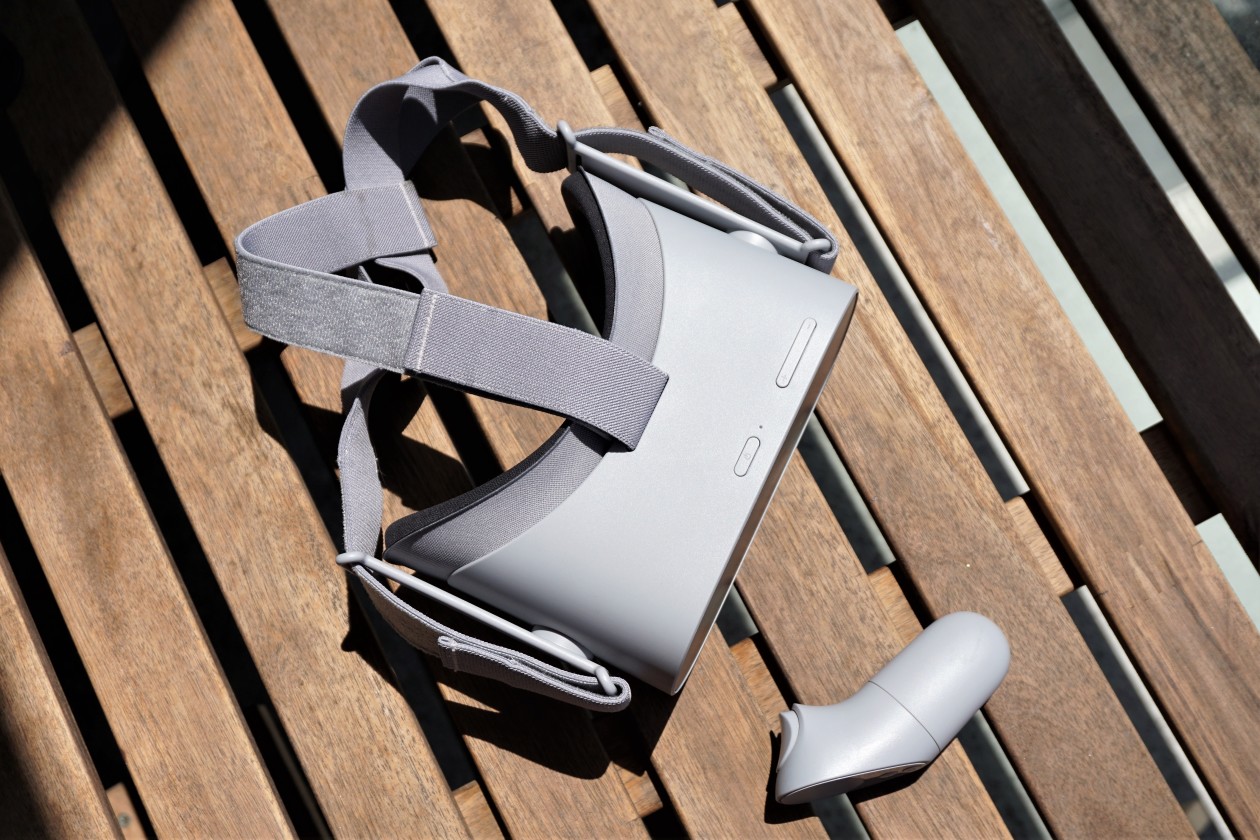 At $200, the Oculus Go finds a balance between features and price—it’s one of the easiest and most useful headsets available. PHOTO: DAVID PIERCE/THE WALL STREET JOURNAL
See the full story here: https://www.wsj.com/articles/oculus-go-is-the-200-headset-that-could-make-you-try-vr-1525195800