Virtual Reality Preserves Disappearing Land
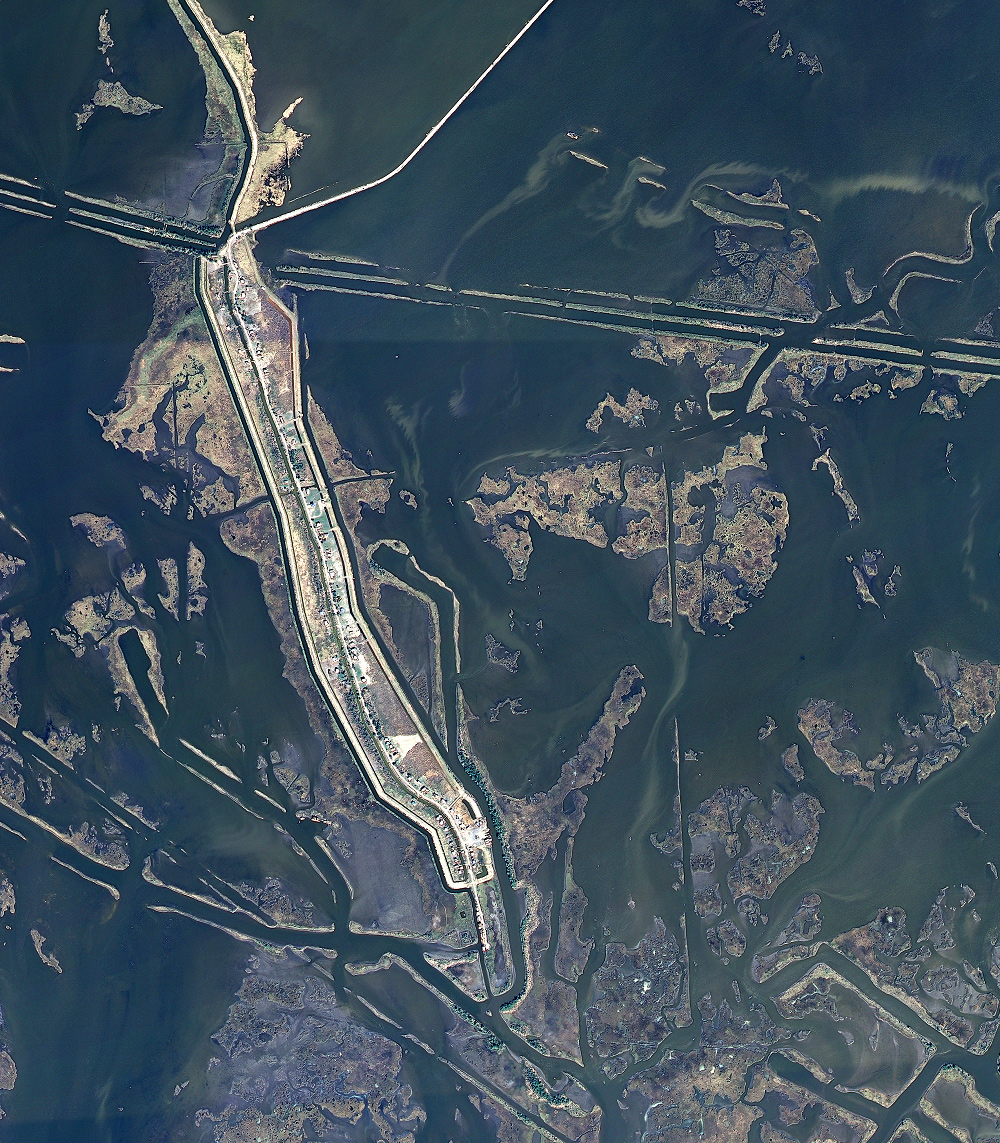 It’s a sunny day in southern Louisiana, and I’m sitting on a porch listening to 91-year-old Wenceslaus Billiot, the oldest member of the Isle de Jean Charles band of the Biloxi-Chitimacha-Choctaw, describe how the island has changed throughout his long life.
“When I was a kid, my daddy and I would go to Montagut in a pirogue to get groceries,” he says, as a breeze stirs the wooden wind chime by my side. “We used to trap [muskrat]. Then when we sold the furs, we’d go make a grocery bill for the summertime.”
There is no trapping on Isle de Jean Charles anymore, and looking out from Billiot’s porch it’s easy to see why. Not even 100 meters away—beyond the protective ring levee that girds what remains of the island—is open water. The wetlands where Billiot and his father once hunted are gone. Since 1955, the island has lost 98 percent of its land to erosion, subsidence, and a rising sea. Soon it will lose most of its inhabitants, too.
Two years ago, the Isle de Jean Charles band received US $48-million from the federal and state governments to relocate the community to a new site about 50 kilometers inland, likely within the next few years. The move made the band the first government-recognized climate refugees in the country.
Albert Naquin, chief of the Isle de Jean Charles band, hopes the project will preserve memories of his community’s culture and connection to the land in a more meaningful way than a conventional historical archive. The virtual reality archive is “going to be a lot easier than reading,” he says, “when you hear it in words from some of the folks."
See the full story here: https://www.hakaimagazine.com/news/virtual-reality-preserves-disappearing-land/