Virtual reality tool designed at USC corrects errors in brain scan data
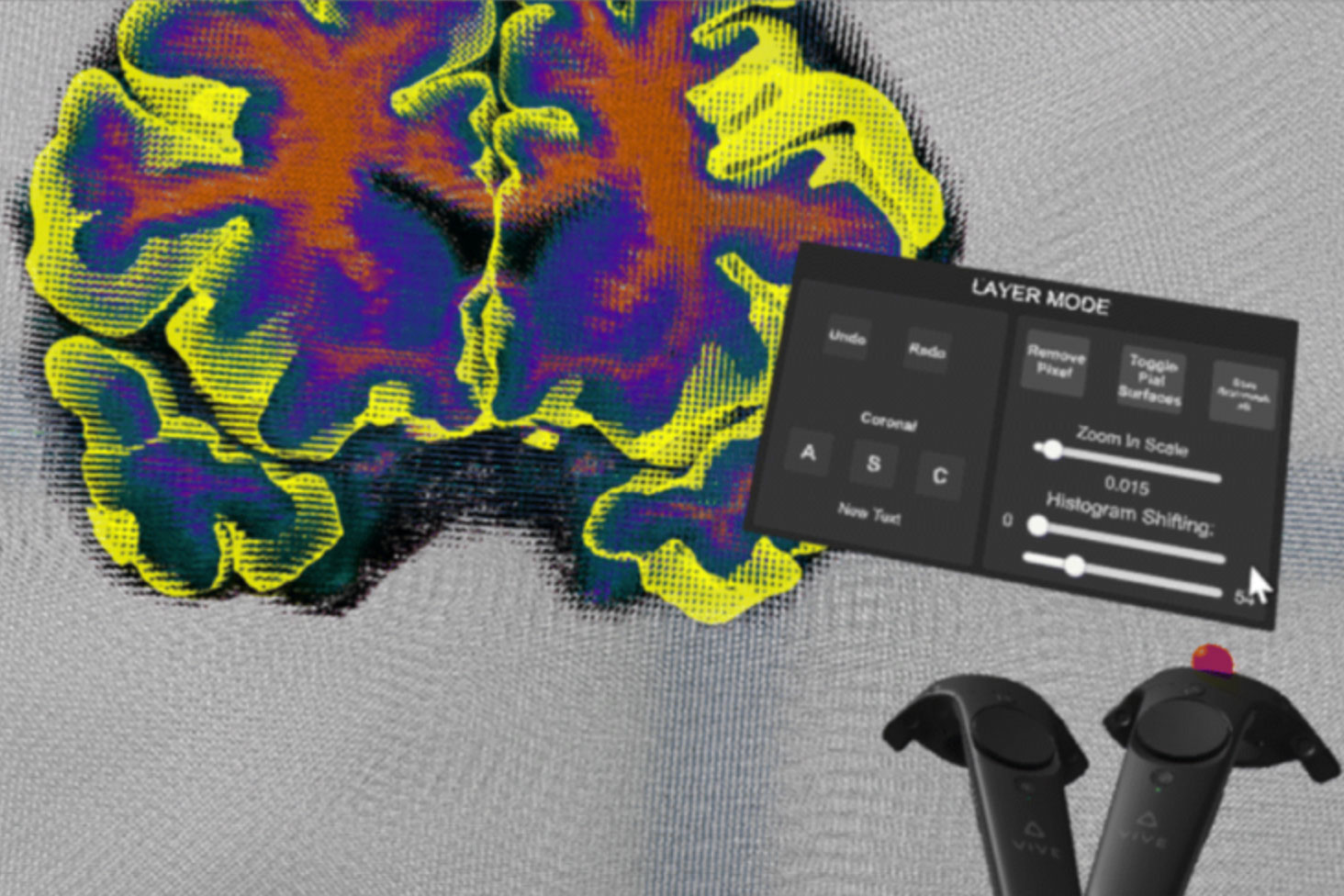 After researchers collect MRI data from study participants, the processing stage begins. During automatic processing, one step, called segmentation, separates the brain into labeled regions to facilitate close examination of various structures. But the automation isn’t perfect, and researchers must manually correct errors before moving forward with analysis.
The time-consuming work requires a trained hand, so most labs hire undergraduate research assistants to correct segmentation errors. But with the vast amount of data being collected, studies still tend to hit a bottleneck during the processing stage....
With this in mind, Duncan, Toga and Assistant Professor Tyler Ard launched an experimental trial to test the efficacy of VR in brain segmentation.
The experiment tested 30 participants, all new to brain segmentation, on two tasks: using a MacBook to perform a minor error correction in the classic data cleanup program FreeSurfer, and completing the same task in VBS, armed with the HTC Vive headset and two controllers.
On average, participants finished the correction 68 seconds faster using VBS compared with FreeSurfer, a highly significant time savings considering the task rarely took more than three minutes to complete.
See the full story here; https://news.usc.edu/147222/virtual-reality-tool-designed-at-usc-corrects-errors-in-brain-scan-data/