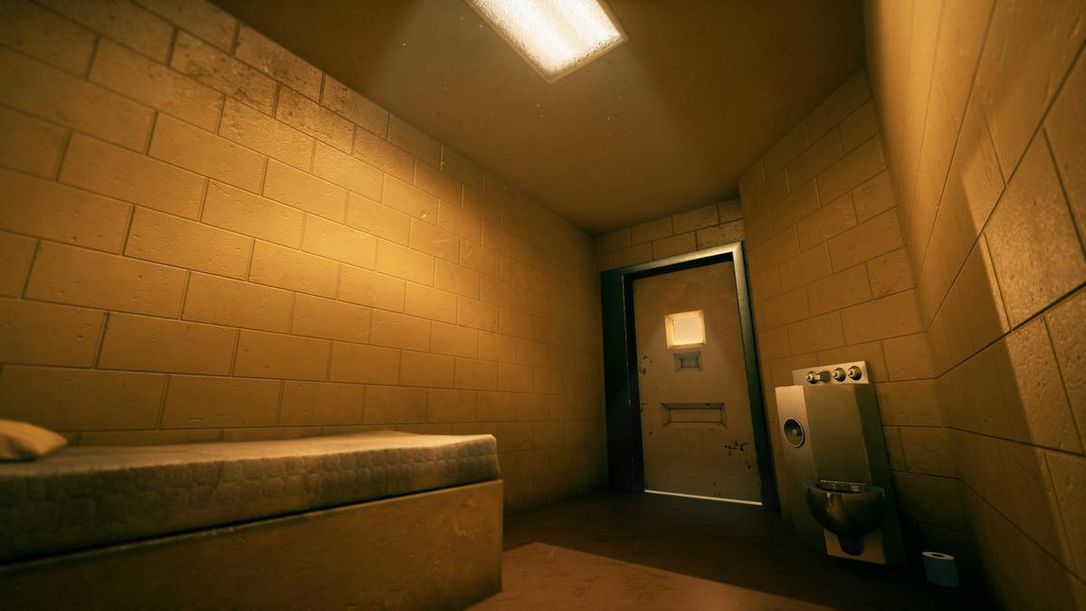
 Think virtual reality and you might picture a fantasy world to be explored and enjoyed. But researchers and staff at a Hamilton hospital are using the technology to better understand what it feels like to be in a seclusion room, the health-care equivalent of a jail segregation cell.
“We wanted to see what it was like to be on the other side of the door,” said Gary Chaimowitz, head of the forensic psychiatry program at St. Joseph’s Healthcare and a professor at McMaster University. “I think many of us can imagine, or recall times when you’ve been in places by yourself, when you didn’t want to be by yourself, left alone, but this puts you, as a staff person, in our rooms.”
Using a VR headset and hand controllers, staff are transported into a room modelled after real seclusion rooms at the hospital, and another set in a jail cell.
SimWave, an Ottawa-based company, used photographs to recreate the experience.
In two of three VR training modules being used at the program, you try to get the attention of virtual staff on the other side of the door. The seclusion room has no bathroom, and your bladder is full. You can ask for help, pace the room and knock or even pound on the door.
Your call for help returns one of 10 programmed responses, ranging from, a polite, “Yes, we’ll get you something,” to “Hold on a sec, we’re a little bit busy right now,” to a little more pointed response, Chaimowitz said.
“The tone, if you’re on the receiving end of that, obviously it makes a hell of a big difference,” he said.
Sometimes, there is no response, or the “patient” hears laughter. In another scenario, you actually get to use the bathroom.
See the full story here: https://www.thestar.com/news/gta/2018/12/21/can-you-stand-segregation-these-researchers-are-using-virtual-reality-to-let-hospital-staff-see-through-their-patients-eyes.html