Senior Living Slow to Adopt Tech for Wellness-Focused Operations
 ...senior living providers are shifting away from a care-focused operational model to one that is focused on wellness. However, providers are not yet making significant investments in technology to drive this change, which involves programming targeted at multiple facets of wellbeing, such as physical, social, spiritual and intellectual dimensions.
There are myriad reasons for the slow adaptation. Senior housing operators must evaluate building infrastructure and geographic location, what tech devices and platforms are the best fit for residents and staff, software requirements for specific platforms such as electronic health records or fitness center attendance, adding layers of privacy for residents’ financial and health information, and costs for purchasing, implementing and maintaining devices and software.
While facing all these potential challenges to technology investments, this reluctance to embrace technology is attributable to a natural conservative hesitancy to avoid innovation until it is completely workable, Ziegler Link-Age Fund II Chief Investment Officer John Hopper told SHN. The fund, which closed with $37 million in capital commitments in May 2018, is an investment vehicle affiliated with specialty investment bank Ziegler focused on senior housing technology.
The biggest obstacle right now is wearables are made solely for individual use, Maplewood Senior Living VP, Clinical Innovation and Population Health Brian Geyser told SHN. Products like Apple Watch are a step in the right direction, but there needs to be a focus on developing software platforms to connect multiple individual accounts.
Ziegler, through its Link-Age funds, invested in companies that allow multiple individual wearables to be monitored through one platform, Hopper said. In 2015, Link-Age invested $2.1 million of seed funding in IncludeHealth, which makes exercise machines geared toward people with disabilities. IncludeHealth’s platform is compatible with Apple Watch.
Best Buy’s (NYSE: BBY) $800 million acquisition of senior-focused tech company GreatCall last August was made with an eye toward gaining market share in portable, affordable technology geared toward aging in place.
Subscription services are trending upward
Subscription-based services are growing in popularity with operators, and provide an inroad to incorporating tech into wellness. From a cost perspective, there is a smaller upfront investment, Hopper said. But subscription models allow residents to pay as they go and cancel a service at any time.
Westport, Connecticut-based Maplewood has a suite of technology platforms geared toward promoting socialization, better engagement during group activities and cognitive stimulation. The company is a partner in Live Living Network, a subscription-based streaming platform allowing seniors access to live and interactive programming, which launched in all of the company’s communities last November. The service gives residents access to concerts, travel programs, educational programs and activities at the control of a remote.
Expanding the capabilities of virtual reality
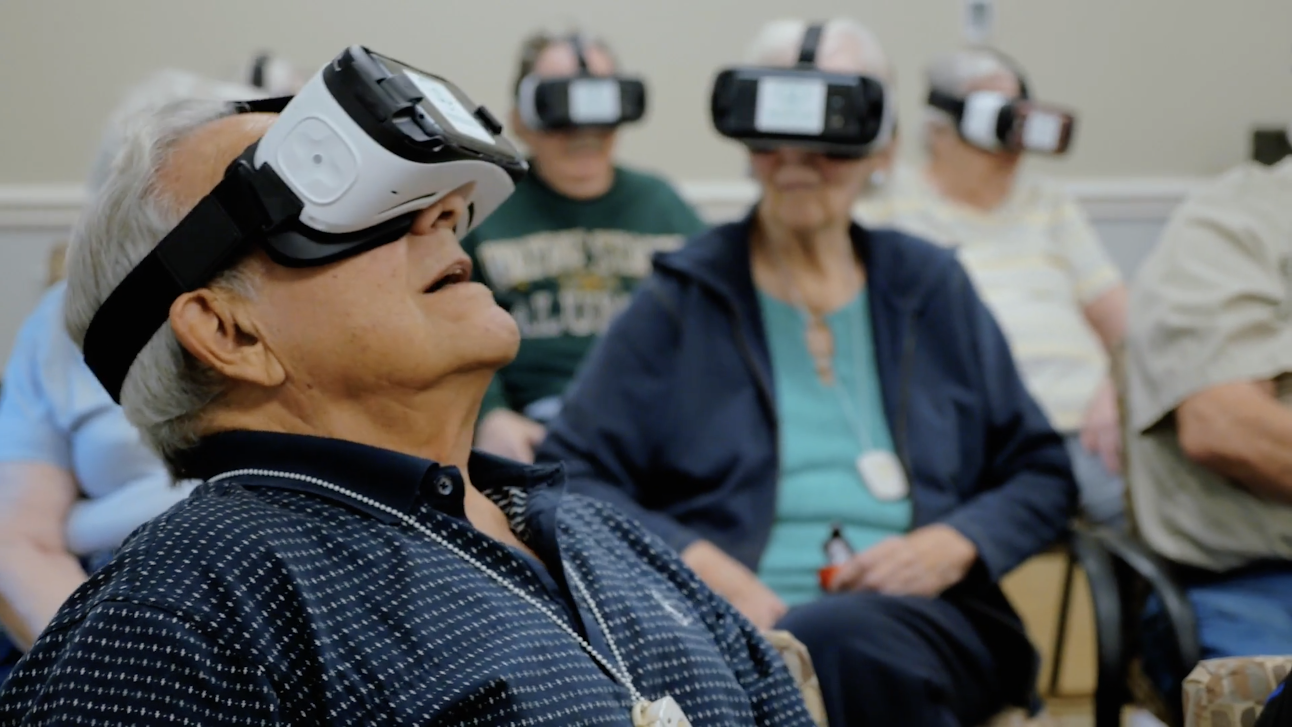
Virtual reality platforms have gained a foothold in the industry the past few years, and this is another tech with great promise in supporting wellness. Two years ago, Maplewood piloted Rendever, a VR platform primarily for memory care patients. Maplewood is now piloting VR as a physical therapy tool, allowing residents with mobility challenges to increase their range of motion and balance, Geyser said.
Ziegler Link-Age Fund II focuses on deploying capital into VR and artificial intelligence companies because those are the technologies developing faster, Hopper said. Ziegler invested in Embodied Labs, a VR platform geared to training caregivers to better treat their patients by immersing them in virtual simulations of what a senior goes through when their conditions deteriorate.
Selling tech’s benefits to staff
While seniors are demanding more tech-friendly devices and platforms to use, senior housing staff remain hesitant to fill the need, because they do not have specific tech adoption strategies in place, Milner said.
Training on tech platforms and devices also leaves something to be desired. ICAA’s research indicates that online tutorials are the most ineffective training tool: 87% of survey respondents said tutorials were offered, but only 27% of staffers believed it was effective.
The most effective training occurred when someone from the tech platform conducted the training. Seventy-one percent of communities surveyed by ICAA said they offered training by someone directly connected to a tech company. However, only 46% of staff said it was effective.
See the full story here: https://seniorhousingnews.com/2019/01/13/senior-living-slow-to-adopt-tech-for-wellness-focused-operations/