New virtual reality tool allows you to see the world through the eyes of a tiny primate
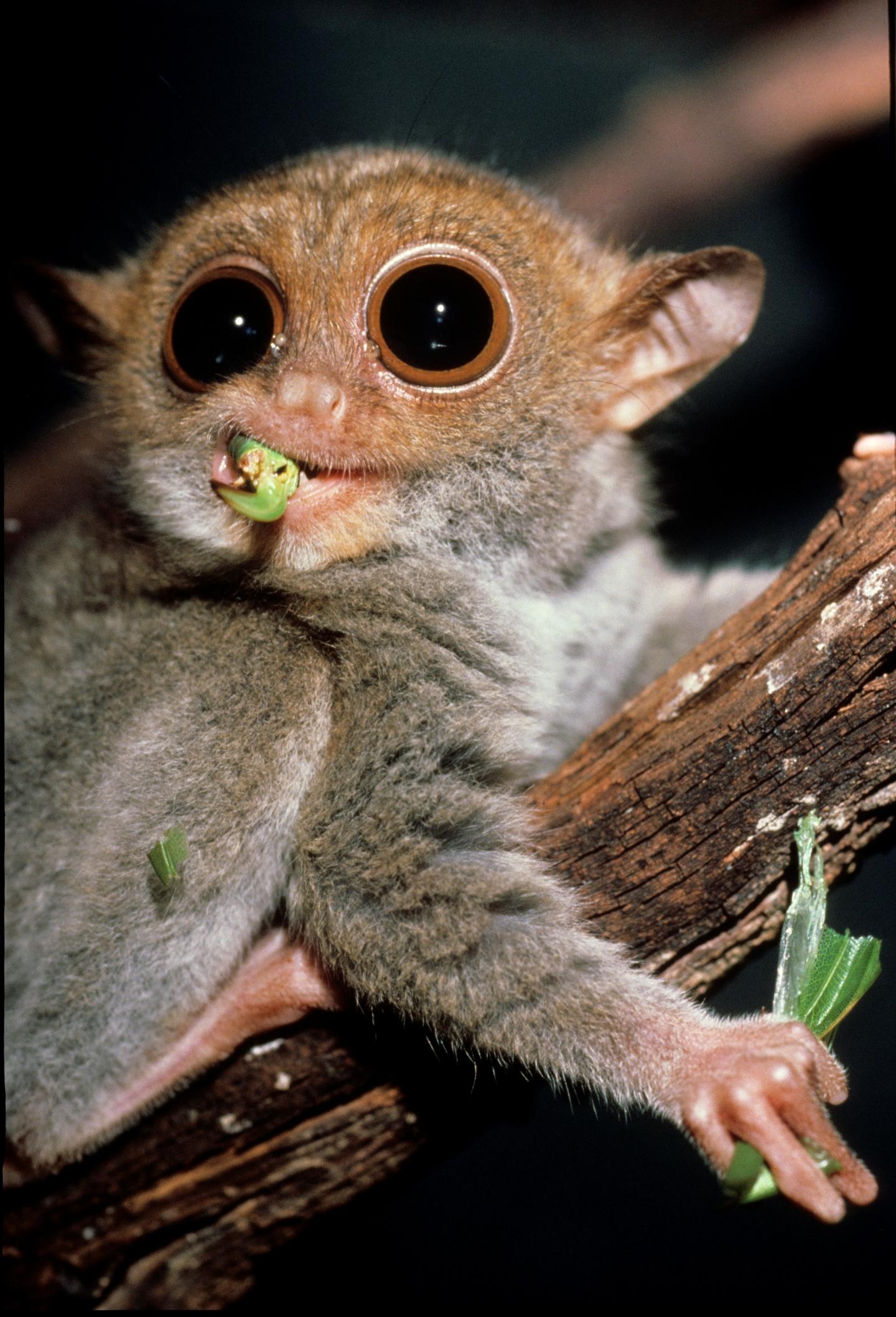 Imagine that you live in the rainforests of Southeast Asia, you're a pint-sized primate with enormous eyes that are roughly the same size as your brain, and you look a little like Gizmo from the movie, "Gremlins". You're a tarsier-- a nocturnal animal whose giant eyes provide you with exceptional visual sensitivity, enabling a predatory advantage. A new virtual reality software, Tarsier Goggles, developed at Dartmouth College, simulates a tarsier's vision and illustrates the adaptive advantage of this animal's oversized eyes. Both the virtual reality build and the team's findings published recently in Evolution: Education and Outreach are available for free online.
"Most ninth- and 10th-grade students in the U.S. learn about optics and natural selection, but the two topics are usually treated in isolation," says Dominy, who served as one of the co-authors. "The tarsier is an effective means of unifying both concepts. You have to understand optical principles to understand why natural selection would favor such enormous eyes in such a tiny predator."
"The Tarsier Goggles project engaged my students first-hand in a learning experience, which could not have been achieved through any other medium," explains Marilyn Morano Lord '95, MALS '97, an anthropology and world history teacher at Kimball Union Academy, who also served as one of the co-authors of the paper.
See the full story here: https://www.eurekalert.org/pub_releases/2019-03/dc-nv032519.php