HOLLYWOOD IS QUIETLY USING AI TO HELP DECIDE WHICH MOVIES TO MAKE
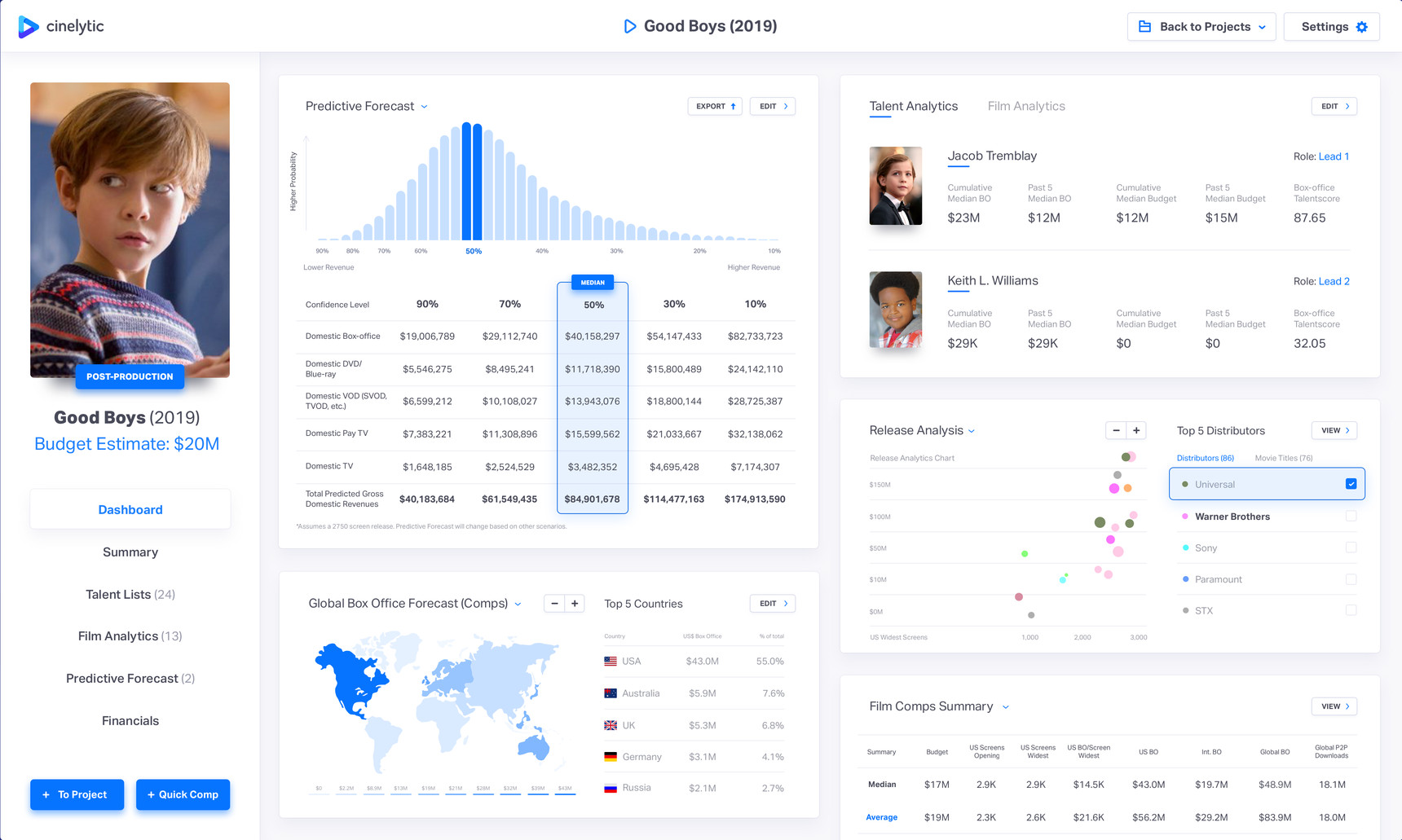 Los Angeles-based startup Cinelytic is one of the many companies promising that AI will be a wise producer. It licenses historical data about movie performances over the years, then cross-references it with information about films’ themes and key talent, using machine learning to tease out hidden patterns in the data. Its software lets customers play fantasy football with their movie, inputting a cast, then swapping one actor for another to see how this affects a film’s projected box office.
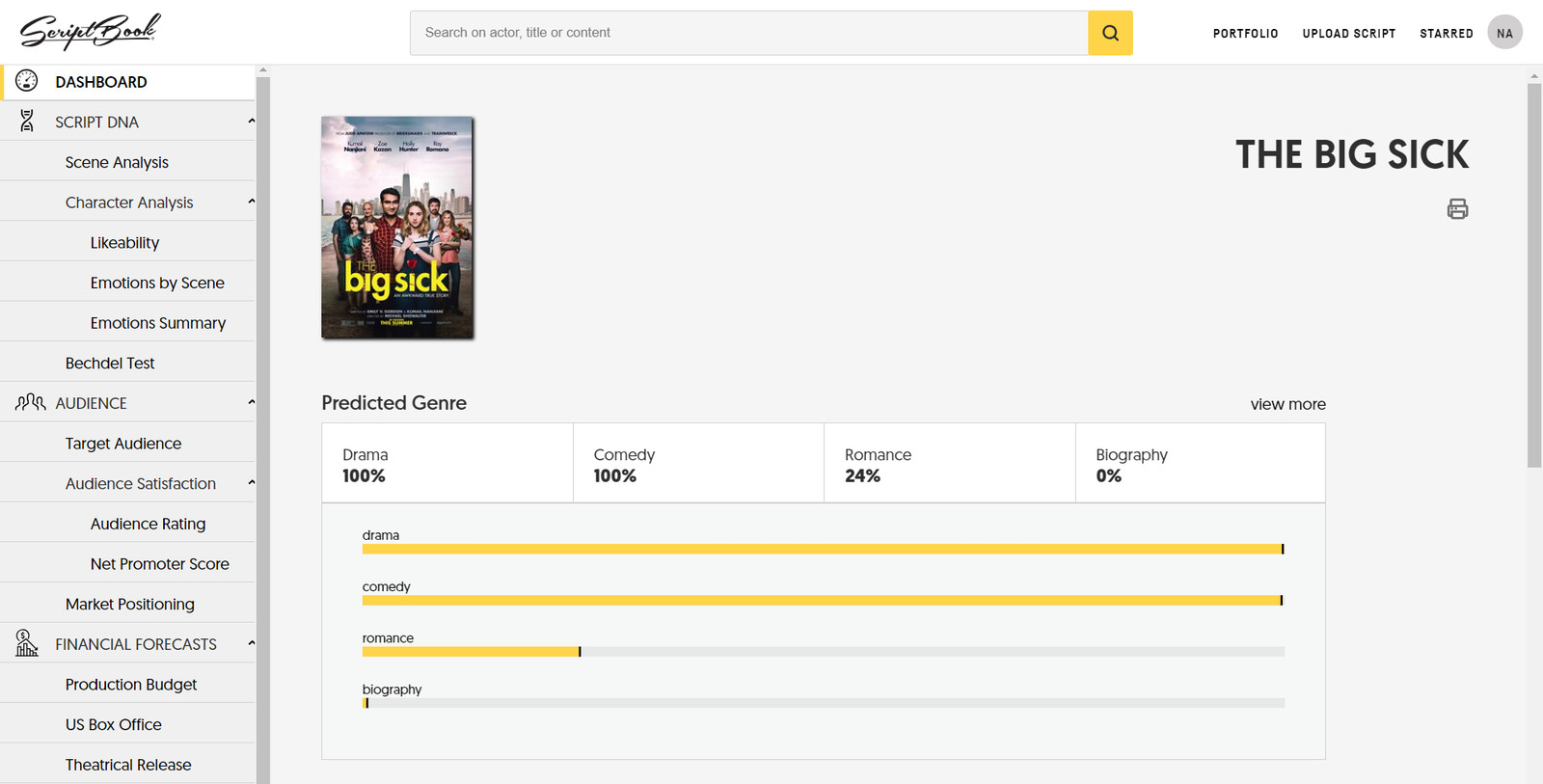
Cinelytic isn’t the only company hoping to apply AI to the business of film. In recent years, a bevy of firms has sprung up promising similar insights. Belgium’s ScriptBook, founded in 2015, says its algorithms can predict a movie’s success just by analyzing its script. Israeli startup Vault, founded the same year, promises clients that it can predict which demographics will watch their films by tracking (among other things) how its trailers are received online. Another company called Pilot offers similar analyses, promising it can forecast box office revenues up to 18 months before a film’s launch with “unrivaled accuracy.”
The water is so warm, even established companies are jumping in. Last November, 20th Century Fox explained how it used AI to detect objects and scenes within a trailer and then predict which “micro-segment” of an audience would find the film most appealing.
But Kang Zhao, who co-authored the paper along with his colleague Michael Lash, cautions that these sorts of statistical approaches have their flaws.
One is that the predictions made by machines are frequently just blindingly obvious. You don’t need a sophisticated and expensive AI software to tell you that a star like Leonardo DiCaprio or Tom Cruise will improve the chances of your film being a hit, for example.
Algorithms are also fundamentally conservative. Because they learn by analyzing what’s worked in the past, they’re unable to account for cultural shifts or changes in taste that will happen in the future. This is a challenge throughout the AI industry, and it can contribute to problems like AI bias. (See, for example, Amazon’s scrapped AI recruiting tool that penalized female candidates because it learned to associate engineering prowess with the job’s current male-dominated intake.)
See the full story here: https://www.theverge.com/2019/5/28/18637135/hollywood-ai-film-decision-script-analysis-data-machine-learning?_hsenc=p2ANqtz-9G5YyV6LtFvbShOjLSt2NyrZgKGOL9bSR_9FqeNbM4hIHJ4PxAOGVjsDjsQra6WT9Jj7jTgj16JUos457fvyzjvB-YIw&_hsmi=73140734