Tilt Five wants to bring augmented reality to tabletop games
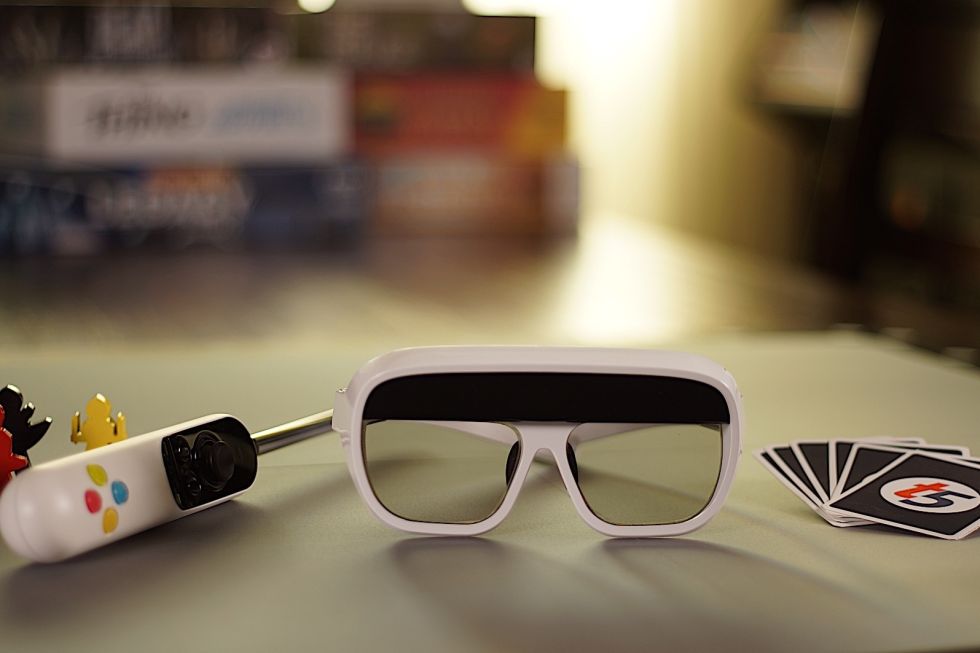
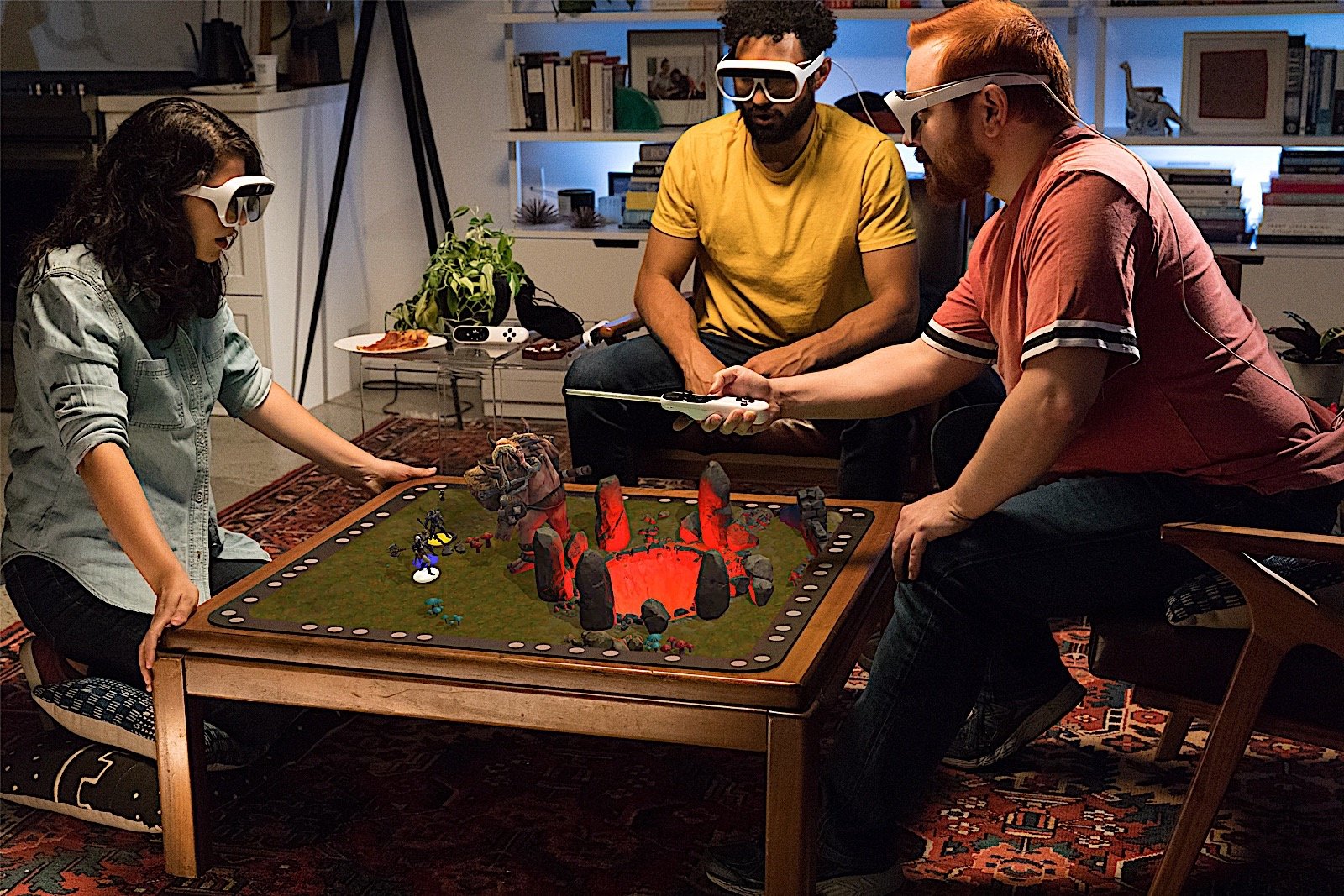 The core idea behind the Tilt Five remains relatively unchanged from castAR. The system consists of a pair of AR glasses made with polarized lenses, two cameras (previous versions only had one) and built-in HD micro projectors. They project 3D images from a wired computer (or phone) to a retroreflective surface embedded with infrared LEDs, which then bounce the image back to your eyes. One camera module scans the LEDs to track the location and movement of your head, while the other is a computer vision camera for your hands, playing cards, tokens or other objects. This is a system called far-eye projection, whereas other AR headsets like HoloLens and Magic Leap uses near-eye projection that utilizes waveguide displays.
That means that, with Tilt Five, the only area in which you'd see the augmented image is on that retroreflective surface, whereas HoloLens or Magic Leap aren't limited by that.
See the full story here: https://www.engadget.com/2019/09/24/tilt-five-kickstarter-hands-on/