Apple patent Describes Tangibility Visualization of Virtual Objects within Various Headset Environments
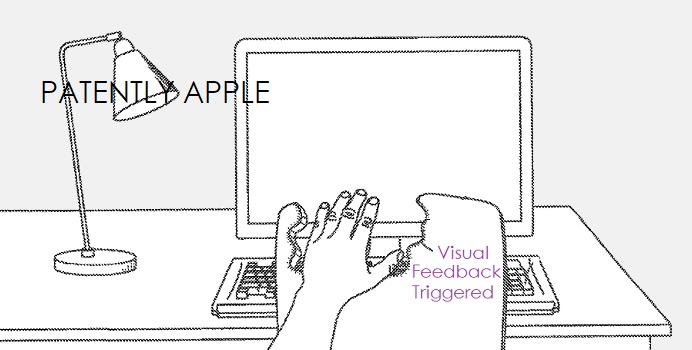 Because the experience is realistic and immersive, the user can easily confuse a virtual (and thus intangible) object within the CGR environment as being a real tangible object that exists outside of the CGR environment.
Thus, the described techniques enhance user convenience and further provide the user with an enhanced degree of safety when interacting with a CGR environment by enabling the user to quickly and easily visually recognize whether an object within the CGR environment is a non-tangible virtual object or corresponds to a real, and thus tangible, object in the real environment.
There are many different types of electronic systems that enable a person to sense and/or interact with various CGR environments. Examples include head mounted systems, projection-based systems, heads-up displays (HUDs), vehicle windshields having integrated display capability, windows having integrated display capability, displays formed as lenses designed to be placed on a person's eyes (e.g., similar to contact lenses). A head mounted system may have one or more speaker(s) and an integrated opaque display.
See the full story here: https://www.patentlyapple.com/patently-apple/2019/11/apple-patent-describes-tangibility-visualization-of-virtual-objects-within-various-headset-environments.html