Supporting small airports using virtual reality
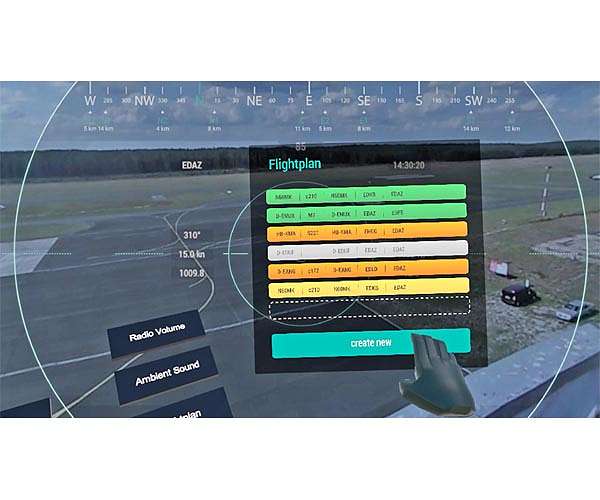 Looking through virtual 'binoculars'
The idea for such airports is to have a combination of a single Pan-Tilt-Zoom (PTZ) camera and a simple panoramic view of the airfield, video images from which are displayed using a VR headset. If traffic announces itself via the air traffic radio system, the controller puts the VR headset on and uses it to control the PTZ camera. They capture the aircraft with the PTZ camera and see the corresponding video image.
Their head movements allow them to intuitively alter the direction of the PTZ camera, so that they can monitor the airfield site and the traffic in a similar way to using binoculars. To give the air traffic controller a better overall view, the PTZ camera image is supplemented with a simple panoramic image of the airfield.
The VR headset also enables the operator to interact with the workplace systems and other participants. The operator could, for instance, use virtual control elements to communicate with other air traffic control services, operate airfield systems or process electronic flight strips.
See the full story here: https://www.spacedaily.com/reports/Supporting_small_airports_using_virtual_reality_999.html