A Brief History of Augmented Reality
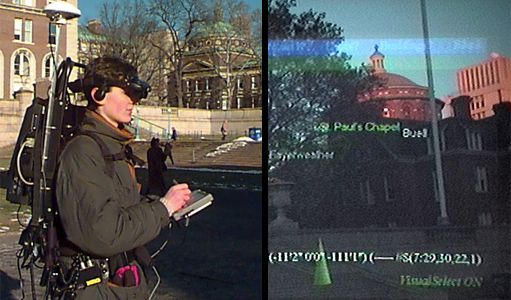 Then in 1997, Ronald Azuma provided a widely acknowledged definition for AR as identified by three characteristics: it combines real and virtual, it is interactive in real time and it is registered in 3D.
DirectIndustry magazine: What are those barriers that need to be overcome for there to be AR in the enterprise?
Michael Gervautz: You need to build the digital twin and digital thread to leverage all the digital data. So as long as you are not able to use digital data throughout your chain, you will not be able to see AR in an effective way. There are also challenges to creating a good AR user experience and having hands-free devices. And the recognition and tracking of products and environments is also a challenge.There are still products that computer vision and AR systems cannot recognize. There are still things to do but we are making progress.
DirectIndustry magazine: What are the next challenges?
Michael Gervautz: Indoor navigation, what people call spatial computing, is the next step. Spatial computing is a new form of computing that uses computer vision and artificial intelligence to seamlessly blend content into the real world. It’s a technology that allows you to recognize the environment, the spaces where you are. We are able to augment objects and products. Soon, we will be able to augment and track the environment. We will build a digital twin of the environment by using a 3D scan and thus create navigation applications and spatial instructions using the surroundings as interactive elements to be explored.That will be a huge step forward.
See the full story here: http://emag.directindustry.com/a-brief-history-of-augmented-reality/