Virtual reality study provides insight into how anxious individuals can reduce threat magnification tendencies
A recent study by Dino Krupić and his team used VR technology to explore individual differences in response to an induced fear of heights. Specifically, they were interested in whether threat magnification – the tendency to exaggerate the presence of danger – could explain differences in the physiological arousal and distress response to fear.
A sample of 122 participants of an average age of 22 took part in a virtual reality experience called Richie’s Plank Experience.... After the plank experience, participants were assigned to one of three conditions: listen to a mindfulness recording, watch a relaxing VR animation, or sit in silence (control condition).
Before the experiment, subjects completed the Pain Catastrophizing Scale (PCS) as an assessment of threat magnification, and the anxiety and fear scales of the Questionnaire of Approach and 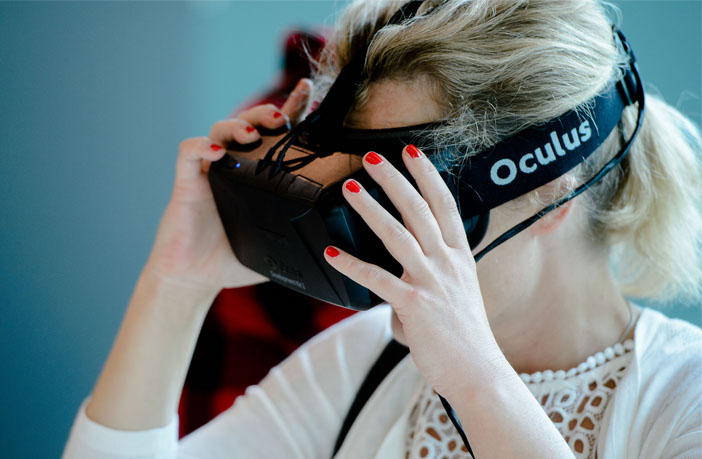 Avoidance Motivation (QAAM). Moodmetric rings measured subjects’ skin conductance levels throughout the experiment and subjects rated their state of physiological arousal immediately after the plank experience. Finally, subjects rated their levels of distress before the plank experience, immediately after it, and following the relaxing condition.
Namely, anxious individuals tend to magnify or overestimate the dangerousness of threats from the environment,” Krupić told PsyPost.
The researchers propose that anxious individuals “are prone to catastrophizing”, which in turn “increases perceived physiological arousal, which then leads to a higher subjective levels of distress.” Accordingly, the authors suggest that interventions to address catastrophic thinking might be beneficial for individuals struggling with anxiety.
See the full story here: https://www.psypost.org/2020/07/virtual-reality-study-provides-insight-into-how-anxious-individuals-can-reduce-threat-magnification-tendencies-57452