Facebook Accused of Squeezing Rival Startups in Virtual Reality
Facebook has a 39% share of the virtual-reality hardware market, making it the industry’s largest player, according to data from market intelligence firm International Data Corporation. Smaller players include Lenovo Group Ltd., Sony Corp. and HTC Corp., while Apple is developing its own mixed virtual and augmented reality headset for launch as early as 2022, Bloomberg has reported. Facebook launched its latest headset, the Quest 2, in October, cutting the price to $299 from $399.
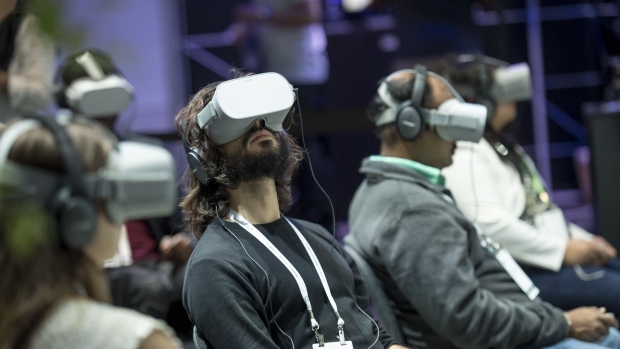
At the core of the complaints is the way Facebook runs the platform and competes against software developers who build apps and depend on the platform for their business.
“Our industry is getting eaten alive by Facebook,” said Cix Liv, who co-founded startup Yur Inc., which makes technology that can be integrated into Oculus games to track fitness metrics. “Any application that has a chance of being mildly competitive with them, they have to kill it somehow.”
Yur released its fitness tracking app for Oculus in September 2019 and spent months working to satisfy Facebook’s security, privacy and performance benchmarks to get the app into the Oculus app store. While the app was available to users on another marketplace, Liv said, Yur couldn’t get it into the Oculus store even though he said the startup met Facebook’s requirements.
Facebook in the spring released a software update for Oculus that prevented Yur’s technology from working within games, according to Liv. Liv said Yur was the only company that experienced such an issue. Subsequent updates required users to delete the Yur app in order to get the Oculus headset working again.
...
Developers also complain that Facebook squeezes them by forcing them to pay a commission on sales, a complaint also leveled at Apple. One of them is Darshan Shankar, the founder and CEO of Bigscreen Inc., which lets users stream movies on the Oculus headset and interact virtually with friends as they watch together.
When a user rents a movie on Bigscreen, they have to use the Oculus in-app purchase system, which collects 30% of the rental fee. That ultimately makes the economics of the business unworkable for the start-up, he said. Shankar said Facebook refuses to negotiate on the 30% commission that Bigscreen has to pay.
“It’s literally impossible for anyone to start an e-commerce or media business in VR because these walled gardens are gatekeepers,” he said. “Entire industries are impossible because of them.”
See the full story here: https://www.bnnbloomberg.ca/facebook-accused-of-squeezing-rival-startups-in-virtual-reality-1.1531098