‘MYST’ for Quest Review – Iconic Point & Click Gameplay Adapted for the Virtual Age
I was 10 years old when I first, and probably last saw Myst in the flesh. My mom admits she never finished it; she was too busy writing novels and trying to not go insane from the constant moving around the country with two rambunctious kids in tow, a built-in feature of my dad’s former life as an officer in the US Air Force. My nostalgia for Myst is pretty surface level, since I never actually played the game and only have fleeting memories of spaceships, switches, and two fantastical brothers locked inside books who would shout at you. They didn’t seem very nice.
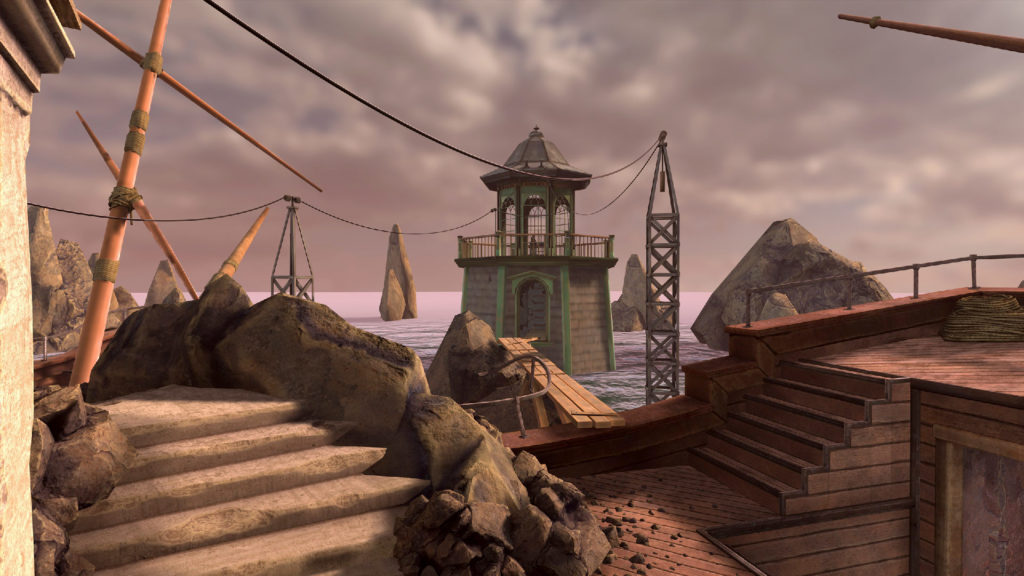
Forget the nostalgia though. Playing the new Myst on Quest feels a bit like teleporting inside a giant mechanical clock that someone’s intentionally broken, and then filled with scraps of paper on how to fix it. You can’t break the clock any worse than it’s already been broken by fiddling with its gears, but you can’t fix it that way either. You need to look everywhere and write down clues. If you’re looking for a new challenge, the new Myst also lets you randomize puzzle solutions.
However fastidious, there’s still something to Myst, and even more so now that it’s in VR. In an age of constant voice overs and omnipresent ‘helpful’ NPCs telling you where to go next, I found the old school approach to game design to be surprisingly refreshing on some level, and actually more immersive at points. I was alone—truly alone—and if I wanted to get off this damn island, I would have to dig deep and do something I normally hate to do in games: read and pay close attention.
Immersion
One of the biggest things you’ll notice is how the world has been rebuilt for real-time gameplay. You can physically pick up books, pull levers, and slide open doors. Object interaction is really very basic though; your hand disappears when you grip an object, becoming an orange orb that only returns to its grey plastic mitt when you’ve released something. Physical objects also magically snap back to their anchored location when you let go of them, which is understandable, if not a bit immersion-breaking when you just want to switch a book or note between hands.
Comfort
Myst features both variable snap-turn and smooth turning. You can also toggle smooth forward locomotion and teleportation on the fly, which can be helpful when ascending winding staircases, which normally make me queasy. There aren’t any vomit-inducing rides to worry about either, so Myst can be a very comfortable experience.
Thankfully, Myst can be played either seated or standing, as it includes and both an auto height detection feature and manual adjustment to keep you where you need to be.
Gameplay: 6 | Immersion: 6 | Comfort: 7
See the full review here: https://www.roadtovr.com/myst-vr-quest-review/