Cai Guo-Qiang’s VR fireworks bring together advanced technology and traditional craft
And what makes Sleepwalking in the Forbidden City truly unique is the way it was created. We might mistakenly assume that Cai relied on 3D animation software, which these days can create images that are virtually indistinguishable from reality. In fact he wanted to avoid the kind of computer-generated effects associated with Hollywood movies, believing that they lacked in ‘warmth’ and ‘animalistic energy’. So he commissioned the artwork’s components in real life and went about filming them, bringing an analogue dimension to what is often a purely digital medium.
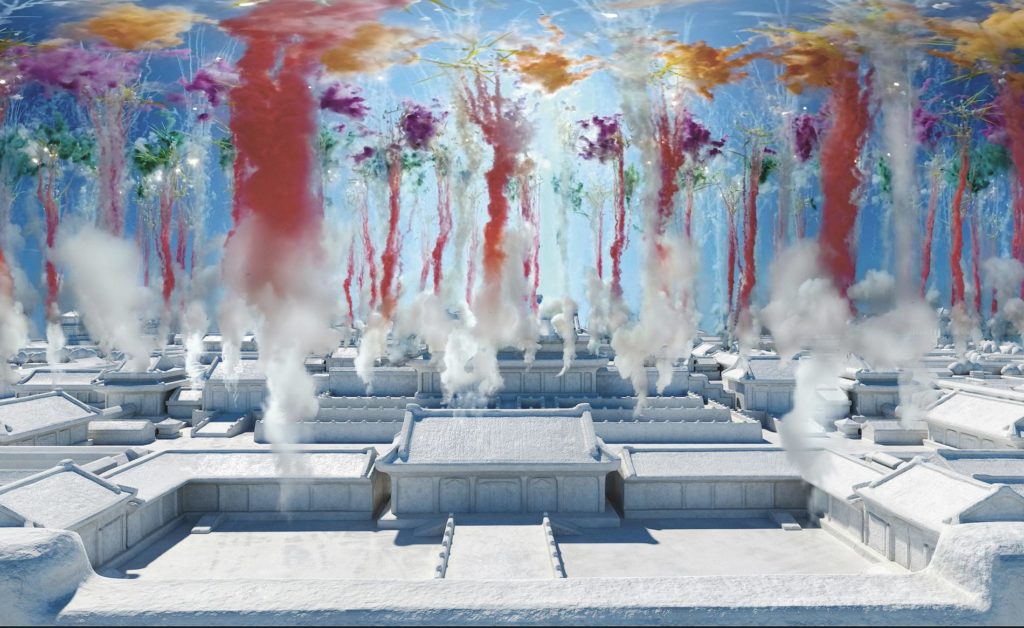
Craftsmen from his hometown of Quanzhou, where Cai had launched his career-defining Sky Ladder five years ago, spent five months painstakingly creating a model of the Forbidden City in alabaster. What we see through our VR headsets is in fact an intricate 3D scan of the model, with its handcrafted textures, rather than a mere rendering. (The model has been included in the Palace Museum exhibition to clue viewers into the physicality of the production process). ‘I believe that for certain works, I shouldn’t use the cleverest way [of making],’ explains Cai.
See the full story https://www.wallpaper.com/art/cai-guo-qiang-virtual-reality-fireworks-forbidden-city