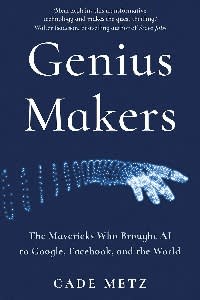
Genius Makers, by Cade Metz — the tribal war in AI
On one side, the “connectionist” tribe believes that computers can learn behaviour in the same way as humans do, by processing a vast array of interconnected calculations. On the other, the “symbolists” argue that machines can only follow discrete rules. The machine’s instructions are contained in specific symbols, such as digits and letters.
After an initial burst of enthusiasm for connectionist thinking among AI pioneers, the symbolist tribe came to dominate as researchers realised that human and machine intelligence are very different attributes. But over the past decade the maverick connectionists have had their revenge, making many of the most striking advances in AI, such as speech and image recognition systems, conversational chatbots, semi-autonomous cars and the AlphaGo program that famously beat the world’s strongest champion in the fiendishly complex game of Go in 2016.
This intellectual counter-revolution that is now rapidly transforming the world is the subject of technology writer Cade Metz’s colourful and readable book, Genius Makers.
Genius Makers is a good read, as far as it goes, but the reader is left with the wish that Metz had displayed deeper learning.
See the full story here: https://www.ft.com/content/52163178-0e12-4de8-9fb3-adc223c12dcd