The Future of Work is Not Corporate — It’s DAOs and Crypto Networks
... Increasingly, traditional corporations have “orbital stakeholders,” or participants that blur the line between internal and external members of the organization. ...
The model of a company having strict boundaries between internal and external may have made sense in the Industrial Age, but in the Information Age, this model leads to misaligned incentives and unsustainable extraction. ...
Crypto networks create better alignment between participants, and DAOs will be the coordination layer for this new world. ...
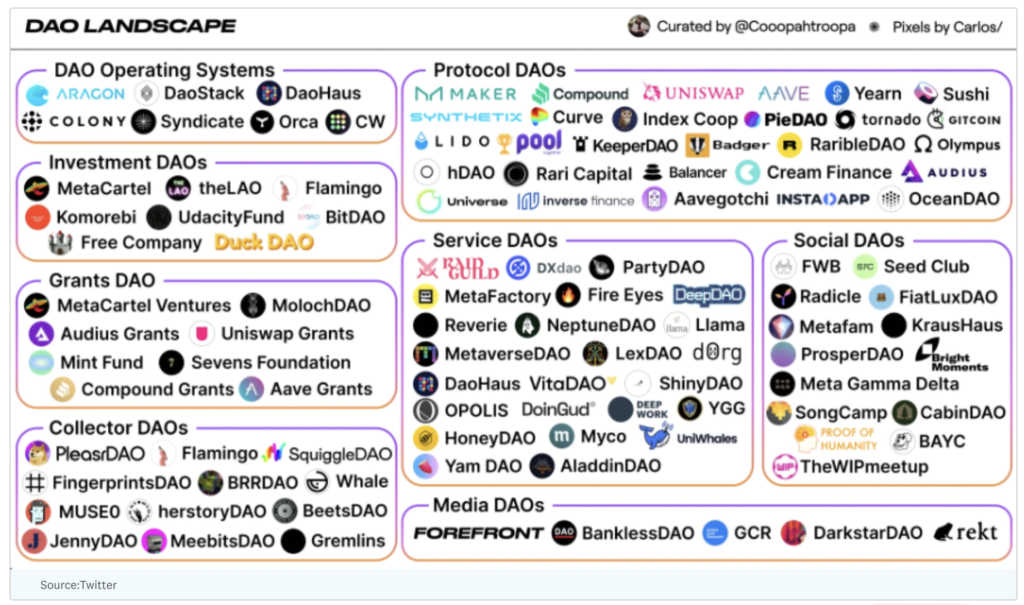
A DAO is an internet-native organization with core functions that are automated by smart contracts, and with people who do the things that automation cannot (e.g., marketing, software development). In practice, not all DAOs are decentralized or autonomous, so it is best to think of DAOs as internet-based organizations that are collectively owned and controlled by its members. ...
The structure of a DAO is inherently open and accountable, a forcing function to share value with the participants who create it. Otherwise, other DAOs will out-compete them or their participants will leave for other opportunities. ...
In fact, the best DAOs have been the ones that have rewarded their participants, serving as the basis of the Ownership Economy. This emergent positive-sum dynamic is the foundation of the x-to-earn trend that will shape the future of work. ...
The openness of these crypto economies will allow people to participate in several DAOs and crypto-networks, mixing and matching different income streams and ownership returns (remember, the best DAOs are distributing ownership to their participants through their own native token). ...
In this new future of work, jobs will be more transient and dynamic — switching costs between jobs will be lower, opportunities will be more visible, work will be reduced down into more atomic units, and the entire world will be unified under a single workforce with access to all opportunities. ...
Learn-to-earn
Learn-to-earn is a new education model in which instead of paying to learn, a person is actually compensated for demonstrating that they have learned something. This is possible when the skill, knowledge, or information that a person learns adds value to a network, and that network is therefore willing to subsidize the learning. ...
On-chain reputation systems will capture our actions that occur on blockchains: our contributions to DAOs, our governance voting history, our token holdings, and more. Ultimately, reputation systems will use these on-chain actions to make predictions about how we will act in the future to make determinations about who is trustworthy, credible, and aligned. On-chain reputations will replace the way companies currently use credentials, resumes, and interview processes. ...
... for these reputation systems to become viable, we will need much stronger decentralized identifier solutions (e.g., Ceramic / IDX) and identity management. ...
Disconnectedness
On one hand, DAOs allow people to choose how they work and associate with communities where they are value-aligned. On the other hand, by reducing much of work into atomic units and purely financial incentives for actions, we risk reducing people’s meaning to purely financial rewards. We risk turning work into discrete, meaningless tasks, where labor is reduced down to a commodity service. ...
See the full article here: https://future.a16z.com/the-future-of-work-daos-crypto-networks/