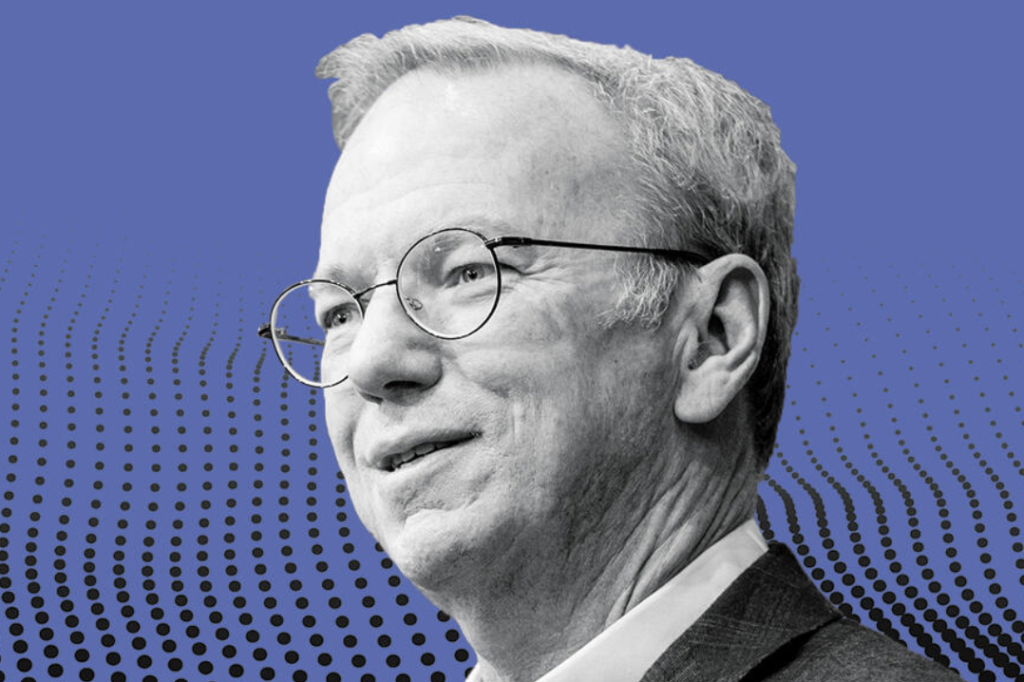
Former Google CEO Eric Schmidt on the challenges of regulating AI
... And the White House just released a blueprint for an AI Bill of Rights to “protect the American public in the age of artificial intelligence.” ...
Schmidt talked about the core challenge of defining what our society wants to gain from AI, and called for a balance between regulating AI and investing in innovation. ...
Schmidt said a naive utopianism often accompanies technological innovation. “This ... goes back to the way tech works: A bunch of people have similar backgrounds, build tools that make sense to them without understanding that these tools will be used for other people in other ways,” he said.
We should learn from these mistakes, Schmidt said. ...
“Academics wrote all sorts of stuff about bias because that's the thing that they could frame. But that's not the real issue. The real issue is that when you start to manipulate the information space, you manipulate human behavior.” ...
Starting a productive discussion on regulation
One of the core challenges right now, according to Schmidt, is that we don’t have a clear definition of what we, as a society, want from AI. What role should it fill? What applications are appropriate? “If you can’t define what you want, it’s very hard to say how you’d regulate it,” he said. ...
“Let’s assume that we got such a list — which we don't have right now ... How are you going to get the CEOs of the companies who are, independent of what they say, driven by revenue ... to agree on anything?” Schmidt asked. ...
Government should do more than regulate
The role of government is not simply to regulate AI, Schmidt said. It must simultaneously promote the technology. Alongside a regulatory plan, Schmidt suggested every country should have a “how-do-we-win-AI” plan.
The particular case of social media
“I’ve been a CEO for more than 20 years. CEOs care a lot about revenue,” Schmidt said. “And the revenue comes from engagement. Engagement comes from outrage.”
To rein in this problem, Schmidt offered a suggestion rooted in his preferences for free speech: People should be permitted to say what they want, but algorithms should be more discerning in what they boost. ... “Everyone gets their opinion, but not everyone gets a megaphone,” he said. ...
Schmidt noted that TikTok found itself facing a problem of toxic content polluting its video streams and detracting from the platform’s entertainment value. In response, the company developed an AI algorithm that finds and mutes toxic content. He suggested every social media company will need to do this going forward.
“And then once these things are in place, they have to become either an industry standard or a regulated standard,” Schmidt said. The stakes extend beyond entertainment and revenue. “If we don’t solve this problem, we’re going to lose our democracies,” he said. ...
See the full story here: https://mitsloan.mit.edu/ideas-made-to-matter/former-google-ceo-eric-schmidt-challenges-regulating-ai