13Feb/14Off
What I Learned by Flipping the MOOC
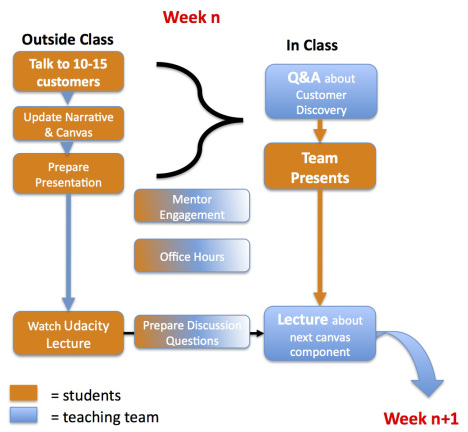 [Philip Lelyveld comment; Flipping = having the students watch the lectures at home and using the classroom for exercises and presentations. MOOC = massively open online course. He learned that he needed sign-ins and metrics to track student behavior at home and in the classroom. Without them, the students didn't do the work.]
We decided we needed to fix these issues, one at a time.
- In subsequent classes we reduced class size from ten teams to eight. This freed up time to get lecture and teaching time back in the classroom.
- We manually took attendance of who watched our MOOC (later this year this will be an automated part of the LaunchPad Central software we use to manage the classes.)
- To get the teaching team front and center, I required students to submit questions about material covered in the MOOC lecture they watched the previous evening. I selected the best questions and used them to open the class with a discussion. I cold-called on students to ensure they all had understood the material.
- We developed advanced lectures which combined a summary of the MOOC material with new material such as lectures focused on domain specific perspectives. For example, in our UCSF Life Sciences class the four VC’s who taught the class with me developed advanced business model lectures for therapeutics, diagnostics, medical devices and digital health. (These advanced lectures are now on-line and available to everyone who teaches the class.)
See the full story here: http://steveblank.com/2014/02/11/what-i-learned-by-flipping-the-mooc/?curator=MediaREDEF