7Jun/14Off
Microsoft’s “3-D Audio” Gives Virtual Objects a Voice
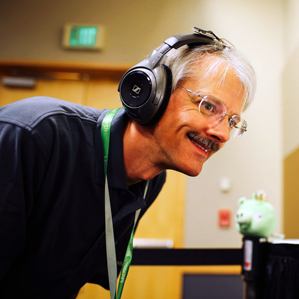 [Philip Lelyveld comment: this combines two old (40 years?) technologies to create a new experience.]
Tashev says he is now working to improve the capture system and make it smooth and speedy enough to be something a person with a Kinect camera might be able to do at home.
Mark Billinghurst, a professor and leader of the Human Interface Lab at the University of Canterbury, New Zealand, says that the approach developed by Microsoft could have a broad impact if the scanning process can be made practical enough. And being able to deploy 3-D audio tricks on voices, notifications, and sounds in games on smartphone headsets or devices like Google Glass could make them easier to interact with, he says.