What Matters Now: Digital Kids
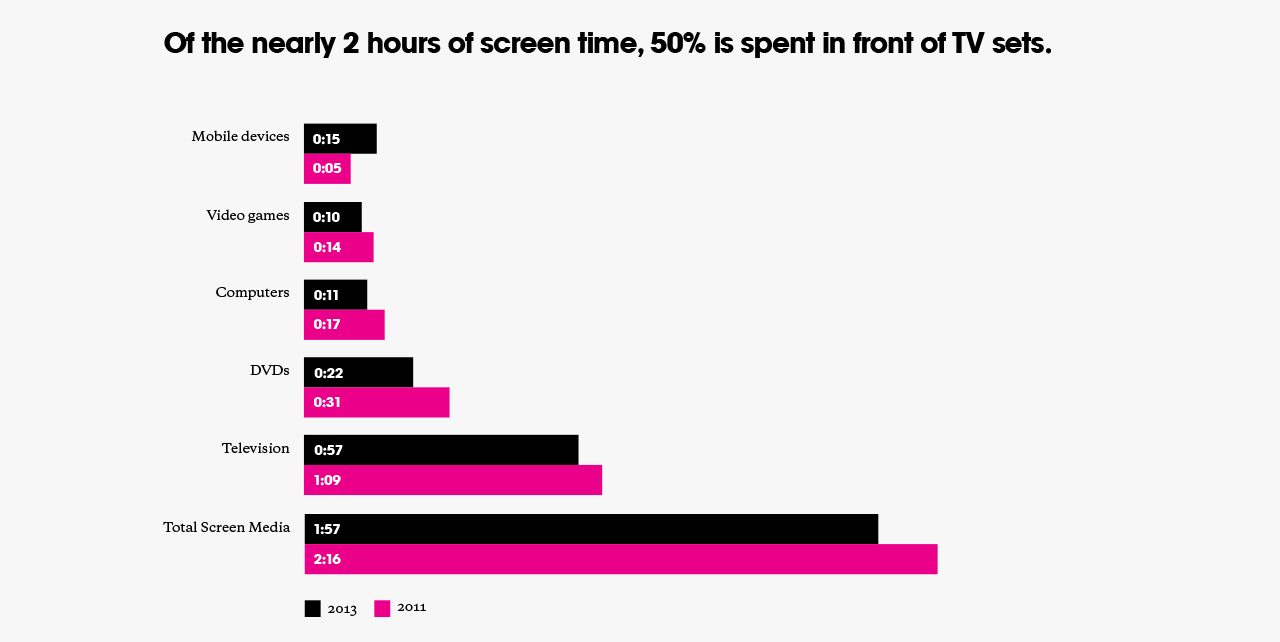 While a great deal of attention has been lavished on the habits and behaviors of Millennials (born in the 1980s and 1990s), another generation of digital natives is coming of age. To better understand the motivations, perceptions and browsing habits of these “digital kids,” Huge conducted multiple focus groups with an ethnically and economically diverse group of ten-year-olds to hear in their own words what excites them and how they discover new content.
As children spend more and more time with mobile screens (both phones and tablets), they are becoming increasingly sophisticated at navigating these interfaces. At the same time, the influence of offline media on their desires and discovery behavior remains pervasive, even if total time spent with these media is declining. Huge also observed childrens’ online behavior. We discovered that this cohort is far savvier online than most marketers give them credit for.
...
Kids are functional and task-oriented browsers. The vast majority of their visual interactive experiences, on sites like Cool Math 4 Kids, would make most designers shudder. Bright colors, cluttered interfaces, and non-intuitive navigation are endemic to these experiences but are not necessarily seen as an impediment to use. Rather than drive kids away, they appear to act as beacons, alerting children that these are experiences meant for them, rather than for adults.
...
While children enjoy engaging in “play” through the use of customization features, as seen in experiences such as Nike iD, the influence of their peers and siblings is pervasive in determining what’s “cool.” Repeatedly, participants noted that something is cool “if a lot of people have it.” This dependence on friends to help delineate what makes something cool seems at odds with the desire to customize items. In fact, children are not that different in that aspiration than teenagers or adults, who want simultaneously to fit in with their friends and co-workers and also to express their individual taste. This tension, born from the countercultural ethos of the 1960s, sought authenticity and rejected conformity while at the same time was co-opted by mainstream popular culture and marketing. It is still relevant today.
...
When we asked participants how they find out about new content or products they want, most cited a TV commercial. Despite the increase in time spent with mobile devices such as phones and tablets (within these focus groups, every child had access to a tablet and preferred to use it to surf online, regardless of family income), the influence of TV is still pervasive. Seeing an ad for something on TV is still a powerful way to fan the flames of desire for children. Additionally, offline channels such as magazines and catalogues (the children have a hard time distinguishing the difference between the two) are also potent motivators for choosing the products they covet.
See the full story here: http://www.hugeinc.com/ideas/report/digital-kids?curator=MediaREDEF