Adding Greater Realism to Virtual Worlds
A startup is borrowing techniques used in high-frequency trading to make virtual worlds more realistic.
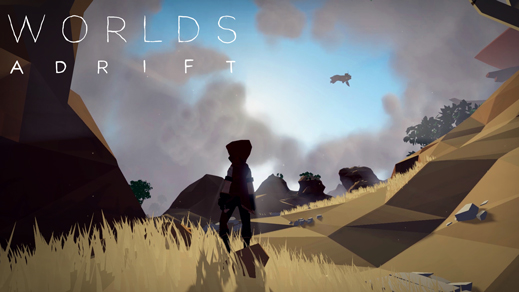 What new possibilities might open up in video game design—and beyond—when an unlimited number of people can inhabit a truly realistic virtual world simultaneously? Improbable has developed techniques that make it possible to share large amounts of information between multiple servers nearly instantaneously.
Virtual worlds will no longer feel as if they’re built of “cardboard,” says Improbable’s CEO and cofounder, Herman Narula. Moreover, using Improbable’s technology, objects and entities will be able to remain in the virtual world persistently, even when there are no human players around (currently, most virtual worlds essentially freeze when unoccupied). And actions taken in one corner of a game could have implications later or in another place.+
Large-scale online games are usually built using several “shards”—identical instances of the world that no more than about 10,000 people inhabit at any one time before the computational complexity becomes too great. Theoretically, with Improbable’s technology an unlimited number of players will be able to occupy the same world, and “everyone will see the same things happening on screen at the same precise moment,” he says.+
The technology could also be used to create real-world simulations that reveal, for instance, the effect that closing a major railway station would have during a disease epidemic, or how a radical change in a government’s housing policy might affect a country’s infrastructure.+