Here’s Some Of The Futuristic Technology Being Developed By The Geniuses At MIT
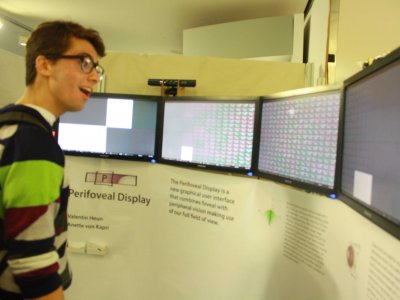 If you want to know what life will be like in 10 years, just take a look inside the MIT Media Lab.
We recently took a quick tour of the MIT Media Lab, where students are working on anything from robotics to programs that let you interact virtually with the real world. The slew of projects on display are guaranteed to get anyone thinking about the future.
MIT Media Lab has more than 20 different groups working on computing, speech technologies, tangible media, fluid interfaces, and much more.
See the full story with examples and pictures here: http://www.businessinsider.com/mit-media-lab-futuristic-projects-2013-3?op=1
Passive 3D TV catching up with active 3D technology
 See the full story here: http://www.3dfocus.co.uk/3d-news-2/3d-television/passive-3d-tv-catching-up-with-active-3d-technology/12684
How Gabon Is Using Technology To Boost Tourism
[Philip Lelyveld comment: there is a link to the videos. The language in the article is colorful in its own right.]
Discover Gabon’s 13 National Parks through an amazing Virtual Tour Parks in a 3D interactive multimedia work produced for your enjoyment only by professionals. It is a very unique digital trip that will certainly move and inspire you to stand up, go out there and experience these amazing views live.
See the full story here: http://www.ventures-africa.com/2013/03/how-gabon-is-using-technology-to-boost-tourism/
Apple patents wrap around 3D iPhone display
 [Philip Lelyveld comment: The patent, linked here, is far reaching, and includes claims on having the content only visible to the viewer, using facial recognition to know where the viewer is, and on having a screen that can be rolled and unrolled.]
The patent, numbered 20130076612 , is entitled “Electronic device with wrap around display.” It was filed on 26 September 2011 and was published on 28 March of this year.
A full wrap around display with 3D and no buttons would be a major departure from existing models, and as such it may not be an appealing idea for some customers.
Read the full story here: http://vr-zone.com/articles/apple-patents-wrap-around-3d-iphone-display/19425.html
BIG DATA PIONEER EXCITED ABOUT REINVENTING HUMAN SOCIETY
Alex ‘Sandy’ Pentland is one of the world’s most-cited computer scientists and was also named one of the world’s seven most powerful data scientists by Forbes. As a pioneer in Big Data, he discusses his distinctive view of the field, revealing his belief in the power of Big Data to inform about people’s behavior rather than just about their beliefs. Pentland is also interested in how that concept relates to business.
According to Pentland, Big Data is about consumer behavior, along with employee behavior, and how it all relates to individual businesses.
 “It’s not about the things you post on Facebook, and it’s not about your searches on Google, which is what most people think about, and it’s not data from internal company processes and RFIDs. This sort of Big Data comes from things like location data off of your cell phone or credit card, it’s the little data breadcrumbs that you leave behind you as you move around in the world,”...
Because it is so important to understand these connections Asu Ozdaglar and I have recently created the MIT Center for Connection Science and Engineering, which spans all of the different MIT departments and schools. It's one of the very first MIT-wide Centers, because people from all sorts of specialties are coming to understand that it is the connections between people that is actually the core problem in making transportation systems work well, in making energy grids work efficiently, and in making financial systems stable. Markets are not just about rules or algorithms; they're about people and algorithms together. ...
Another important issue with Big Data is that since this data is mostly about people, there are enormous issues about privacy, data ownership, and data control. You can imagine using Big Data to make a world that is incredibly invasive, incredibly 'Big Brother'… George Orwell was not nearly creative enough when he wrote 1984.
For the last several years I've been helping to run sessions at the World Economic Forum around sourcing personal data and ownership of the data, and that's ended pretty successfully with what I call the New Deal on Data. The Chairman of the Federal Trade Commission, who's been part of the group, put forward the U.S. "Consumer Data Bill of Rights," and in the EU, the Justice Commissioner declared a version of this New Deal to be a basic human right. ...
See the full story here: http://www.edge.org/conversation/reinventing-society-in-the-wake-of-big-data
Amazon expands X-Ray feature to TV shows
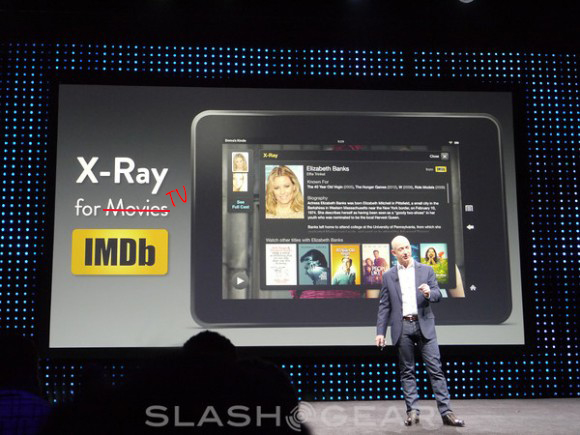 X-Ray is an Amazon feature that is also available on Kindle ereaders, and the feature first launched for books, allowing readers to gather more information about the story’s characters and even more information on the author. Now that X-Ray is available for TV shows, viewers can tap on an episode to learn more about the show, including characters, actors/actresses, and quick facts.
See the full story here: http://www.slashgear.com/amazon-expands-x-ray-feature-to-tv-shows-27275482/
Technology That Serves to Enhance, Not Distract Art Appreciation
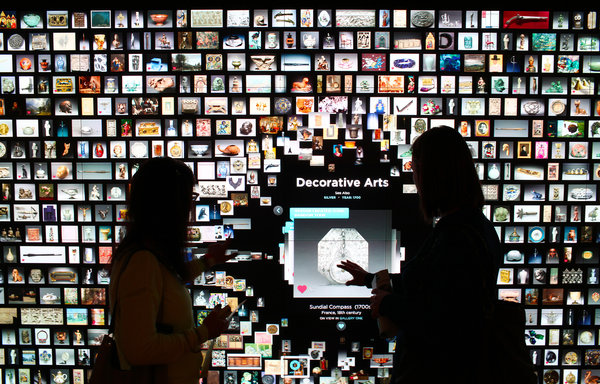 Mr. Franklin is standing in front of a 40-foot-wide touch screen that displays greeting-card-size images of all 3,000 objects on display in the museum. When a visitor touches an image, the screen enlarges it, arranges itself near similarly themed objects, and offers information like the location of the actual piece. And by touching a “heart” icon in the corner of the image, the visitor can transfer it from the wall to an iPad (one brought from home or rented at the museum for $5 a day), creating a personal list of favorites.
From the list of favorites, the user can devise a personalized tour, which can be shared with other users.
See the full story here; http://www.nytimes.com/2013/03/21/arts/artsspecial/at-cleveland-museum-of-art-the-ipad-enhances.html?_r=0
Oculus Rift Shakes Up Gaming With Virtual-Reality Headset
The CEO said the Oculus headset represents the first time gamers can be fully immersed in a 360-degree videogame environment. He expects play time will increase gradually over time: “We’ll see when it gets to getting lost in the Holodeck.”
SoCal-based Oculus, which was created by Palmer Luckey, first launched back in August as a Kickstarter project. Oculus’ initial goal was to raise $250,000. It raised $2.4 million instead.
 As explained when we first saw the Oculus Rift at CES, the Rift isn’t a computing device itself, and the games aren’t streaming inside the headset, so it needs to be attached to a computer to work.
Unlike past attempts at virtual reality (like, most notoriously, Nintendo’s Virtual Boy), the Oculus Rift works because “the hardware’s finally ready,” Iribe said.
See the full story here: http://allthingsd.com/20130212/oculus-rift-shakes-up-gaming-with-virtual-reality-headset/