3D Storytelling conference sets speakers including Sky’s John Cassy, director Julian Napier, Vision 3’s Chris Parks
Programme details have been confirmed for the 3D Storytelling conference at London’s Ravensbourne on March 22 and 23.
Thursday’s talks will include John Cassy of Sky 3D [pictured] on the UK as a world leader in 3D television; Anthony Geffen on making The Kingdom of Plants; Deluxe Digital’s Jonathan Gardner on 3D digital cinema distribution; Steve Smith of Sky 3D on live sports in 3D; Onsight’s Richard Mills and John Myers on post production challenges; Matthew Bristowe of Prime Focus on 2D to 3D conversion and Sony’s Mick Hocking on 3D in gaming.
Friday sessions include producer Rachel Joseph onStrictly Come Dancing 3D; Onsight’s Richard Mills on technological advances; Geoff Boyle on shooting 3D in extreme conditions; Can Communicate’s Duncan Humphreys on 3D production values and creative freedom; director Julian Napier on making Carmen 3Dand Madam Butterfly 3D; Chris Parks of Vision 3 on recent 3D successes and disappointments; Adam Sculthorp from Dimension Media leading a panel about the future of 3D; and results from Filmclub and Ravensbourne’s research into children’s views on 3D. ...
Sponsors include Sony, Onsight, Dimension Media, Digital Greenwich and Real D and partners are Filmclub, Vision 3, Sky 3D, WFTV and SGO. Screen International is the media partner. ...
See the conference website here: http://3dstorytelling.co.uk/
See the full story here
What Lies Beneath the Sea: Shooting in Stereo 3D
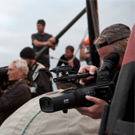 ... So when Cassell attempted to break a world record by swimming underwater from Catalina Island to the California coast -- a dive of 30 miles -- they assembled a support crew and armed them with an array of 2D and S3D video cameras, which included Sony XDCAMs, Sony HXR-NX3D1Us, Panasonic AG-3DA1s, a Panasonic HDC-Z10000 and multiple GoPro 3D Hero rigs. In addition, they used Canon EOS 7D Digital SLRs to shoot both 2D still pictures and HD video. Their documentary, 30-Mile-Dive, is currently in production. ...
Cassell learned that shooting stereo footage underwater requires a different approach than he was used to. “You really need to be aware of distance so that you can get the (stereo) convergence right,” he explains. “Instead of rushing toward things to film them, you need to keep 5-8 feet distant from what you’re shooting -- otherwise the convergence will be off. It’s really exciting to see underwater subjects in 3D. Things swim. They hover. All the debris is floating, so you really are in a 3D environment.”
Another lesson Cassell learned was that all of that floating debris can look like a snowstorm if it’s not lit properly. “S3D requires a little more light. It’s been difficult to figure out how to light things,” he says. “You don’t want too much, because you have a lot of floating particles; with more light, they look like a blizzard. So lights need to be farther away, positioned to the side and a little below where you’d normally place them. It’s been quite a learning experience, but it all makes me feel like a kid again -- something new to play with and learn.” ...
“We had 5 or 6 terabytes of storage on the boat,” says Faires. “We had to be sure to stabilize all of the cards and hard drives so they wouldn’t go flying off the deck when the boat tossed in the waves.”
The PA logged everything, keeping track of what was shot under and above water. ...
To assemble and edit all of that footage, Faires turned to Adobe Premiere Pro CS5.5. “The GoPro, Sony, Panasonic and Canon cameras all shoot HD video, but they save it in different formats. Premiere supports all those formats natively, so I could bring them into my timeline, without having to convert them to another format,” he explains. “Plus, Premiere integrates with GoPro Cineform Studio Premium -- software that allowed me to edit the stereo footage.” ...
Read the full story here:
Immortals Blu-ray 3D Review

The Picture
Captured on digital video, the 1.85:1 Immortals was converted from 2D to 3D in post-production, but for what it's worth, it was designed and shot with the intent of 3D exhibition in mind. The results offer the home viewer a pleasing sense of realistic depth into the TV, albeit with that faint, telltale glow around characters and objects. But so much of this movie was shot against green screen anyway, the eye can forgive it.
The image displays some outstanding sharpness and detail, even in the many long shots, a boon to the work of the great visual stylist Tarsem (The Cell, The Fall). I did however note quite a lot of video noise, and the blacks can definitely become murky, so overall the technical quality was not the home run I'd hoped for.
...
See the full review here:
SXSWi Panel Explores The Future of High Quality Audio, 4K Televisions
"For 15 years we got away from quality audio, and now we're going back to it." Indeed, audio quality has slowly improved over the years as both consumers and digital services sought to improve upon the low quality compressed files of the early iPod days. High-quality downloads are now easier to find - Apple just launched the Mastered for iTunes line of specially mastered tracks - and many subscription services and Internet radio services stream at a higher bit-rate than in the past....
Another coming trend is 4K resolution for televisions. ...
"Innovation requires mentoring and capital," he said. Entrepreneurs could soon get help with the latter. Shapiro was especially excited that the U.S. House of Representatives' JOBS Act passed last week includes a provision that will allow entrepreneurs to receive small amounts of "crowdfunding" capital via social media - but without current regulations that would otherwise limit this strategy. "If the Senate will act… this JOBS Act will make a difference so people can get money."
See the full story here
Chinese TVs To Wage War With LG, Samsung
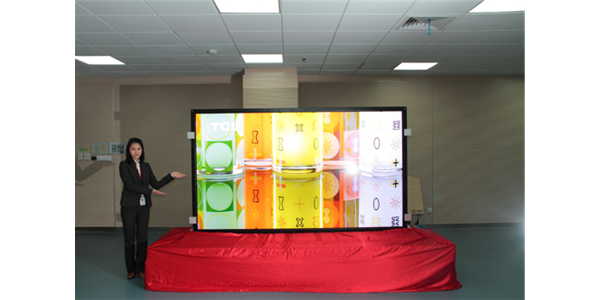
Meet TCL, Haier and Changhong – Chinese home brands all looking to make ructions in the global TV market, threatening the domination by South Korean TV giants LG and Samsung, as well as Japan'sSony and Sharp.
Shenzhen-based TCL (The Creative Life) area already making headway in the Australian market since its launch in 2005 with its Internet ready TV's, 3D display technology and ultra slim bezel sets, unleashed here in January.
The brand is also big news in Philippines, Thailand, South East Asia and hopes to grow its Aus market share from around 3.5-4% currently to around 10% in the future, according to Paul Widdis TCL's General Manager, Australia, who says it is "doing very well", selling in Retrovision, Bing Lee and Good Guys. ...
TCL Corp. is ranked at the No. 1 TV brand in its native China, (Hisense is No.2) believes Research & Development is its core strength and recently developed the world's largest 110" 4K Full HD 3D LCD screen, debuted in Beijing last week. ...
Haier, not yet available in Oz, had its revolutionary 58" Brain Wave TV, a wireless set controlled by your mind, on show at CES, as well as showcasing home ‘cloud living', virtually edgeless cloud TV, and glass-free 3D TV. TCL also debuted 20 LCD models and its breakthrough Cloud Life TV's based on the cloud computing. ...
See the full story here
Demand exceeds talent supply for China’s 3D industry
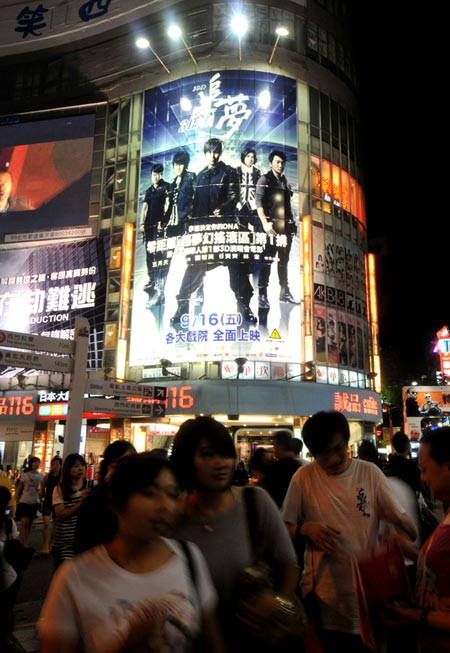 While China's 3D production industry has entered a peak period of development, a bottleneck in the supply of 3D talent has appeared. Lu Junshang, secretary-general of the National 3D Competition and president of 3D Animation told the Chinese-language Digital Weekly that China was experiencing a shortfall of 3D talent of about 10 million, with the manufacturing sector alone requiring 8 million professionals.
Reporters also found that the launch of China's experimental 3D television channel has brought not only opportunities but also numerous challenges for the TV industry, including the lack of video and broadcast equipment, and 3D cameramen and broadcast professionals. ...
China does not lack consumers for 3D products but suffers a shortage of 3D professionals and teams. Ideally, about 7,000 3D educational institutes would have to be set up to balance supply and demand.
However, data shows that there are only 3,000 3D training institutes in China today. In addition, the courses offered by some 3D schools focus on theory and are not suitable for practical applications. ...
See the full story here:
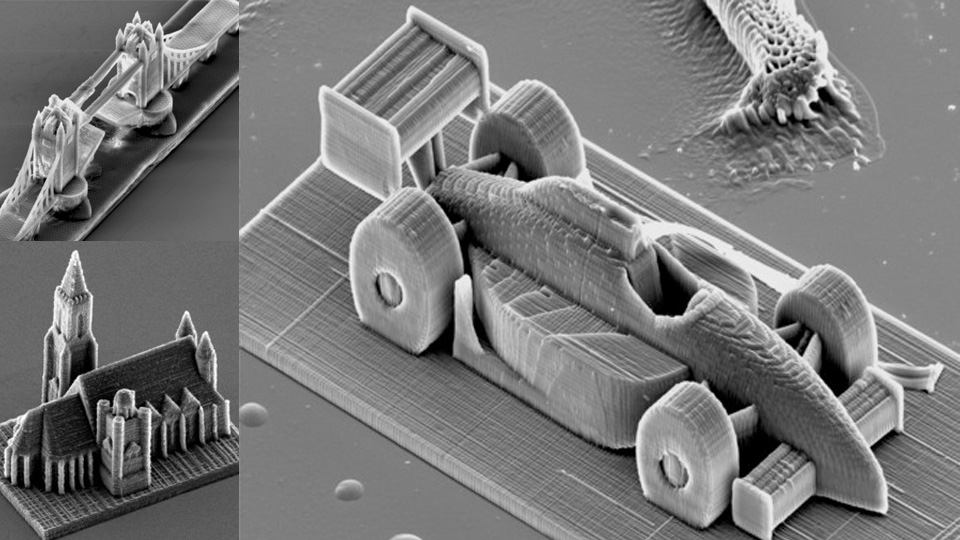
Watch the Fastest 3D Printer In the World Creating the Tiniest 3D F1 Car You Can Imagine
See the original post here:
LG attempts to rebuild ‘credibility’ beginning with £5m ad campaign
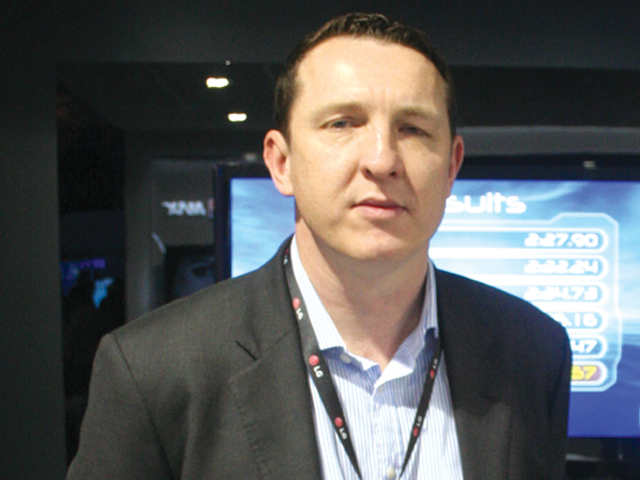
Manufacturer to focus on the low- to mid-end of the market to combat sharp decline in market share over the past two years
LG says it needs to rebuild its commercial credibility in the UK after its market share declined “significantly” over the past two years. The company has seen its market share drop from around 10 per cent two years ago to around five per cent today.
LG Electronics UK consumer marketing director Stephen Gater (pictured) told Mobile News the manufacturer had focused on the high-end handset market despite a lack of consumer confidence in its products.
He also admitted sales of its Optimus 3D handset did not match expectations.
To combat this, Gater said LG is looking to focus more on the low- to mid-end of the market to rebuild its credibility among customers and resellers alike. ...
Read the full story here: