Come for the gimmick, stay for the poignance of Joe Hunting’s We Met in Virtual Reality, a documentary that starts out odd and ends up oddly sweet.
It’s a documentary that may shift your perceptions of the state of virtual reality in 2022, ...
Instead, he follows a small group of users and their evolving avatars through their chosen worlds. Our heroes include a pair of virtual couples — DustBunny & Toaster and DragonHeart & IsYourBoi — determined to extend their commitments into the physical world, as well as pink-haired Jenny, who teaches ASL in the Helping Hands community, intended for deaf or hard of hearing users, or those wishing to learn. ...
It’s all presented as extremely enriching and positive, so much so that even the virtual strip club is darn near sweet. The closest We Met in Virtual Reality comes to exposing whatever dark underbelly VRChat might have is attending a virtual improv comedy show, which definitely felt like a nightmare to me. ...
The term refers to the difficulty of making sure that an A.I. system does what humans want it to do. In traditional software, alignment wasn’t much of an issue, ...
With A.I., alignment is harder. While humans might specify the goal, the software itself now learns how best to achieve it. Often, the logic behind the software’s decision in any particular case is opaque, even to the person who created the software. And this problem becomes more challenging the more capable an A.I. system becomes. ...
OpenAI now says that it has made progress towards solving these alignment problems by creating a new version of GPT, which it calls InstructGPT. InstructGPT starts out a bit like GPT-3 in basic design and training. ...
After its initial training, InstructGPT is then fine-tuned with two additional steps. First, it is supplied with what Leike says were “a few tens of thousands of examples” of text humans wrote in response to the same sort of prompts that OpenAI’s customers use to try to get GPT-3 to do something. The system has to learn to imitate these human-written responses. Next, the system is further honed by asking it to generate two different responses to a prompt and having human reviewers pick the one they think is best. This information is then used to create an internal reward mechanism where InstructGPT itself has to guess which of the responses it has generated is most likely to be preferred by a human, and that becomes its output. ...
Leike tells me that InstructGPT has not completely cracked The Alignment Problem. “It will still sometimes ignore an instruction or say something toxic,” he says. ...
It’s not clear we’re very close to achieving AGI. But it’s good to know that companies like OpenAI are at least thinking hard about The Alignment Problem—and making some progress towards solving it. ...
US-based camera company Snap has added new features which augment the shopping experience for brands and consumers.
The augmented reality (AR) experience has become available. Users will be able to see prices, descriptions and given URLs to purchase. It also gives the ability to ‘try on’ products with new Lens Product Cards.
The company also gives an opportunity for brands to sell more product as well as track trends. The new lenses are ‘catalogue-supported’, meaning it links directly to the item. This gives users the ability to purchase in the app and provides the brands with real time analytics.
Being able to watch analytics live can help the brand to track consumer trends and product engagement. These insights will allow marketers to make informed decisions. Marketers can also leverage Snapchat’s AR try-on as an early indication on which products the users are engaging with.
Karpathy suggested that applicants watch the Tesla AI Day presentation to get an idea of what Tesla is trying to accomplish with AI. Furthermore, in Karpathy’s words about the AI development platform is stated, “There is no other organization that vertically integrates, develops, and deploys cutting-edge robotics AI at this scale. Our goal is to improve the safety and comfort of driving along the way to automating transportation with Full Self-Driving. We are also applying everything we’ve learned to our humanoid robot “Tesla Bot”, which I believe is on track to become the most powerful AI development platform.”
In March of last year, for instance, the famous Royal Shakespeare Company co-produced Dream, an immersive theater experience inspired by Shakespeare’s A Midsummer Night’s Dream that featured actors using motion capture technology. They were transformed into digital avatars, and their performance was streamed to an audience watching on smartphones or computers.
It’s one of several shows, along with “Wallace and Gromit: The Big Fix Up,” “Robots and Dinosaurs/Lost Origin” and “Weavr,” which received funding from a £16 million British government initiative called The Future Demonstrators Programme, dedicated to “funding major projects exploring the future of large-scale immersive experiences.” That itself is part of a larger £39.3 million governmental fund, Audience of the Future, which began before the pandemic, and invested in new immersive technologies such as virtual, augmented and mixed reality from 2018 to 2021. ...
Tony-nominated director Robert O’Hara is bringing the classic “Long Day’s Journey Into Night” to New York City’s Off-Broadway circuit, and he told The New York Times that he struck a deal with Audible to secure the rights. The catch? He’s directing an audio presentation of the production at an undisclosed post-February date this year.
“What’s amazing about this turn to streaming and digital is the democratization of theater, so more people will be able to access it,” actor Ato Blankson-Wood told the Times.
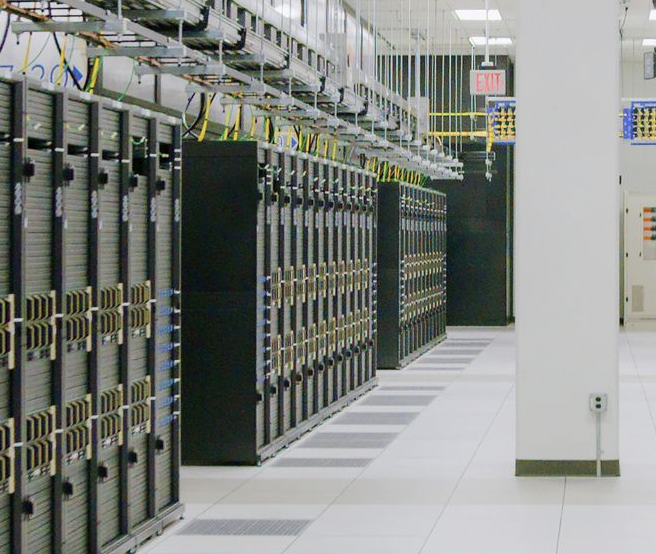
Meta’s supercomputer is being used for research purposes, said Mr. Pesenti, with products not likely arising from it for years. The objective is to ingest troves of data to build AI models that can think like a human brain, with multiple inputs—such as voice and visual recognition—and can deliver contextual understanding of situations. ...
Eventually the supercomputer will help Meta’s researchers build AI models that can work across hundreds of languages, analyze text, images and video together and develop augmented reality tools, the company said. The technology also will help Meta more easily identify harmful content and will aim to help Meta researchers develop artificial-intelligence models that think like the human brain and support rich, multidimensional experiences in the metaverse.
“In the metaverse, it’s one hundred percent of the time, a 3-D multi-sensorial experience, and you need to create artificial-intelligence agents in that environment that are relevant to you,” said Mr. Pesenti.
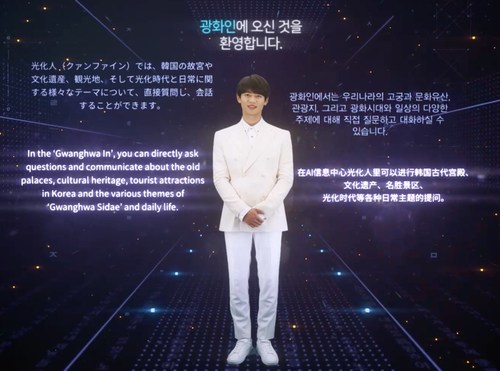
DeepBrain AI applied AI human technology to "Gwanghwa-in", a newly created Gwanghwamun Era project in Gwanghwamun, Seoul, and recreated K-Pop group SHINee's Minho as an "AI guide". This AI version of SHINee Minho is capable of delivering accurate information through AI Human solution that allows real-time conversation. It will provide information on palaces, cultural heritages, tourist attractions and many more including today's weather.
The models use core technologies that combine DeepBrain AI's speech, video synthesis, natural language processing, and voice recognition.
The AI guide serves to provide information on major tourist attractions and cultural heritages in Seoul and travel information such as restaurants and cafes in Gwanghwamun to domestic and foreign tourists who visit the center.
Corning Incorporated (NYSE: GLW) announced today the launch of a new glass composition to advance the development of augmented and mixed reality (AR/MR) diffractive waveguides for wearable devices. ...
Corning Advanced Optics’ new 2.0 high-refractive index glass will enable a wider field of view (FOV) and enhanced optical clarity, including best-in-class light transmission for blue wavelength in AR/MR wearable devices. Compared with glass compositions with lower refractive index values, OEMs can achieve a greater FOV with fewer pieces of glass, allowing for lighter, sleeker, and more cost-effective headset designs. Corning’s 2.0 glass composition, as well as its comprehensive solutions for flatness metrology and precision laser glass cutting, will further enable the AR/MR industry, bringing mass consumer adoption one step closer. Corning’s 2.0 glass is available in wafer diameters of 150 mm, 200 mm, and 300 mm and a range of thicknesses with leading geometric tolerances.
Some of the top poker players today make moves that would have been seen as foolish even 15 years ago. Back then, they would been seen as "fish," or weak players, and invited to games every night. Today, those unorthodox moves are a good sign that the player has adopted strategies from artificial intelligence, which has revolutionized the game, writes Keith Romer in the New York Times Magazine. In fact, "conquered" is the word used in the headline of the in-depth look at the changes. Players now have access to computer programs such as PioSOLVER, which run through the nearly innumerable possible outcomes of a particular hand in a particular game and suggest the strategy—when to bluff or check, how much to raise and when, etc.—that is most likely to pay off over time. The answers are sometimes surprising to traditional players, but the algorithms don't lie.
Players can't use such tools during an in-person tournament, of course—online games are another story—but they can replay hands on the computer afterward to see whether they did the right thing. ...
Piotrek Lopusiewicz, the programmer behind PioSOLVER, counters by arguing that the new generation of A.I. tools is merely a continuation of a longer pattern of technological innovation in poker. Before the advent of solvers, top online players like Polk used software to collect data about their opponents’ past play and analyze it for potential weaknesses. “So now someone brought a bigger firearm to the arms race,” Lopusiewicz says, “and suddenly those guys who weren’t in a position to profit were like: ‘Oh, yeah, but we don’t really mean that arms race. We just want our tools, not the better tools.’”
Besides, for Lopusiewicz, solvers haven’t so much changed poker as revealed its essence. ...