Watchdog finds the Pentagon needs to improve artificial intelligence project management
 The DoD inspector general suggested the Joint Artificial Intelligence Center, established to facilitate the adoption of artificial intelligence tools across the department, take several steps to improve project management, including determining a standard definition of artificial intelligence, improving data sharing and developing a process to accurately track artificial intelligence programs. The JAIC missed a March 2020 deadline to release a governance framework. It still plans to do so, according to the report, but that date is redacted in the report.
“An AI inventory management process for identifying and developing a baseline of AI projects is necessary to maintain awareness of the types and number of AI projects across the DoD,” the inspector general wrote.
JAIC also should promote collaboration on AI projects across the services. It found that the Marine Corps and Army are both working on a project to identify service members who are likely at risk of suicide, but are not collaborating. If the services did collaborate, they may develop a technology that “might be suitable for any Military Service.” Other benefits identified were cost savings and transparency.
See the full story here: https://www.c4isrnet.com/yahoo-syndication/2020/07/01/watchdog-finds-the-pentagon-needs-to-improve-artificial-intelligence-project-management/
Inside Lost Horizon: A Virtual Reality Music Festival
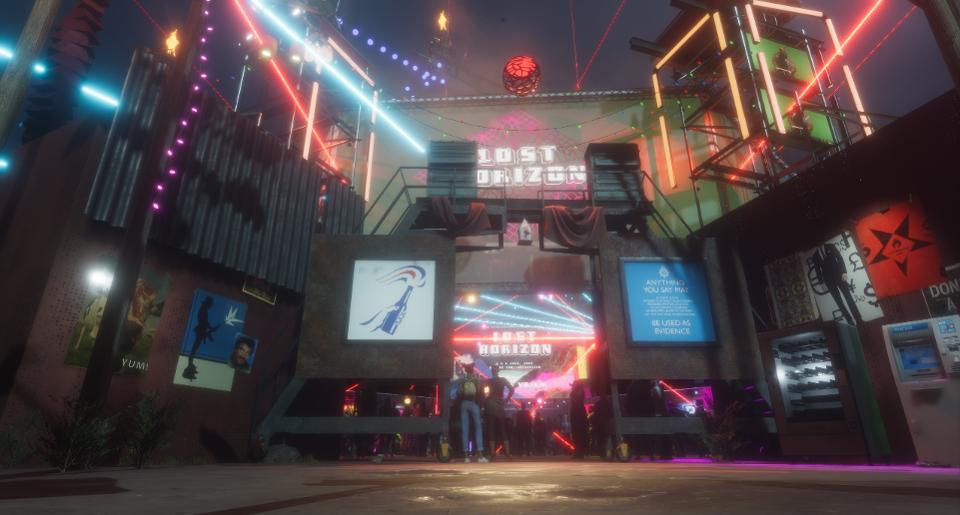 The music festival landscape has changed drastically this year as a result of COVID-19, resulting in many festivals moving into the live stream space. The team behind Glastonbury’s Shangri-La festival has done something different: They have teamed up with VR Jam, Sansar, Orca Sound Project and Beatport to create the world’s largest independent music and arts festival in virtual reality, Lost Horizon.
Lost Horizon, taking place July 3-4, will be fully interactive and feature four stages (Gas Tower, Freedom, Nomad and SHITV), creating an experience similar to in-person events. Attendees will be able to explore the free festival via PC, VR or mobile app, or they can also stream it on Beatport or Twitch.
Lost Horizon, which will be raising money for The Big Issue and Amnesty International, has been designed to look and feel like Glastonbury’s Shangri-La festival while also featuring new areas and artworks since there are no creative limitations inside the virtual reality world, Klean says. Cox adds that this concept of limitless creative opportunities also applies to what DJs can play inside of a virtual reality festival as opposed to a typical event.
See the full story here: https://www.forbes.com/sites/lisakocay/2020/06/30/lost-horizon-virtual-reality-music-festival/#7de120af3900
Sony Plans Software Subscription Future With Image Sensors
 Reuters reports that the sensor software “can be modified or replaced wirelessly without disturbing the camera.” Its uses include being “installed in security cameras where it can single out factory workers not wearing helmets, for instance, or be mounted in vehicles to monitor driver drowsiness.” Users can subscribe to the software via monthly fees or licensing, “much like how gamers buy a PlayStation console and then pay for software or subscribe to online services.”
Fierce Electronics reports that Sony VP of business and technology innovation Mark Hanson stated that, “our thinking was that if we could tackle the things that complicate the process at the edge, we will improve time-to-market for the customer at a lower cost.” Sony’s IMX500 image sensor is a logical extension of its existing image sensors that utilize backside illumination.”
Its AI processing capability came from placing the logic chips on the backside of the sensor “thereby giving the sensor more pixels to improve the light sensitivity.” After a “wide bus structure carries the data from the image sensor to the image signal processor (ISP),” the IMX500 also runs the signals acquired by the pixel chip through an ISP, with AI processing done in the process stage on the logic chip.”
See the full story here: https://www.etcentric.org/sony-plans-software-subscription-future-with-image-sensors/
Creating Family Memories From Across The Globe With The Alcove VR App
Available free on Facebook’s Oculus Go VR headset, AARP Innovation Labs’Alcove is a brand new social platform that allows up to four loved ones to connect in VR for some good old-fashioned family time. Only instead of sitting down in the den, friends and siblings connect via their own virtual home where they can participate in a wide variety of interactive games and experiences perfect for users of all ages.
Upload family photos, both 2D and 360-degree, and sit down for a next-gen slideshow; meet up and explore the Swiss Alps from the comfort of a flying hot air balloon; participate in immersive mediation and a variety of brain-building activities; customize your virtual home with family photos; or kick back and enjoy some compelling AARP TV, articles, and documentaries. You can even upload your own videos and host a virtual screening of your favorite home movies.
Each room of your virtual home features new gateways to explore. By selecting the world map, for instance, you can teleport to exotic locations around the globe, from Tokyo and Rome to Vienna and Prague. Or you can just head to the living room for a game of checkers.
For more information on Alcove and its many use-cases, visit alcovevr.com.

Niantic announces Catan: World Explorers, the fourth augmented reality game from the studio
 ...the studio has now set its sights on the popular board game Catan, in cooperation with Asmodee. This upcoming title is called Catan: World Explorers, and it's billed as a massively-multiplayer augmented reality game that will "transform the entire Earth into one giant game of Catan," which at least sounds somewhat interesting.
Of course, since Niantic hasn't shared any concrete details about Catan: World Explorers, we still don't know when the game will arrive, how it will be monetized, or what the board-game-based gameplay actually looks like. At the very least, Niantic has published an official website for the title where interested parties can sign up for email updates, which also doubles as a way to pre-register for a secured spot at launch, which sounds like the game won't get a world-wide release whenever it finally lands on the Play Store (at least not at first).
All in all, I can't say it's surprising to learn that Niantic is still keen on pushing out more AR games, especially since today's announcement mentions that the studio is currently working on ten new titles.
See the full story here: https://www.androidpolice.com/2020/06/30/catan-world-explorers-augmented-reality-game-android/
An Investor’s Primer on Virtual Reality (VR) and Augmented Reality (AR)
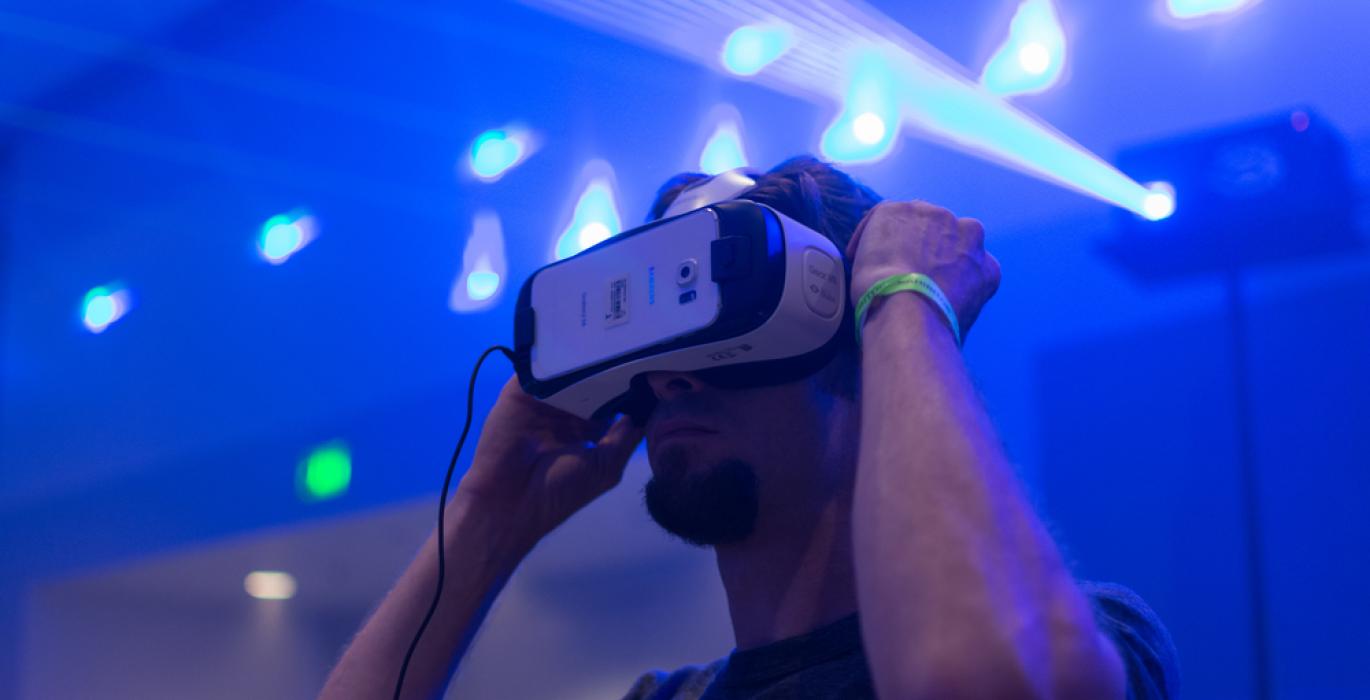 This article lists the highlights & major players - https://www.nasdaq.com/articles/an-investors-primer-on-virtual-reality-vr-and-augmented-reality-ar-2020-06-30
4 WAYS THAT THE ENTERTAINMENT INDUSTRY IS HARNESSING AI FOR GROWTH
 1. Targeted Advertising
When it comes to online shopping, the use of personalized, AI-generated banners is now standard practice, with the global e-commerce giant Alibaba’s Luban algorithm generating hundreds of millions of unique ad banners on its site every single day.
2. Personalized Content
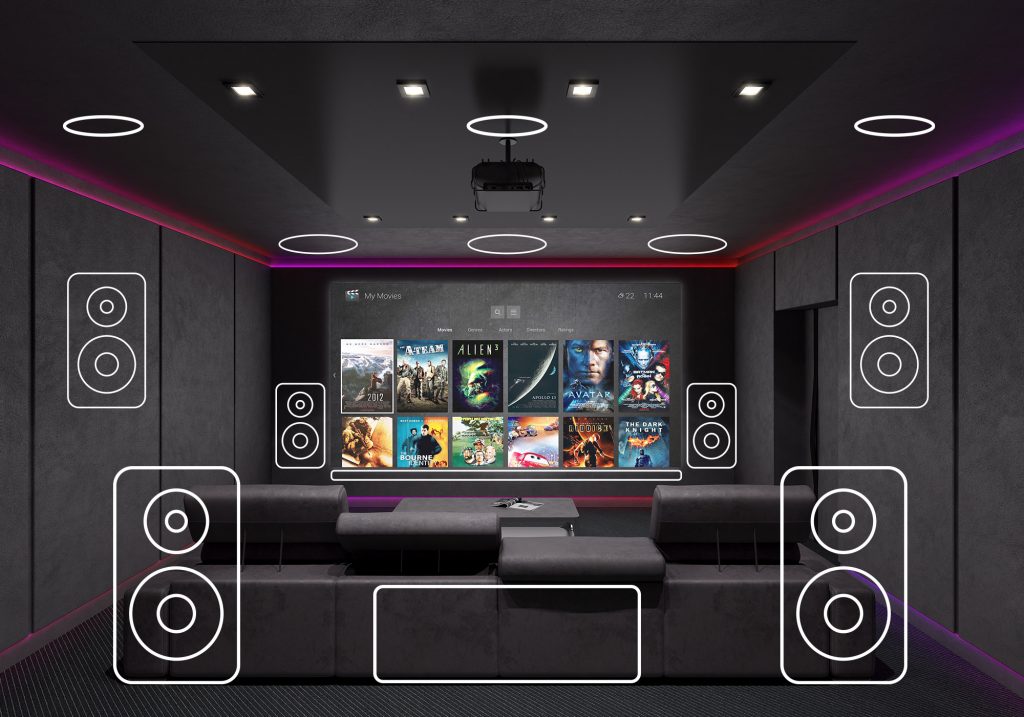
Netflix’s sophisticated Meson algorithm is able to analyze user behavior and sentiment to curate a bespoke selection of media content for each of its millions of account holders, even using different movie posters and trailer clips depending on who is watching.
3. Accessibility
AI is being used to improve content classification and flag potentially problematic or harmful content, often with the use of sentiment recognition to identify anything that might be described as being sensitive.
4. New Frontiers of Entertainment
One of the emerging shifts in entertainment that looks set to completely disrupt the industry is the growing use of VR (virtual reality) and AR (augmented reality), two mediums that rely heavily on AI processes to function and develop.
See the full story here: https://www.analyticsinsight.net/4-ways-that-the-entertainment-industry-is-harnessing-ai-for-growth/
Frank Turner on playing the virtual reality version of Glastonbury’s Shangri-La: “It’s cool as shit!”
 Viewers or punters – however you want to put it – go into this virtual reality version of Shangri-La and can walk around and stop in and see different stuff and one of them will be me, playing away as a hologram. You don’t have to have an actual VR headset to be a part of this either, that’s important to stress, you can just do it on an iPhone.
I went down to a warehouse in Bow to record my set, which was all very carefully socially distanced – and I’ve got to say, it was extremely nice to get out of the house to play some music. It was nice to remember that there are other people out there – my wife and I have been at home just the two of us for a really long time – and so nice to see people doing whatever they can to keep some form of live music going.
I would recommend some warm cans of lager, then put some wet trainers on and shit in a bucket – then you’ll be pretty close to the Glastonbury experience.”
See the full story here: https://www.nme.com/features/frank-turner-on-playing-the-virtual-reality-version-of-glastonburys-shangri-la-its-cool-as-shit-2697289