WHEN THE BEST USER INTERFACE IS NO INTERFACE AT ALL
 For years now, medical literature has warned that “the growing number of prompts may be counterproductive.” Indeed, alarm fatigue is a serious enough issue to rank among the top ten health technology hazards of 2020, according to medical safety firm ECRI Institute.
For these reasons, SwipeSense deliberately avoided alerts in the design of its product — a set of IoT “badges” that gather data on when healthcare workers disinfect their hands, and where nurses are making stops during their rounds, all geared toward driving better, safer habits.
Here’s how it works. The badges clip behind nurses’ ID cards during shifts and communicate with sensors outfitted onto hand sanitation dispensers; the badges can also attach to medical equipment, to help keep track of valuable (and expensive) devices. The data is transmitted in real time across a Bluetooth wavelength to the hospital’s cloud.
Beyond tracking hand-washing habits and assets, there are trickle-up advantages. Hospital operations staff can use the data to plug whatever holes are spotted in nurses’ rounds, thereby shoring up avoidable harm.
Artificial intelligence is also showing early promise in this area, according to a study published last year in the Journal of Medical Internet Research. Experimental results suggested that an AI “reasoning algorithm” developed by researchers — which determines if a collection of alarms should be aggregated before notifying caregivers — is useful in preventing alarm fatigue.
See the full story here: https://builtin.com/design-ux/iot-medtech-alert-fatigue-swipesense
Level 6 Autonomous Driving Concept, & An Appeal To Elon Musk To Make Smart Traffic Lights
 Dumb traffic lights could be a thing of the past, and relatively soon. The technology exists to make it happen. Guess who has this technology? Elon Musk and Tesla.
As a part of the endeavor to create autonomous vehicles, Tesla has created cameras that can recognize all of the items needed to make smart lights a reality. These include: small cars, big vehicles (SUV), buses, vans, semi trucks, pickup trucks, motorcycles, pedestrians, bike lanes, bicycles, dogs, road cones, solid lines, dashed lines, double lines, stop markings on the road, arrows on the road, trashcans, railroad crossings, lane poles, parking spaces, and parking signs.
While there are more parts of the puzzle needed, the large portion of the work has been completed. Many large intersections where this technology would be utilized already have traffic cameras installed that have fine enough vision to capture license plate characters.
See the full story here: https://cleantechnica.com/2020/02/03/level-6-autonomous-driving-smart-traffic-lights/
Israel’s Rafael reshapes urban-warfare with AI, augmented reality
 The Germany military is studying Israeli digital combat technology ahead of a potential contract. Even the United States, which enjoys modern digital equipment, has shown interest in Fire Weaver as a system that is well-suited to American battle doctrines.
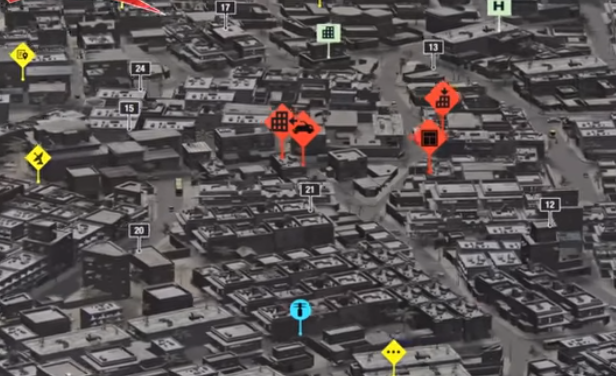
In December, a German company named Atos was selected by a German federal office, which reports to Germany’s Federal Ministry of Defense, to study the creation of a "glass battlefield to support dynamic operations." Atos was tasked with demonstrating how drones could be used together with ground vehicles and soldiers to create a real-time, three-dimensional picture – "glass battlefield" – for managing combat operations.
To carry out its study, Atos joined forces with Rafael. The Israeli company is delivering two key components for the study. .... the first component is "Fire Weaver," an advanced, augmented-reality system that connects all friendly forces to a single battlefield picture and makes sure that all of them are looking at the exact same targets. ... The second component offered by Rafael for the study is a radio system called BNET, which can be used by soldiers, vehicles or drones, connecting them all together.
See the full story here: https://www.israelhayom.com/2020/02/02/israels-rafael-revolutionizes-urban-warfare-with-ai-augmented-reality/
AmazeVR launches LBE at Incheon International Airport
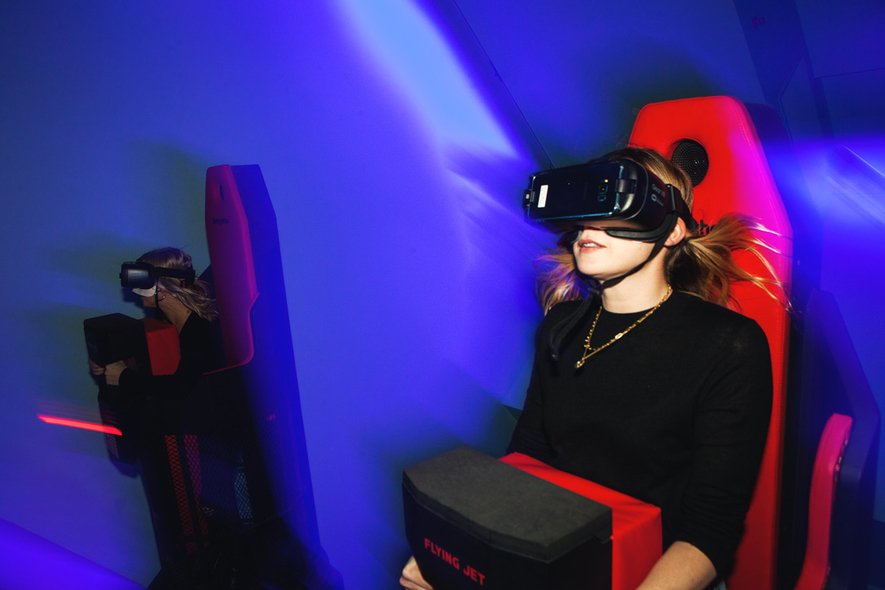
 AmazeVR, a premium virtual reality (VR) entertainment platform, has launched its first location-based VR experience with an installation at Incheon International Airport in Seoul, South Korea. The company hopes to expand its immersive LBE offering.

AmazeVR has now obtained an additional $2.5 million commitment to expand its total funding to approximately $9 million (via TechCrunch).
The company’s entertainment hub is located at Incheon’s airtrain station, on the way to Terminal 1. The attraction has 11,000 square feet of space and features meditation areas and relaxation-focused VR videos.
Leading the way in airport attractions is Jewel Changi Airport, an entertainment destination with shops, restaurants, play attractions, accommodation, and the world’s biggest waterfall.
At Vienna International Airport, Christie’s laser projectors are providing a panoramic cockpit view at a multimedia visitor experience, while Emaar is developing a business and tourism complex in the aero-economic area of Beijing Daxing International Airport.
See the full story here: https://blooloop.com/news/amazevr-incheon-airport/?fbclid=IwAR1dh0LnP_frf6RZ_LfhkhAjd3WDcT2Z0LLrhqK-k7X2U19VS6euzQpSAqM
Artificial Intelligence Will Do What We Ask. That’s a Problem.
 The danger of having artificially intelligent machines do our bidding is that we might not be careful enough about what we wish for. The lines of code that animate these machines will inevitably lack nuance, forget to spell out caveats, and end up giving AI systems goals and incentives that don’t align with our true preferences.
As a result, research suggests, YouTube’s algorithm has been helping to polarize and radicalize people and spread misinformation, just to keep us watching.
YouTube’s engineers probably didn’t intend to radicalize humanity. But coders can’t possibly think of everything.
A major aspect of the problem is that humans often don’t know what goals to give our AI systems, because we don’t know what we really want.
Asking a machine to optimize a “reward function” — a meticulous description of some combination of goals — will inevitably lead to misaligned AI, Russell argues, because it’s impossible to include and correctly weight all goals, subgoals, exceptions and caveats in the reward function, or even know what the right ones are. Giving goals to free-roaming, “autonomous” robots will be increasingly risky as they become more intelligent, because the robots will be ruthless in pursuit of their reward function and will try to stop us from switching them off.
Instead of machines pursuing goals of their own, the new thinking goes, they should seek to satisfy human preferences; their only goal should be to learn more about what our preferences are.
- The machine’s only objective is to maximize the realization of human preferences.
- The machine is initially uncertain about what those preferences are.
- The ultimate source of information about human preferences is human behavior.
The approach pins the success of robots on their ability to understand what humans really, truly prefer — something that the species has been trying to figure out for some time.
There was just one question: “If the obligation of machines is to try to optimize that aggregate quality of human experience, how on earth would they know what that was?”
Russell theorized that our decision-making is hierarchical — we crudely approximate rationality by pursuing vague long-term goals via medium-term goals while giving the most attention to our immediate circumstances.
“It turns out that uncertainty about the objective is essential for ensuring that we can switch the machine off,” Russell wrote in Human Compatible, “even when it’s more intelligent than us.”
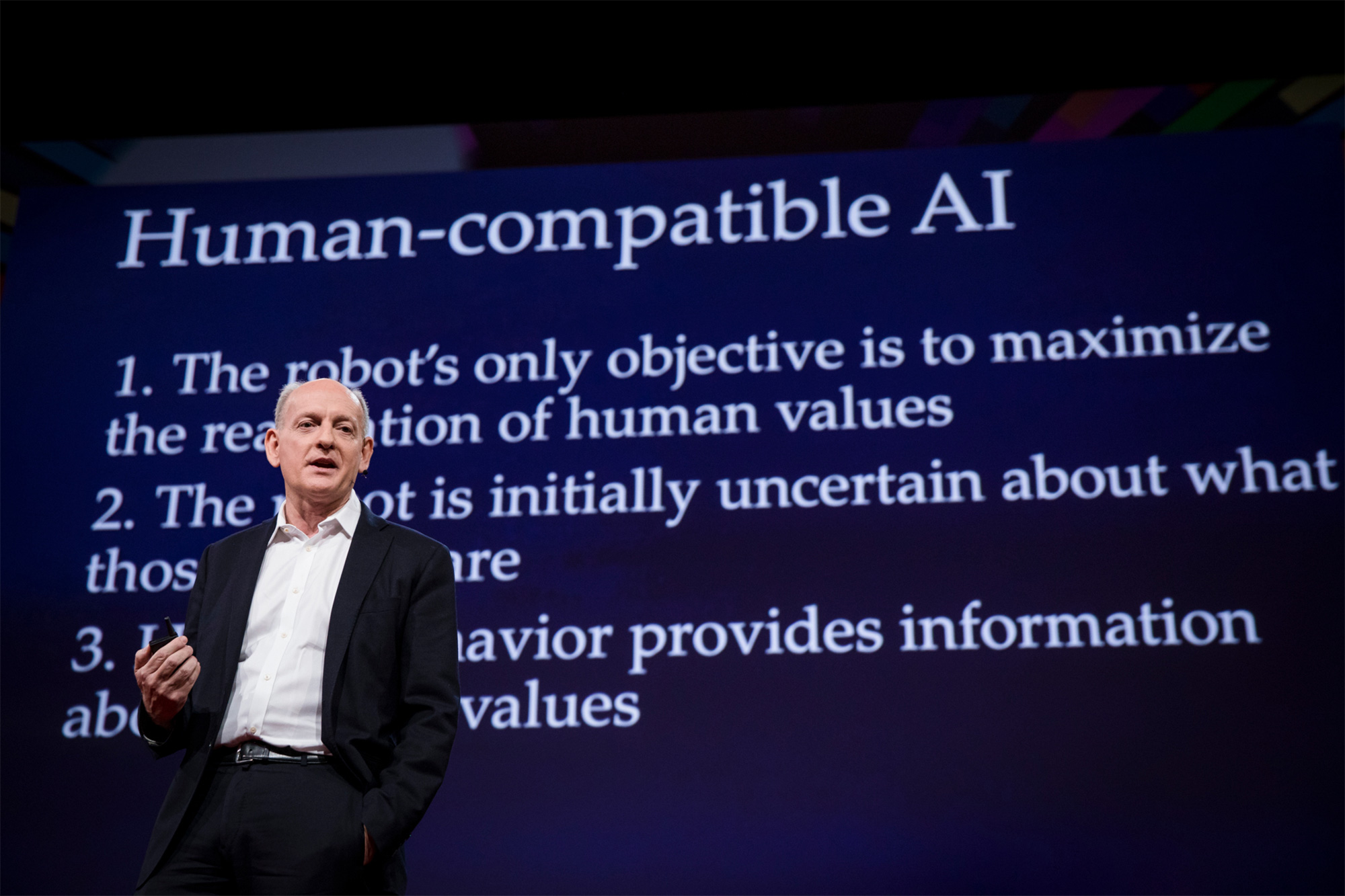
Stuart Russell speaks at TED2017 - The Future You, April 24-28, 2017, Vancouver, BC, Canada. Photo: Bret Hartman / TED
Russell sees two major challenges. “One is the fact that our behavior is so far from being rational that it could be very hard to reconstruct our true underlying preferences,” he said.
The second challenge is that human preferences change.
... However, there’s a third major issue that didn’t make Russell’s short list of concerns: What about the preferences of bad people? What’s to stop a robot from working to satisfy its evil owner’s nefarious ends? AI systems tend to find ways around prohibitions just as wealthy people find loopholes in tax laws, so simply forbidding them from committing crimes probably won’t be successful.
See the full long article here: https://www.quantamagazine.org/artificial-intelligence-will-do-what-we-ask-thats-a-problem-20200130/
The Future of Food Is on Instagram
 There’s no consensus about what the term “digital food” really means. To some, it’s the sharing of images of food on social media to represent culture, calories, presentation, preparation, and taste.
Through this “digital food,” we can use new technologies to explore and represent who we are. Augmented reality (AR) provides a unique way to experience digital food. AR experiences by artists such as Robbie Conceptuel on Instagram allow you to become the food itself. With his filter, Bubble Tea, available on Instagram, your face is transformed into a trendy drink, and jelly bubbles pour out of your mouth when you open wide.
Designers also create photo-realistic 3D food models specifically for AR. Design company QReal has created several AR experiences, such as Lobster, an Instagram filter where a user can place a photorealistic 3D model of a lobster with macaroni and cheese on a flat surface.
It’s also already possible to order food using augmented reality. AR company Kabaq has partnered with Snapchat to offer users the ability to view a Domino’s pizza in AR, then order that pizza online. Ordering food in AR allows us to see examples of what our food will look like before we see it in real life. When the already popular Uber Eats eventually adopts ARwithin its app, it is likely there will be a surge in orders, if only for the initial novelty alone. By using what is known as persistent AR, you could share the same digital food with another person or share the ordering process with a group of people.
The future of food could also exist in digital restaurants. I used Instagram to create Fresh Hot Delicious, a completely digital restaurant specializing in digital desserts. Each dessert exists as a freely available AR filter on Instagram.
Digital food can be funny, satirical, or political, as seen with Peached by Beth Wickerson.
Food designers and sensory scientists have been using virtual reality (VR) to explore digital food since at least 2016. Project Nourished, a “gastronomical virtual reality experience,” replicates existing foods and produces new kinds of food experiences. They aim to help people “eat whatever they want” with no allergies, no intolerances, and no regrets.
See the full story here: https://onezero.medium.com/the-future-of-food-is-on-instagram-223790dd5c5c
Spatial raises $14M more for a holographic 3D workspace app, a VR/AR version of Zoom or Hangouts
 Spatial, which has developed a “holographic” collaboration platform that people use to speak and work together in virtual rooms through the use of strikingly effective avatars — think of a supercharged, virtual reality version of Zoom or a Google Hangout — is today announcing that it has raised $14 million, a Series A that it will be using to continue building out the functionality of its application and its interoperability with a wider range of hardware, as well as to start looking at how it can turn its tech into a platform that could be used by others, for example by way of an SDK.
The funding is being led by White Star Capital, iNovia and Kakao Ventures, with participation from Baidu and individual investors, Instagram cofounder Mike Krieger and Zynga’s Mark Pincus, also participating. Together with Spatial’s last round, $8 million in October 2018, the company has now raised $22 million.
See the full story here: https://techcrunch.com/2020/01/30/spatial-raises-14m-more-for-a-holographic-3d-workspace-app-a-vr-ar-version-of-zoom-or-hangouts/
VR World opens Midtown flagship
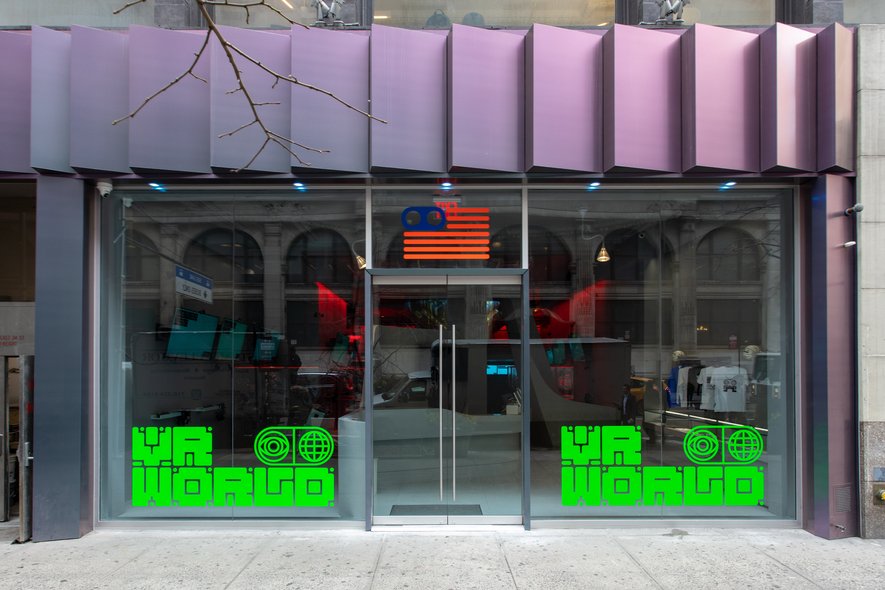 VR World opened its flagship location at 8 E. 34th St. this week, three years after opening its first location in 2017.
The three-floor, 12,000-square-foot space looks to create a “social entertainment experience of the future.”
The venue offers two-hour admission at $44 and an all-day pass for $64.
See the full story with pictures here: https://www.crainsnewyork.com/entertainment/vr-world-opens-midtown-flagship