USING AI TO PREDICT BEST PICTURE, BEST DIRECTOR, AND MORE AT THE 2020 OSCARS
Unanimous AI, which also does sports predictions (it nailed the Super Bowl last weekend), uses a mix of human intuition and algorithms to create what the company called “Swarm A.I.” In practice, this means several dozen movie fans logging in simultaneously to make their predictions. As those predictions come in, a digital puck gets dragged between the various options in each category, giving participants the chance to rethink their picks based on group consensus. The result is a hivemind, similar to how bees work together to pick a location for a new home.
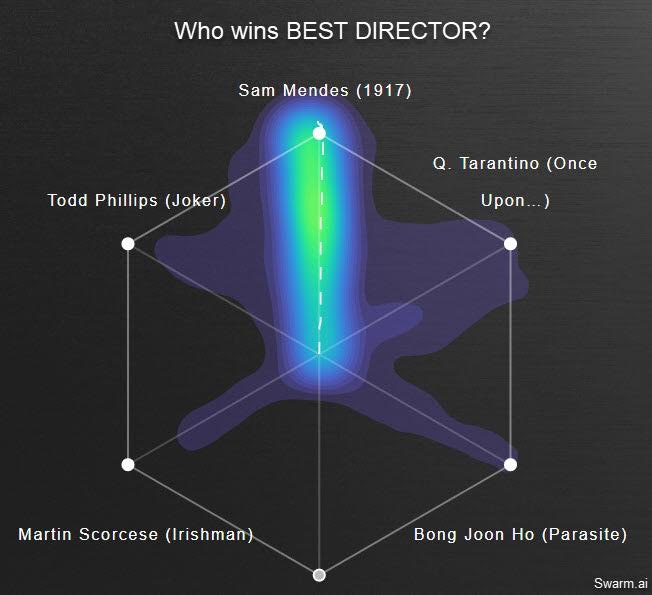
cf64e2a6-27b4-4ce9-b23b-b580d89b8755-0.gif

See the full story here: https://www.inverse.com/entertainment/oscar-predictions-2020-best-picture-actor-actress-director-according-to-ai
Music by numbers? Robot conducts human orchestra
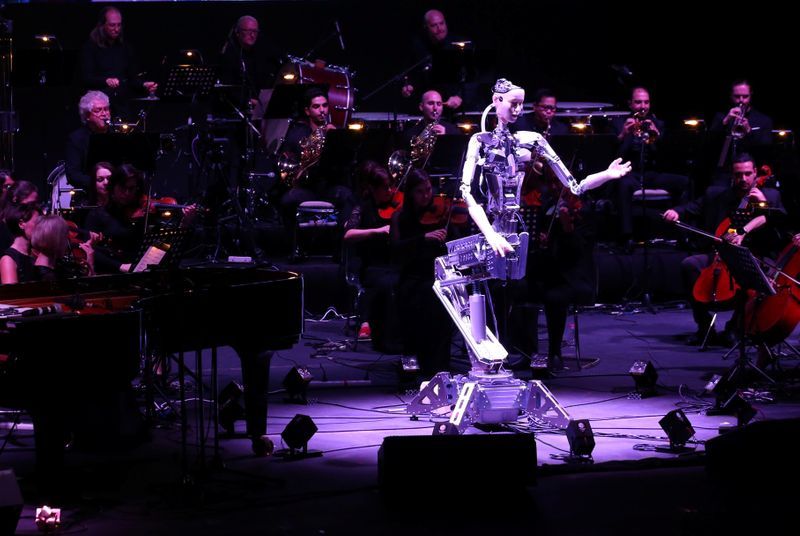 The robot has a humanoid face, hands and lower arms, which gesticulate with what could pass for passion as it bounces up and down and rotates during the live performance of Keiichiro Shibuya's opera "Scary Beauty" in the Emirate of Sharjah.
For Shibuya, a composer from Japan, the role of robots in our everyday lives may well be increasing, but it is up to us to decide how artificial intelligence might add to the human experience, and humans and androids create art together.
"This work is a metaphor of the relations between humans and technology. Sometimes the android will get crazy, human orchestras have to follow. But sometimes humans can cooperate very comfortably," he said.
Shibuya wrote the music, but the android controls the tempo and volume of the live show, and even sings at times.
Meet the Tech World’s 10 Newest Bets on the Future of Music
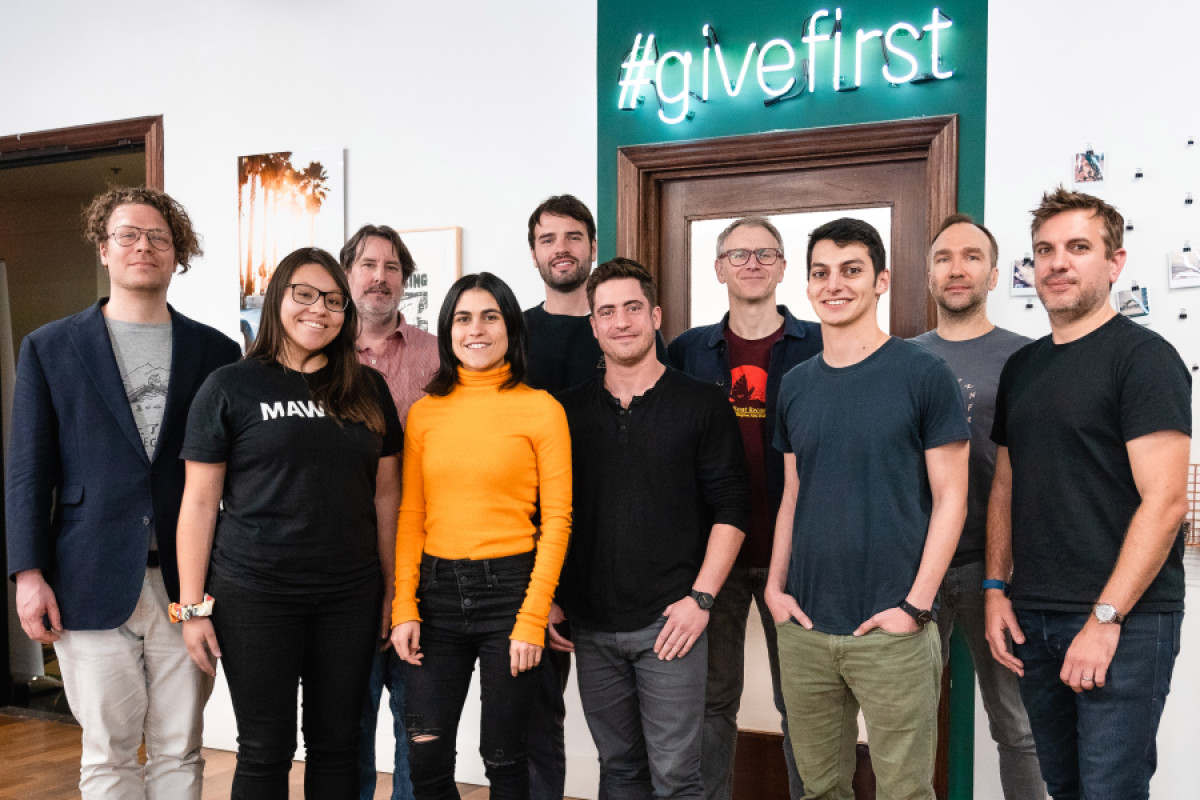 Techstars Music … announced its 2020 class today, trumpeting 10 music-tech ideas it believes will be key to the industry’s future.
Delta AI
Delta protects the digital rights and brand identity of entertainment companies through the detection and traceability of deepfakes. Delta’s AI-driven SaaS platform allows enterprise to actively identify, monitor and respond to deep fake content.
Entertainment Intelligence (Ei) collects, cleans, categorizes and enriches data for a wide range of entertainment businesses. Ei is unique in its ability to seamlessly blend social and consumption data from limitless sources, tracking and analyzing information on a daily basis. Ei also generates industry benchmarks, reports and dashboards to help customers understand their market, save time and increase efficiencies.
‘There’s a Wide-Open Horizon of Possibility.’ Musicians Are Using AI to Create Otherwise Impossible New Songs
[PhilNote: just as at the birth of the synthesizer, AI can create new sounds and tonalities based on existing instruments and voices. It is a new potential creative tool.]
 It’s the job of forward-thinking musicians, then, to wield the technology for the exact opposite purpose: to push against standardization and explore uncharted territory they could not have conjured on their own.
For their most recent album Chain Tripping, YACHT trained a machine learning system on their entire catalog of music. After the machine spit out hours of melodies and lyrics based on what it had learned, the band culled through its output and spliced together the most intriguing bits into coherent songs. The result was a jumpy and meandering interpretation of dance pop that was strange to listen to and even stranger to play.
“I think often musicians underestimate how much the way we play is based on our physical experiences and habits,” Evans says. She says it took the band many excruciating hours to learn the new music, because many riffs or chord changes would deviate just slightly from the ones they had relied on for decades. “AI forced us to come up against patterns that have no relationship to comfort. It gave us the skills to break out of our own habits,” she says. The project resulted in the first Grammy nomination of YACHT’s two-decade career, for best immersive audio album.
....
Arca and the Bronze team soon began collaborating on an installation by the French artist Philippe Parreno that currently resides in the newly reopened lobby of New York’s Museum of Modern Art. The music creaks and burbles out of swiveling speakers that seem to move along with you. The output changes with the temperature and crowd density, meaning no two days in the space will be the same.
Arca says that listening to the music that she ostensibly composed is a strange and gripping experience. “There’s something freeing about not having to make every single microdecision, but rather, creating an ecosystem where things tend to happen, but never in the order you were imagining them,” she says. “It opens up a world of possibilities.” She says that she has a few new music projects coming this year using Bronze’s technology. ...
When more AI creations are released, there will be inevitable legal battles. Existing copyright laws weren’t written with AI in mind, and are extremely vague about whether the rights to an AI song would be owned by the programmer who created the AI system, the original musician whose works provided the training data, or maybe even the AI itself. Some are worried that a musician would have no legal recourse against a company that trained an AI program to create soundalikes of them, without their permission.
See the full story here: https://time.com/5774723/ai-music/?fbclid=IwAR3xo7AJSfLU1scdhJPYsETc_QTjEcfXKXGipRDEtlZ4fTRILScs6jgvHe0
“We Were Naïve,” Says FCC Chair Who Oversaw the Creation of Section 230
 The problem is not really in markets, but in society. What is the Facebook market? The market for no one charging you to put your own content on a page? If you look at it as a market, as with Facebook, you see that a fairly small percentage of the overall online advertising market goes to Facebook, and that doesn’t really worry you. But you are worried about the embedding of the company in the society. And it is the same thing with Amazon and the same thing with Google. It is exactly the same as with AT&T: one company, everybody has a phone line, they define the technology and they do everything—so the government broke it up.
My conclusion is that Mark Zuckerberg, god bless him, who is a smart but really lucky guy, should not be surprised that people want to break up his company, because it’s exactly the same thing that happened to AT&T and also Standard Oil. Standard Oil was also embedded in society in every conceivable way: in shipping, transportation, industrial process, heating. When companies are that deeply entrenched, it isn’t anymore just about efficiency and markets—it is about their political power, social power, and influence power. And if you are Facebook and you say, “We know that we are powerful, but our powers are such superpowers that we ourselves cannot control them’”—this is not what I would call a workable excuse.
See the full story here: https://promarket.org/we-were-naive-says-the-fcc-chair-who-oversaw-the-creation-of-section-230/
Introduction to tech-driven immersive theater
 In The Nest, an immersive show currently running in Los Angeles, audience members sift through an abandoned storage unit to slowly uncover the story of its owner. Creators Jeff Leinenveber and Jarrett Lantz wanted to coax people through the story rather than lead them through it more obviously. They created a custom Arduino flashlight that the audience used to explore the space, but whose functionality could be controlled remotely. "We use it at precise moments for either cinematic effect or to help guide an audience member,” says Larantz. When audience members are getting off track, or exploring the wrong area, the show runners will trigger the flashlight and it will flicker or go out. “People will naturally gravitate towards the next thing,” says Leinenveber.
This could be automated using beacon technology like in The Raven, of course, but Lantz and Leinenveber instead opted for the human touch.
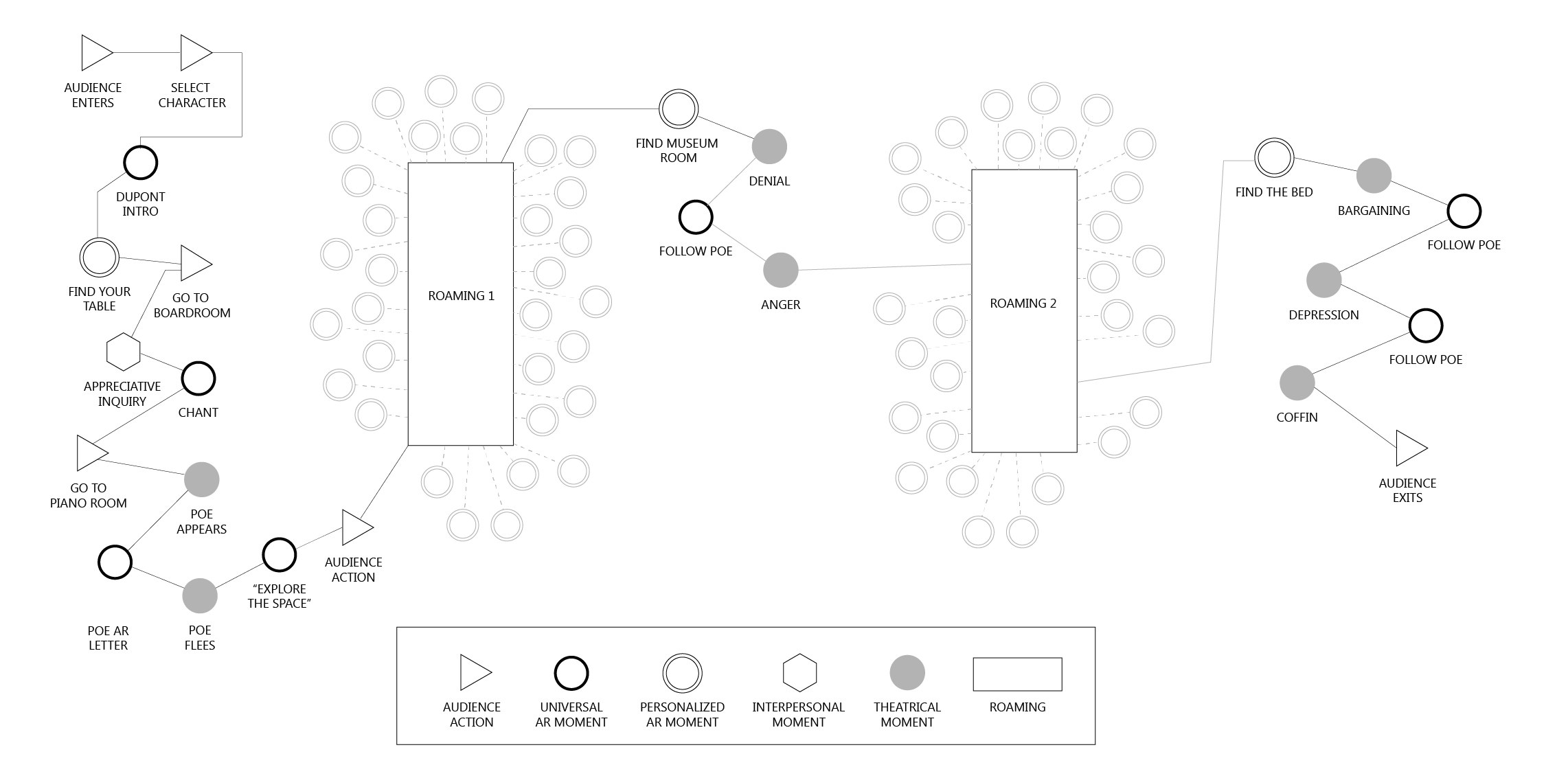
Project Amelia —a branching narrative, immersive send-up of big tech, created by Bricolage in Pittsburgh. The experience took place in a 20,000 sq. ft. former gym, involving multiple story tracks and ten possible different endings. This was far too much for a backstage team to keep tabs on. The solution? Allow the actors on stage to cue scenes and lighting changes from their own devices in real time.
See the full story with useful links at the end here: https://sway.office.com/1mZxInQjMafAtvpX?ref=Link&loc=play&fbclid=IwAR23jVsPmm2q31qUUZ0oR0MIGiWnRTz-Poxp94t09X6rJw-nsRy6ILowLog
Augmented Reality Raises Legal Issues For Property Owners
 It will be important for property owners and asset managers to be prepared for these changes. Some suggestions:
- Review lease and contract documentation to clarify what augmented reality features the tenant or counterparty may use which is associated with the building, such as those which are akin to signage.
- Perform periodic due diligence as to the appearance of the property using commonly available devices and apps.
- Review real estate purchase agreements to be sure that agreements with augmented reality providers are disclosed and either assigned to the purchaser or terminated at closing.
see the full story here: https://www.law360.com/technology/articles/1240342/augmented-reality-raises-legal-issues-for-property-owners
Twitter Just Released Its Plan To Deal With Deep Fakes
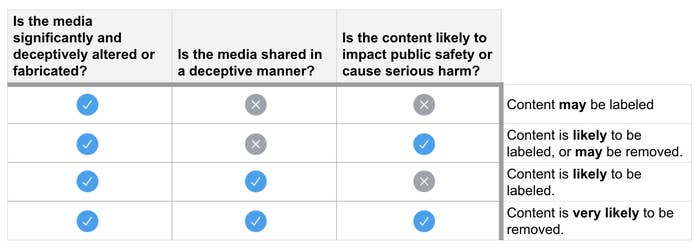 Twitter will soon begin removing altered videos and other media that it believes threatens people’s safety, risks mass violence, or could cause people to not vote. It will also start labeling significantly altered media, no matter the intent.
The company announced the new rule Tuesday. It will go into effect March 5.
“You may not deceptively share synthetic or manipulated media that are likely to cause harm,” Twitter said in a blog post. “In addition, we may label Tweets containing synthetic and manipulated media to help people understand the media’s authenticity and to provide additional context.”
See the full story here: https://www.buzzfeednews.com/article/alexkantrowitz/twitter-just-released-its-plan-to-deal-with-deep-fakes