Google shows off stunning new AR features coming to web and mobile apps soon
Part of a ARCore’s new Depth API in the works
 Google has been quietly working to improve its augmented reality platform, ARCore, since its official launch early last year. Now, the company says it’s ready to unveil some of the next-generation upgrades to depth detection and physics it’s achieved, which promise to make AR experiences seem much more realistic in the future.
The upgrades, part of ARCore’s all-new Depth API, will soon allow developers to perform what’s known as occlusion, which is when an artificial object can be blocked from view by other real-world objects in a scene.
Google says it’s able to do this through optimizing existing software, so you won’t need a phone with a specific sensor or type of processor. It’s also all happening on the device itself, and not relying on any help from the cloud. So long as you have a phone that supports ARCore, which is pretty much every new Android phone released in the last few years, you’ll be able to access these new features.
 These go beyond occlusion and into more realistic physics and 3D mapping. Google has developed a way for AR objects to interact with the real world more realistically, move through an environment the way a real-world 3D object would, and interact with surfaces like you might expect physical matter would. For instance, in the demo I got to experience, I was able to create colorful shaped blocks out of thin air that could bounce off virtually any surface, even the handlebars of an exercise bike.
See the full story here: https://www.theverge.com/2019/12/9/20999646/google-arcore-augmented-reality-updates-occlusion-physics-depth
Report: Magic Leap One Sales Are Horrible, New Version ‘Years Away’
 Six months after its release, Magic Leap has reportedly sold only 6,000 augmented reality headsets. Now, the well-funded startup could be "years away" from releasing an upgraded model.
The Magic Leap One made its global debut in August 2018. It's available for $2,295, which appears to be a price that most consumers aren't comfortable with due to augmented reality's limited history. Now, with consumers hesitant to invest in Magic Leap's ecosystem, the well-funded startup doesn't have a clear path forward.
Magic Leap has begun development on an upgraded model. Called the 'Magic Leap Two' behind closed doors, it features a simplified design along with a wider field of view and 5G connectivity. The report claims Magic Leap is running into "fundamental technology constraints," though.
See the full story here: https://www.pcmag.com/news/372429/report-magic-leap-one-sales-are-horrible-new-version-year
Top 10 Predictions For Media & Entertainment In 2020
 PREDICTION #9 – Real, not virtual, live “experiences” also increasingly find their way into multi-platform media strategies, driven by a growing counter-movement to digital’s frequently heads down isolation. Live experiences, and their more lasting “soul” (not to mention selfie-worthy moments) deepen brand engagement and monetization. They also drive ever grander “offline” experiments and M&A.
Think of Madison Square Garden’s audacious Sphere project here, a $1.2 billion project that aims to reinvent the venue experience. The first MSG Sphere is rising up from the desert floor in Las Vegas right now to blow minds. At smaller scale, but equal mind-blowing impact, Woolf & The Wondershow’s Cages music experience in downtown Los Angeles’s Arts District demonstrates how technology can expand and enhance the possibilities without overpowering the underlying story. It is a “must.”
PREDICTION #10 – “Fake news” (including AI-driven “deepfakes”) overrun 2020’s U.S. elections and cause unprecedented societal disruption. The White House hangs its hat on disinformation campaigns actively promoted by major media and social media players, and claims victory no matter what the actual outcome.
The country is divided and threatened like never before in generations. Hacking headlines add to an increasing sense of mass insecurity. But in the face of daunting forces, optimism survives and social activism rises up. 2020’s fear transitions to 2021’s brave new redemptive possibilities.
Brace for the Digital-Money Wars
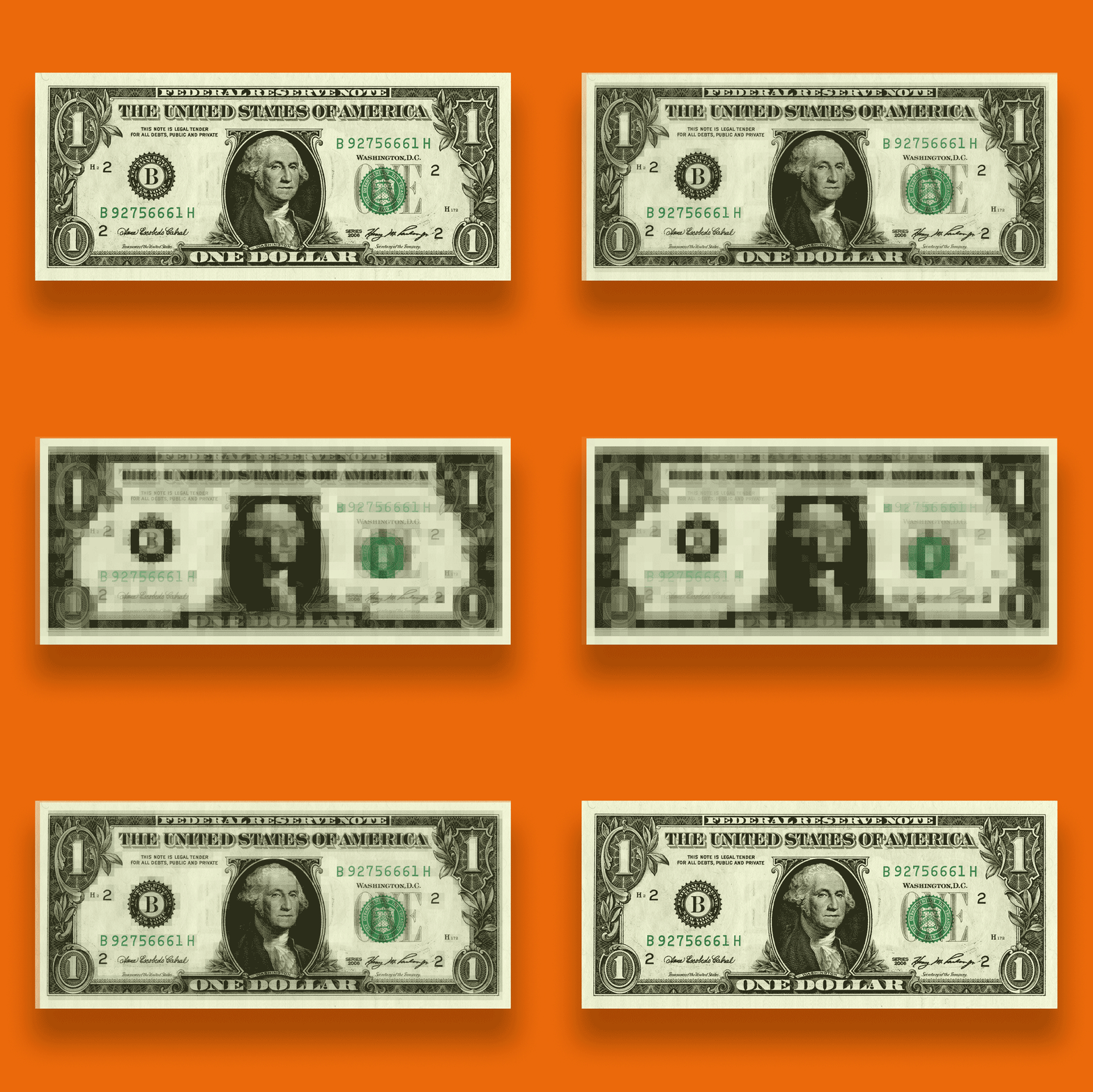 The digital yuan China is planning is in fact a complete inversion of the bitcoin model. All of the data created would be centrally housed and become part of China’s surveillance state.
...it’s an example of the leverage China would have over every transaction on its system. The only question is how heavy-handed the Chinese would be in using it.
While the Chinese model might be the far end of the spectrum, cryptocurrency has been moving in that direction. While bitcoin was designed to mimic the anonymity of cash in a digital setting, all its transactions are public, and therefore trackable. And Facebook’s libra would log transaction data, while recording user identities in a separate database. A central concern in Congress is what Facebook would do with that information.
Say the Federal Reserve digitized the U.S. currency. It could track how every dollar in circulation is spent. That might give it a great advantage in trying to figure out how the economy is growing, and where stimulus efforts would best be directed. But say people in government wanted to lock down some group or activity.
People need to start thinking about this now, Harvard’s Ms. Kumar said. China’s digital yuan will be a real-world proof of concept. The West will need to respond in some way. “Are we prepared for that?” she said. “Not just technically, but legally? Can we protect privacy in this new world?”
See the full story here: https://www.wsj.com/articles/brace-for-the-digital-money-wars-11575694806
Wanted: Virtual reality headsets that aren’t made in China
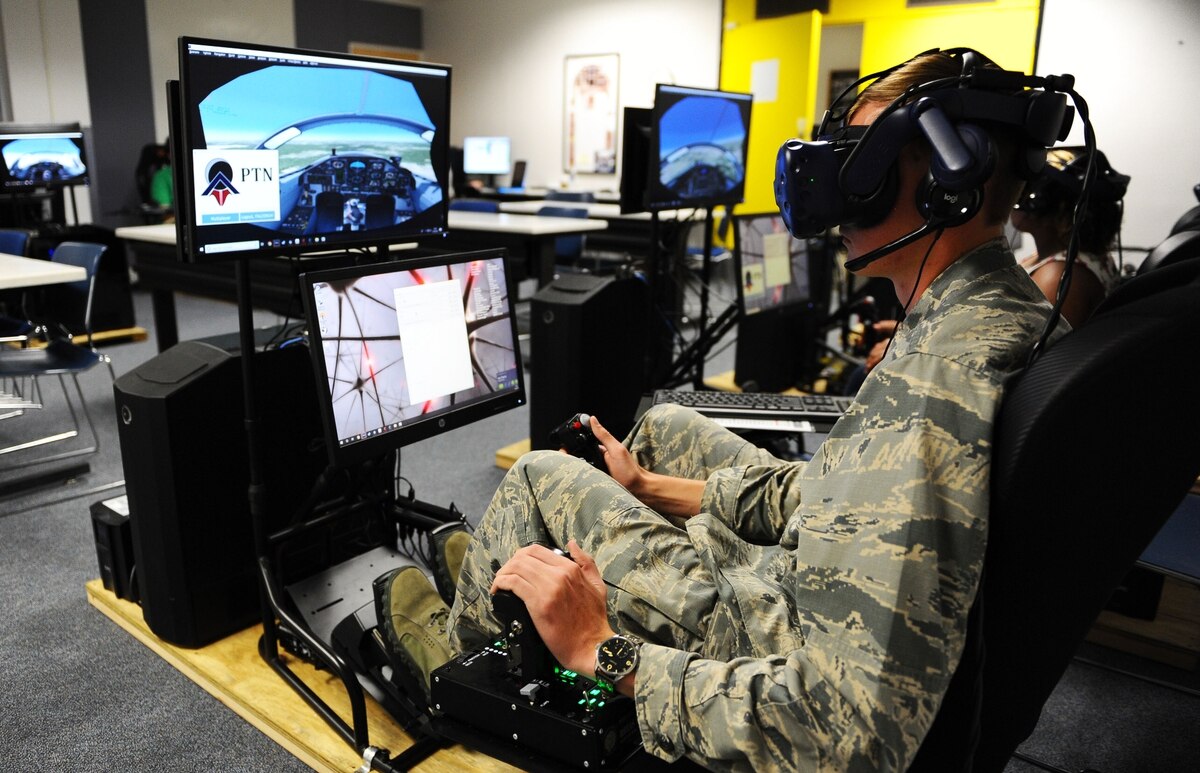 The U.S. Air Force wants to tap into the augmented and virtual reality technologies that are proliferating in the commercial market, but the service has run into a problem: Many have parts from China, limiting their ability to be used by the U.S. military in operational environments.
“Can we not have an AR [augmented reality] solution that’s made in China? I don’t think that’s good for us,” Col. Gerard Ryan, chief of the Air Force’s operational training infrastructure division, said during a panel discussion Tuesday at the Interservice/Industry, Training, Simulation and Education Conference.
“I don’t think the security policy is going to pass. And I say that sarcastically, but it’s true. If we’re going to use a gaming engine, let’s make sure it’s not made by a foreign country that we don’t like,” he added.
An unclassified environment like basic pilot training is a perfect place for the Air Force to use the augmented and virtual reality devices currently on the market. But for such products to ever see use by fighter and bomber pilots — or any operator that deals with secure information — the service must be sure that no part of the device is made by China, or any other foreign entity that could insert technology that allows for data collection.
See the full story here: https://www.defensenews.com/digital-show-dailies/itsec/2019/12/06/wanted-virtual-reality-headsets-that-arent-made-in-china/
China Announces New Regulations To Combat Fake News Created Using Deepfake Technology
 In an effort to deter the rampant spread of “fake news,” Chinese regulators working on behalf of the Cyberspace Administration of China (CAC) have announced new rules that will ban the use of “deepfake” technology to produce and distribute fictional news stories. The upcoming regulations will also require any video and audio content created using VR or AI technology to be marked.
In September, face-swapping app Zao went viral in China, establishing itself as the #1 free app on the App Store and sparking the CAC’s initial anxiety over deepfakes. The worry is that deepfake technology could be used to create hyper-realistic renditions of established figureheads, which could then be used to spread potentially harmful misinformation. According to the transcript published to the CAC website, deepfake technology could “endanger national security, disrupt social stability, disrupt social order, and infringe upon the legitimate rights and interests of others.”
These new regulations, published by three Chinese government agencies, will take effect beginning January 1st, 2020; failure to adhere to the rules will be considered a criminal offense.
Just a month-and-a-half ago, California legislatures introduced their own system for combating deepfake news, banning the distribution of any deepfakes of established political figures within 60 days of an election.