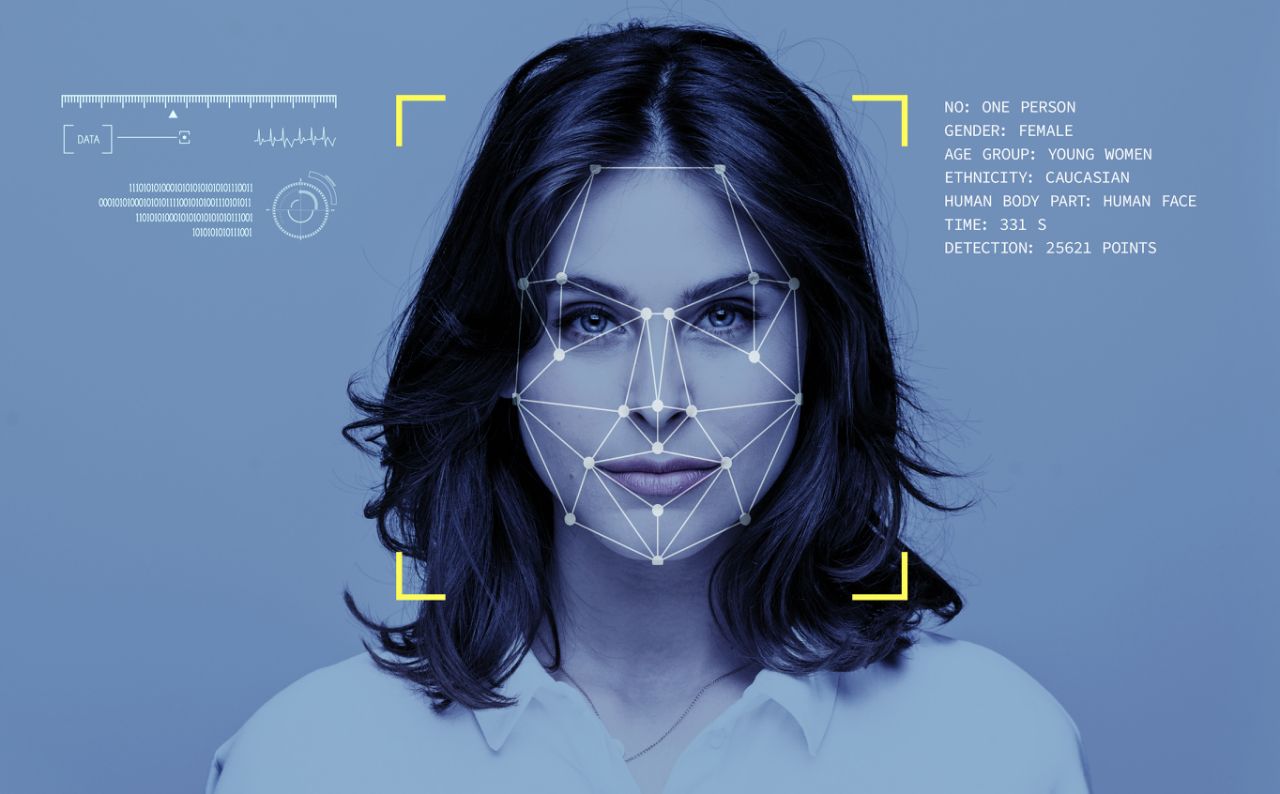
In fact, each unit contains two cameras. One camera photographs a car’s registration plate and a second high-set lens looks down through the windscreen and can see what drivers are doing with their hands.
The units use artificial intelligence to exclude drivers who are not touching their phones. Photos that show suspected illegal behavior are referred for verification by human eyes before an infringement notice is sent to the vehicle’s registered owner along with a 344 Australian dollar ($232) fine. Some cameras will be permanently fixed on roadsides and others will be placed on trailers and moved around the state.
A six-month trial of two fixed cameras this year checked 8.5 million vehicles and detected more than 100,000 drivers with their hands on phones, including one driver who was using a phone and iPad simultaneously. Another driver had a passenger steer while they both held phones, the government said.
Scientists have developed a soft artificial skin that provides haptic feedback and -- thanks to a sophisticated self-sensing mechanism -- has the potential to instantaneously adapt to a wearer's movements. Applications for the new technology range from medical rehabilitation to virtual reality.
The skin's system of soft sensors and actuators enable the artificial skin to conform to the exact shape of a wearer's wrist, for example, and provide haptic feedback in the form of pressure and vibration. Strain sensors continuously measure the skin's deformation so that the haptic feedback can be adjusted in real time to produce a sense of touch that's as realistic as possible. The scientists' work has just been published in Soft Robotics.
Haptics sandwiched between silicone layers
The artificial skin contains soft pneumatic actuators that form a membrane layer which can be inflated by pumping air into it. The actuators can be tuned to varying pressures and frequencies (up to 100 Hz, or 100 impulses per second). The skin vibrates when the membrane layer is inflated and deflated rapidly. A sensor layer sits on top of the membrane layer and contains soft electrodes made of a liquid-solid gallium mixture. These electrodes measure the skin's deformation continuously and send the data to a microcontroller, which uses this feedback to fine-tune the sensation transmitted to the wearer in response to the wearer's movements and changes in external factors.
The algorithm is trained to identify the language, tone and facial expressions to select the best applicants by assessing their performances in the videos.
Facial expressions assessed by the algorithms include brow furrowing, brow raising, eye widening or closing, lip tightening, chin raising and smiling, which are important in sales or other public-facing jobs.
Loren Larsen, Hirevue’s chief technology officer, told The Daily Telegraph that 80 to 90 per cent of the predictive assessment was based on the algorithms’ analysis of candidates’ use of language and verbal skills.
“There are 350-ish features that we look at in language: do you use passive or active words? Do you talk about ‘I’ or ‘We.’ What is the word choice or sentence length? In doctors, you might expect a good one to use more technical language,” he said.
“Then we look at the tone of voice. If someone speaks really slowly, you are probably not going to stay on the phone to buy something from them. If someone speaks at 400 words a minute, people are not going to understand them. Empathy is a piece of that.”
Facebook and Amazon each discussed computer glasses at launch events this week.
Amazon’s approach is to get a lightweight product out now, while Facebook is promising advanced technology in a few years.
It’s important for both companies because they don’t have established operating systems.
There's now an arms race to capture the next computing platform. We view who is best-positioned in consumer AR:
1. Apple (ecosystem)
2. Facebook (social)
3. Microsoft (enterprise)
4. Google (search)
That’s a big issue for all of the top internet platforms as they deal with scrutiny from consumers and lawmakers concerning their use of data. But the biggest challenge may be getting people comfortable with a whole new way to view the digital world.
“Getting consumers used to having these types of devices in their lives and building some expectations around how to manage privacy and how to manage data use on these devices, that’s all going to help the entire industry,” Bosworth told CNBC.
Once the system completes the sorting of the films by performer, genre and theme, it’s expected to ultimately tag films for additional characteristics a particular user might be interested in such as positions, locations, hair color, etc.
Another way artificial intelligence has been used in adult entertainment is the development of an oral sex simulator. VIECI was the company that created the Autoblow AI to offer men a high-tech sex toy ...
To achieve this, the data scientists used six days (8,333 minutes) of pornographic footage to train the AI algorithm regarding how to replicate oral sex. They ran the video at 50% speed to allow the computer to capture 30 screenshots of video per second and document the position of the mouth. This work discovered the 16 "most-used mouth locations" used in the films. According to the company, the result of the AI's work is an experience that's as real as possible.
Another programmer created an app called DeepNude that used artificial intelligence to alter images of fully clothed women to make them appear naked. The app caused such outrage the anonymous programmer deleted it just days after it went live. The app was free, easy to use, and put every woman at risk for being taken advantage of by these fake images.
Francis said technology needed “both theoretical and practical moral principles.”
Francis made his comments in an address to participants at a Vatican conference attended by executives from companies such as Facebook, Mozilla, and Western Digital as well as Nobel laureates, Catholic ethicists, government regulators, internet entrepreneurs, and venture capitalists.
The three-day gathering, which ends on Saturday, is discussing topics with tech jargon not commonly heard inside the Vatican such as algorithms and blockchain.
“The remarkable developments in the field of technology, in particular those dealing with artificial intelligence, raise increasingly significant implications in all areas of human activity. For this reason, open and concrete discussions on this theme are needed now more than ever,” Francis told the participants.
In DreamWorks Animation’s How To Train Your Dragon: The Hidden World, directed by Dean DeBlois, the Viking village of Berk has become a chaotic dragon utopia.
The Producers Guild of America (PGA) has created a new Innovation Award in recognition of recent tech strides made by Virtual Reality, Augmented Reality, and other emerging media. The inaugural award honoring “exceptional distinctiveness, inventiveness, and impact…in expanding the conventions of program format, content, and audience interaction, production technique, and delivery” will be presented, along with other key awards, at a nominee celebration prior to the 31st Annual Producers Guild Awards on January 18, 2020.
The innovations encompass immersive theme park attractions (Walt Disney Imagineering’s “Pandora” and “Star Wars: Galaxy’s Edge”) along with movie and TV-inspired VR adventures (DreamWorks Animation’s “How to Train Your Dragon: The Hidden World” VR Experience). The entries that will be reviewed and voted on by a jury of blue-ribbon experts in the field of new media include:
Kim Adams (Co-founder, Adventure Lab)
Nancy Bennett (Chief Creative Officer and founding member, Two Bit Circus)
Thomas Geraghty (Director, Technology & Innovation, Universal Parks)
Doug Herzog (Consultant, Quibi)
Lisa Hsia (Executive Vice President, Bravo, Oxygen, Universal Kids Digital Media)
Lori McCreary (CEO, Clickstar, Inc.; Founder and CEO, Revelations Entertainment)
Dr. Jacquelyn Ford Morie (Founder and Chief Scientist, All These Worlds LLC.)
Joanna Popper (Global Head of VR for Location Based Experience, Hewlett Packard)
Yelena Rachitsky (Executive Producer of Experiences at Oculus)
Albert Rizzo (Director, Medial Virtual Reality, USC Institute for Creative Technologies)
Ira Rubenstein (Chief Digital & Marketing Officer, Public Broadcasting Service)
Sam Russo (Vice President, Attraction Development, Herschend Family Entertainment)
Ted Schilowitz (Futurist in Residence, Paramount Pictures & 20th Century Fox)
Christina Lee Storm (VP Business Operations, Strategy & Emerging Technology, DreamWorks Animation)
Shelby Jiggets-Tivony (VP, Creative & Advanced Development, Disney Parks Live Entertainment – Walt Disney Imagineering)
Part of Prime Focus Technologies' media recognition AI engine, CLEAR™ Vision Cloud, the solution identifies cricket action with extremely high accuracy, helps produce highlight packages in near real-time and delivers immersive viewing experiences to engage with fans. It is trained to catalogue an exhaustive range of elements including ball segments, runs scored per ball, replays, celebrations, wickets, bowling type, batting type, striker, brand logos, etc. with high accuracy. With CLEAR as the backbone, Vision Cloud delivers in-app notifications, powers the most dynamic Video Scorecards, creates rich & interactive storyboards and extends the power of creating highlights to the consumer. Sports highlights produced by the engine compare and go beyond the best human-produced highlights.
LiveMaps, a new program that uses machine learning, localization, and mapping technology to create a virtual map of the real world.
LiveMaps relies on crowd-sourced data, such as geotagged images, obtained from various smart devices to create a point cloud system. This information can then be used to generate photorealistic replications of real-world locations, allowing users to travel to any destination around the globe in a matter of seconds. This technology can also capture data regarding specific objects and locations, providing users with additional references and reminders.
According to Facebook, LiveMaps will serve as the core foundation for their upcoming AR glasses.
During this morning’s highly-anticipated keynote presentation, Zuckerburg revealed that upcoming software updates to the Quest’s onboard cameras will soon allow for native hand tracking without the need for any additional hardware.
“Our computer vision team developed a new method of using deep learning to understand the position of your fingers using just the monochrome cameras on Quest today—no active depth-sensing cameras, additional sensors, or extra processors required. This technology approximates the shape of your hand and creates a set of 3D points to accurately represent your hand and finger movement in VR.”