To realize its VR dreams, Facebook needs to kill what Oculus has built
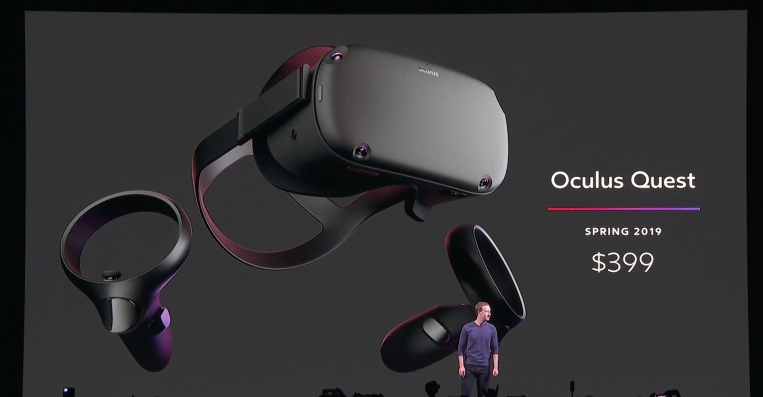 The company’s Quest product, which they released on Tuesday,offers a streamlined version of high-end virtual reality while leveraging time-honed software to make the process of getting up-and-running immeasurably easier. It’s probably the best VR product that’s been built yet, and one that has the mainstream firmly in view.
As the closing of the Oculus acquisition approaches its fifth birthday, one wonders where Facebook’s 10-year-plan for virtual reality begins to show some signs of critical success.
Whether the Quest succeeds or fails, I would not be surprised to see the company fade the high-end into its standalone line over time. The PC will always drive the most high-end experiences, but it’s no place to stake a platform that still needs to prove itself.
Facing its prolonged degradation, Nintendo reshaped its mobile and home consoles into a single product. Oculus needs to do the same, and they already have.
See the full story here: https://techcrunch.com
Amazon Will Pay You to Help Develop Its Augmented Reality System, No Skills Required
 The "Amazon Real World Image Study" is a new, limited time program based in New York City that asks the public to submit themselves to full body 3D scanning for Amazon's research and get paid in the process.
The Body Labs team, a New York-based startup acquired by Amazon in 2017, is conducting the program. The company's work revolves around artificial intelligence, computer vision, and body modeling.
Back when the company was independent, it described a process of capturing a photographic image of a person and then transforming that image into a 3D model of the person. That 3D data could then, based one part of the company's vision, be used for things such as fitting clothing to a person's body shape.
That vision fits in perfectly with Amazon's goal of allowing online shoppers to more accurately purchase items that fit by using augmented reality in the same way that the company has begun using AR to allow you to place items in your home before clicking the buy button.
In return for submitting yourself to Amazon's body scan, you'll get a $25 Amazon gift card. The process takes around 30 minutes and will require those involved to change into form-fitting clothing provided by Amazon.
See the full story here; https://next.reality.news/news/amazon-will-pay-you-help-develop-its-augmented-reality-system-no-skills-required-0198051/
Facebook’s A.I. Whiz Now Faces the Task of Cleaning It Up. Sometimes That Brings Him to Tears.
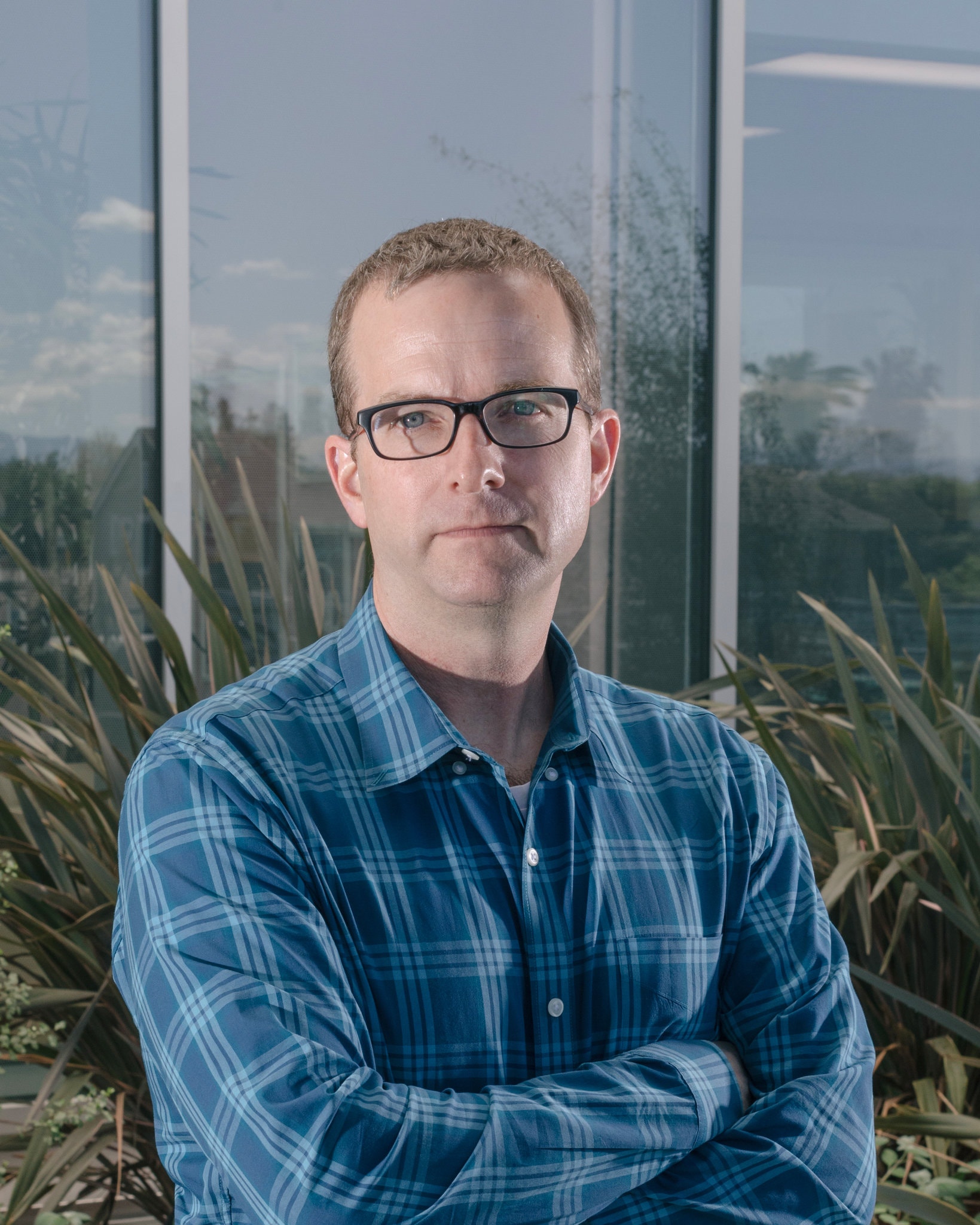 Mr. Schroepfer, 44, is in a position he never wanted to be in. For years, his job was to help the social network build a top-flight A.I. lab, where the brightest minds could tackle technological challenges like using machines to pick out people’s faces in photos. He and Mr. Zuckerberg wanted an A.I. operation to rival Google’s, which was widely seen as having the deepest stable of A.I. researchers. He recruited Ph.D.s from New York University, the University of London and the Pierre and Marie Curie University in Paris.
But along the way, his role evolved into one of threat removal and toxic content eliminator. Now he and his recruits spend much of their time applying A.I. to spotting and deleting death threats, videos of suicides, misinformation and outright lies.
“None of us have ever seen anything like this,” said John Lilly, a former chief executive of Mozilla and now a venture capitalist at Greylock Partners, who studied computer science with Mr. Schroepfer at Stanford University in the mid-1990s. “There is no one else to ask about how to solve these problems.”
...
In late 2015, some of the A.I. work started to shift. The catalyst was the Paris terrorist attack, in which Islamic militants killed 130 people and wounded nearly 500 during coordinated attacks in and around the French capital. Afterward, Mr. Zuckerberg asked the Applied Machine Learning team what it might do to combat terrorism on Facebook, according to a person with knowledge of the company who was not authorized to speak publicly.
In response, the team used technology developed inside the new Facebook A.I. lab to build a system to identify terrorist propaganda on the social network. The tool analyzed Facebook posts that mentioned the Islamic State or Al Qaeda and flagged those that most likely violated the company’s counterterrorism policies. Human curators then reviewed the posts.
It was a turning point in Facebook’s effort to use A.I. to weed through posts and eliminate the problematic ones.
...
Identifying rogue images is also one of the easier tasks for A.I. It is harder to build systems to identify false news stories or hate speech. False news stories can easily be fashioned to appear real. And hate speech is problematic because it is so difficult for machines to recognize linguistic nuances. Many nuances differ from language to language, while context around conversations rapidly evolves as they occur, making it difficult for the machines to keep up.
Delip Rao, head of research at A.I. Foundation, a nonprofit that explores how artificial intelligence can fight disinformation, described the challenge as “an arms race.” A.I. is built from what has come before. But so often, there is nothing to learn from. Behavior changes. Attackers create new techniques. By definition, it becomes a game of cat and mouse.
See the full story here: https://www.nytimes.com/2019/05/17/technology/facebook-ai-schroepfer.html
Sony Unit to Produce Movies, TV Shows Based on Games
 Sony Interactive Entertainment (SIE) has launched PlayStation Productions to transform the company’s 100+ video games into film and television projects. The production company, headed by Asad Qizilbash, is at work on its first projects on Sony Pictures’ Culver City lot. SIE Worldwide Studios chair Shawn Layden, who also oversees the new production company, noted that, with 25 years developing games, the company believes “now is a good time to look at other media opportunities across streaming or film or television.”
The Hollywood Reporter, in an exclusive, notes that the original content library includes “adventure to sci-fi to action to mystery to horror.” “Instead of licensing our IP out to studios, we felt the better approach was for us to develop and produce for ourselves,” said Qizilbash. “One, because we’re more familiar, but also because we know what the PlayStation community loves.”
Although film adaptations of games haven’t always worked well, Hollywood is friendlier to the concept of adapting games largely because today’s directors and producers play them.
Layden agreed, noting that his goal is, “to be the first gaming entity to do something lasting and meaningful in a completely different medium.”
See the full story here: http://www.etcentric.org/sony-unit-to-produce-movies-tv-shows-based-on-games/
Virtual reality helps police in dealing with autistic people
 This week, the company announced a partnership with Chicago police to train officers by using virtual reality headsets. It will be making the program, developed with the help of mental health and autism experts, available to police departments across the U.S.
For now, they offer two training modules: one for autism and another for dealing with people who have schizophrenia.
“The ability to tell the difference between someone who’s acting in an unusual way that may be due to their autism versus someone who could be a risk to you can be a really fine line,” said David Kearon of the advocacy group Autism Speaks. “When you’re trying to make that judgment very quickly, that’s where we see mistakes made.”
See the full story here: https://www.boston.com/news/politics/2019/05/24/virtual-reality-helps-police-learn-to-interact-with-autistic
Upcoming 10th Augmented World Expo To Shine Light On Immersive Computing
 Inbar called 2019 “The Year of the Creator,” as a good number of authoring tools aimed at equipping the next generation of creators with easy-to-use object oriented tools for building XR experiences without code are coming of age. “The race to build an index of the real world is on, with companies working to align digital content with the physical environment on a global scale in order to enable next-level augmented reality,” said Inbar.
See the full story here: https://www.forbes.com/sites/charliefink/2019/05/24/upcoming-10th-augmented-world-expo-to-shine-light-immersive-computing/#56e9dc165128
Senators Press For National Artificial Intelligence Strategy
 Several U.S. senators have proposed the Artificial Intelligence Initiative Act to create a national AI strategy and fund federal R&D in this growing area to the tune of $2.2 billion. The initiative’s $2.2 billion would be awarded over a five-year period to multiple federal agencies. At the same time, although the European Commission put out guidelines for artificial intelligence technology, some experts are saying that the tech companies that participated in drafting guidelines compromised them to protect their own interests.
VentureBeat reports that the Act, created by senators Rob Portman (R-Ohio), Martin Heinrich (D-New Mexico) and Brian Schatz (D-Hawaii), would fund agencies such as the Department of Energy and the Department of Commerce’s National Institute of Standards and Technology (NIST), and would also “establish a National AI Coordination Office to lead federal AI efforts, require the National Science Foundation (NSF) to study the effects of AI on society and education, and allocate $40 million a year to NIST to create AI evaluation standards.”
Wired reports that Johannes Gutenberg University of Mainz philosopher Thomas Metzinger criticized the European Commission’s AI guidelines saying that, “too many of the experts who created [them] came from or were aligned with industry interests.” He and another group member drafted a list of prohibited AI uses, including autonomous weapons, but “tech’s allies later convinced the broader group that it shouldn’t draw any ‘red lines’ around uses of AI.” In the formal draft, “red lines” became “critical concerns,” which “appeared to please Microsoft.”
Harvard law professor Yochai Benkler also believes that, “industry has mobilized to shape the science, morality and laws of artificial intelligence … becoming too influential over how society governs and scrutinizes the effects of AI.”
Signs of pushback include San Francisco’s ban of the city’s use of facial recognition and the Algorithmic Accountability Act, introduced by senators Cory Booker (D-New Jersey), Ron Wyden (D-Oregon) and representative Yvette Clarke (D-New York), to require companies to “assess whether AI systems and their training data have built-in biases, or could harm consumers through discrimination.”
See the full story here: http://www.etcentric.org/senators-press-for-national-artificial-intelligence-strategy/