Lifeprint’s augmented reality photos get the most obvious Harry Potter partnership ever
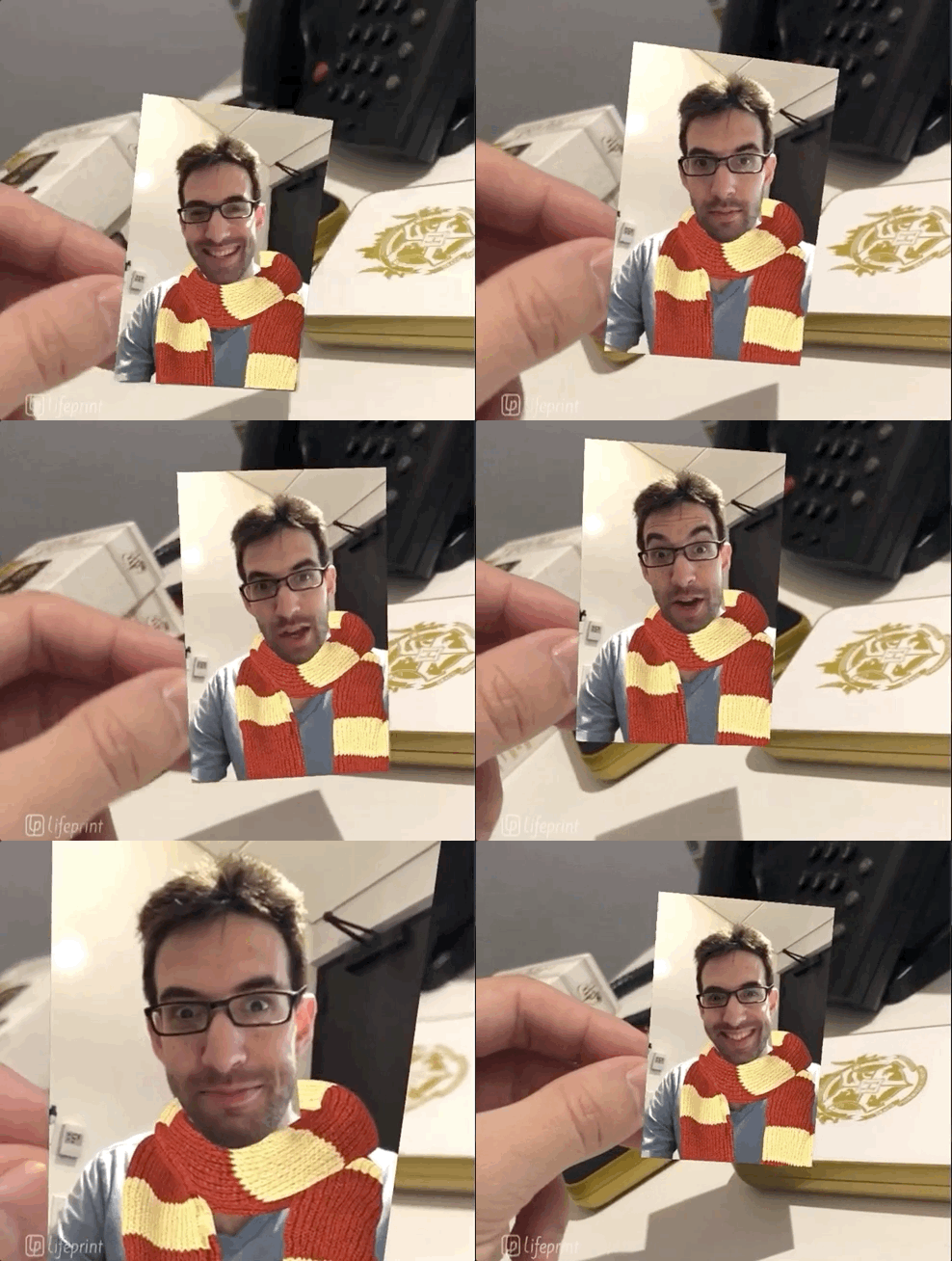 The Harry Potter Magic Photo and Video Printer, which bundles the company’s very Harry Potter-like AR pictures into a properly Harry Potter-branded package.
See the full story here; https://www.theverge.com/circuitbreaker/2018/10/2/17921132/lifeprint-harry-potter-augmented-reality-photos
Augmented reality, fog, and vision: Duke professor outlines importance of smart architectures
 An academic researcher’s talk on Monday at the Fog World Congress in San Francisco demonstrated both the limits of distributed computing structures and their critical importance to future IoT and augmented reality (AR) implementations.
Dr. Maria Gorlatova’s recent work has centered on the study of fog and edge architecture – specifically, the way in which particular methods of architecting those systems can affect latency and response time. She's studying the differences in systems which are on- and off-campus, that have different points of execution, which seems like the academic way of saying “where the computational work is done.”
The difference between the cloud – a highly centralized architecture – and fog computing, the industry’s current term of art for systems that have the abstracted nature of the cloud, but do their actual work much closer to the endpoint than the cloud’s faraway data centers – is immense. Both fog and its close cousin edge computing are useful alternatives to the cloud architecture.
“Fundamentally, our new devices that are generating high-bandwidth traffic and high-volume, high-velocity data just cannot afford to transfer all of the data to a centralized hub for processing,” Gorlatova said.
Some of the trade-offs, she said, are already fairly well-known. For instance, many tasks that aren’t terribly demanding from a compute or network perspective are best accomplished at the edge, but the advantages in terms of latency are outweighed by the cloud’s more potent computing capabilities for more complex tasks.
Some of the lessons from that research can seem self-evident, but they have wide-ranging implications. Gorlatova’s example was the security problem posed by bad actors influencing augmented reality systems – for example, creating huge, obtrusive holograms that block a user’s view of the real world, creating potentially serious safety issues.
Solutions to the vision-blocking problem, which was first described a year ago, center on fixed policy recommendations, which have to be implemented, manually, by human beings. By applying machine learning to the problem, however, an AR system could be taught to recognize when holograms are obstructing the view of a user, and simply move them out of the way, or make them transparent.
“Fog offers a natural chokepoint for reducing the resources consumed on mobile nodes in multi-user settings, as well as a natural point for making those experiences more intelligent.” She and her team are currently working on a fog-based pilot deployment for secure, responsive AR on Duke’s campus, and hopes to have a system in place early next year.
See the full story here: https://www.networkworld.com/article/3309446/cloud-computing/augmented-reality-fog-and-vision-duke-professor-outlines-importance-of-smart-architectures.html
VR influencer Jesse Damiani to host one of the largest VR/AR/MR art shows ever featuring CatsAndVR favs JOY and Steve Teeps.
 Jesse Damiani, the Editor-at-Large of VRScout and VR influencer is producing one of the world’s largest virtual reality, augmented reality, and mixed reality art shows Sponsored by RYOT, with additional support from Meow Wolf, VRScout, Raptor House Effects, and Magik Gallery, with LACMA curator Britt Salvesen serving as consultant, the exhibit will feature over twenty-five world-class artists working in this cutting-edge space.
AR’s success depends on perfecting input methods
 So those are the four primary inputs: Eye-tracking (gazing), controllers, voice, and gesture recognition. The question still remains, what input is going to lead to what in terms of UI and UX? We don’t have the answers yet but I believe it’s going to be an amalgamation of all of those inputs. And the combination will have to be contextual.
See the full story here: https://thenextweb.com/contributors/2018/09/29/ars-success-depends-on-perfecting-input-methods/
Here is what Marines really need for realistic simulations training
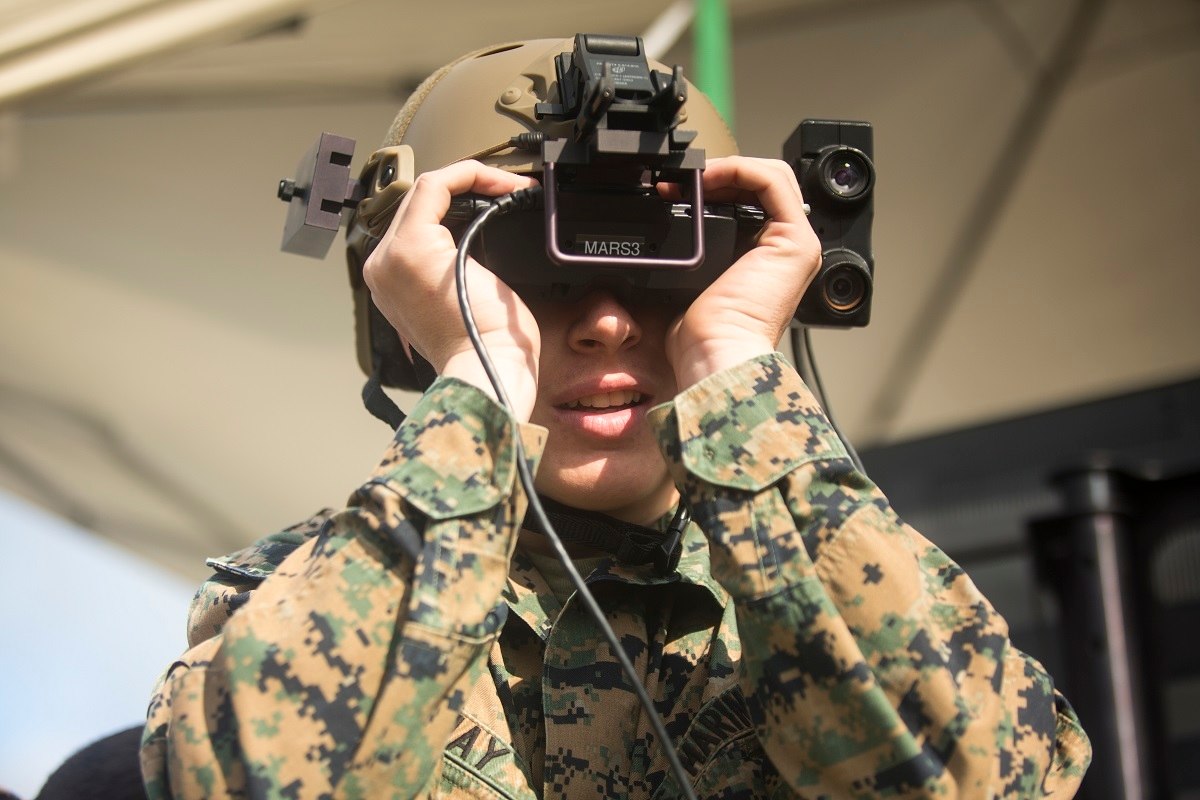 Last year at the annual military expo here, Commandant Gen. Robert B. Neller told industry his vision for simulations is a kind of Star Trek-like holodeck in which any Marine could fight any battle on any terrain in virtual reality.
Since then, Secretary of Defense James Mattis has said that close combat infantry units should fight 25 battles before they ever taste real combat.
This year one of the Marines in charge of bringing those simulation dreams to reality laid down some of the tangible needs of the Corps now and in the near-term.
Harder said a goggle that is about twice the weight of existing eye protection, perhaps with its power source somewhere on the body, is likely five to 10 years away based on his survey of the field.
There’s another an ongoing need: better drones.
...smaller drones that can fly lower, giving Marines a street-level, detailed view of the battlespace so they can create their own terrain maps and fight the simulated fight in the areas they’ll really be operating in.
Which brings it to one of the more ambitious items beyond terrain and hardware: getting simulations to act more like humans.
What’s needed is both civilian simulations to act like civilian populations might act in the real world and the same for the enemy, taking advantages, fighting and withdrawing.
But one step further is key: The enemy has to talk back.
Across the infantry battalions Marines received new gear last year called Tactical Decision Kits. These allow for squad to company-sized elements to do video game-play for their unit exercises, complete with NFL-style replay of engagements and decisions.
That’s a low-level example of one thing that’s lacking in current training, Harder said. Right now the main piece of tech for a Marine commander conducting an after action review is a pen and paper pad.
See the full story here: https://www.marinecorpstimes.com/news/your-marine-corps/2018/09/28/here-is-the-current-checklist-for-marine-corps-simulations-training/
Why one of Sony’s biggest PSVR advocates went indie
Dave Ranyard used to head up one of Sony’s longest-running PlayStation developers, working on its most experimental tech, located in the heart of London. Over the course of the past decade, he’s worked on games that spearheaded PlayStation peripherals from the popular SingStar karaoke series to early augmented reality efforts with Wonderbook. Most recently he was working on PlayStation VR, serving as one of the kit’s key ambassadors in its early days, presenting the demos that would add up to the popular PlayStation VR Worlds launch compilation. Showing sharks to his mother, watching people fall through virtual desks or simply watching cynics be converted right before his eyes — you might consider him one of the headset’s biggest advocates.
But these days? He’s traded all of that in for a meditation yurt and he couldn’t be happier about it.
“Madness?” Ranyard interjects with a laugh before I’ve even finished my first question. Well, isn’t it? “I was 48 [when I left Sony],” he explains, “and I thought, if I don’t do it now, I’m not going to do it. It was a bit of personal pressure. I’d always thought “Wouldn’t it be great to have your own studio?””
He’s had his own businesses before, too. In another life, Ranyard was a musician signed to Warner Bros. and he’d even run a vintage clothes store before that.
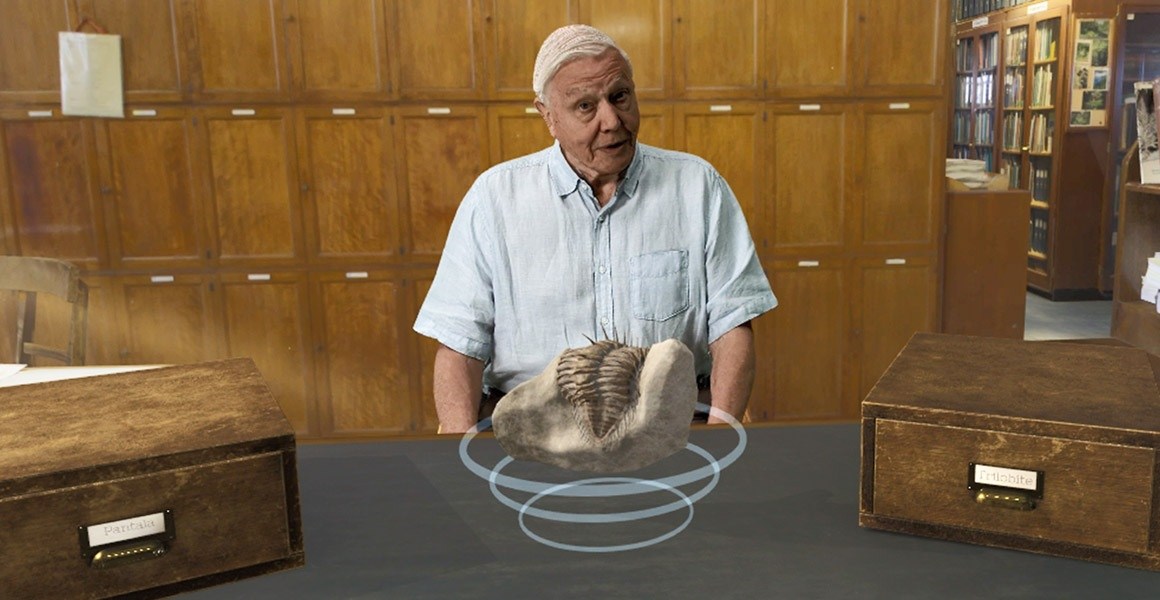 For starters, DRI has found its feet by taking on some contract work. For example, it helped out with the brilliant Hold The World, a VR experience which puts you face-to-face with a photoscanned Sir David Attenborough as he takes you on a supernatural tour of London’s Natural History Museum.
See the full story here: https://venturebeat.com/2018/09/29/why-one-of-sonys-biggest-psvr-advocates-went-indie/
72-year-old Fidelity bets on the future with blockchain, virtual reality and AI
- The Boston-based private company is experimenting with blockchain, artificial intelligence and virtual reality — and is benchmarking itself against digital natives like Nvidia instead of brokerage firms like Charles Schwab.
Failure is acceptable but they had to create a separate place to do it, far away from the retirement and other fund businesses.
 Johnson pointed out that financial services don't have a high "fun factor," which makes it hard for the average person to care about it. That's not obvious during a visit to the lab, where virtual reality headsets are strewn on tables and a corn-hole game sits in the corner.
The "7th Floor Village" at the company's headquarters was designed to counter the staid reputation financial firms tend to have, transporting visitors from Boston's Seaport to Silicon Valley. The floor was redesigned a year ago to jibe with the working environment software engineers expect: open plan with no offices or assigned desks. People work at broad communal tables or standing desks, and bright colored couches are scattered about. Nearby, there is cold brew coffee on tap.
Fidelity is moving to zero fees in some areas. Just a month after announcing it would become the first financial company to offer no-fee index mutual funds, Fidelity attracted roughly $1 billion into the two portfolios. It offers access to more than 260 other commission-free ETFs. On stock trading, the firm is betting that the quality of its brokerage services will resonate with customers more than the appeal of zero fees.
In the meantime, Katie Chase, the head of strategy for Fidelity Center for Applied Technology and head of the Blockchain Incubator (which is a part of FCAT), is exploring uses for both public blockchain and enterprise blockchain. Chase could not comment specifically on the projects but said she's seen massive interest from clients and partners, as well as their own employees.