Augmented reality is coming to movie screens in the form of the Noovie ARcade Halloween Experience launching today and running through Halloween night on Oct. 31.
The AR horror experience is launching in National CineMedia's Noovie pre-show on 21,000 movie screens in 1,700 theaters across the country, including AMC, Cinemark and Regal Entertainment Group.
About 20 minutes before the movie “Venom” or “Halloween,” moviegoers with the Noovie Arcade app can activate the AR experience by pointing their phone camera at the screen.
The AR experiences include having a galactic worm hole opening with aliens pouring out or emojis wreaking virtual havoc in the theater lobby.
Disney chairman and CEO Bob Iger may set the company's direction for preferring augmented reality over VR, but Robert Sumner, associate director at Disney Research, is driving the company's innovation of AR technology.
At Disney, Sumner heads up research in animation and games, including augmented reality. According to the Disney Research website, Sumner and his team endeavor to "bypass technical barriers in animation and game production pipelines with new algorithms that expand the designer's creative toolbox in terms of depiction, movement, deformation, stylization, control, and efficiency."
In this capacity, Sumner has co-authored several publications for research into augmented reality innovations, including AR face projection, a mobile app that lets users re-color paintings in AR, and intelligent AR characters that can react to real-world obstacles.
Sumner's work in advancing technology also extends outside of Disney's doors. After studying computer science at the Georgia Institute of Technology, Sumner earned his M.S. and Ph.D. from the Massachusetts Institute Technology (MIT). Before joining Disney, Sumner worked as a postdoctoral researcher at ETH Zurich, where he now serves as an adjunct professor for the Game Programming Laboratory. He founded the ETH Game Technology Center in 2015; a group focused on fostering research, education, and outreach in game technology.
Robert leads the lab's research in animation and games. His research group strives to bypass technical barriers in animation and game production pipelines with new algorithms that expand the designer's creative toolbox with respect to depiction, movement, deformation, stylization, control, and efficiency.
We spoke to Sumner about what sparked his path toward working on the cutting edge of immersive computing. Below is his lightly edited response.
Describe your first time experiencing AR or VR?
My first experience was around 1996. I was a student volunteer at the SIGGRAPH computer graphics conference and had the chance to try a virtual reality experience in Disney's exhibition space where you fly a magic carpet through the animated world of Aladdin. Even in this early day, the experience was incredible, and I've never forgotten it. Fortunately, a research paper describing the concept is still available.
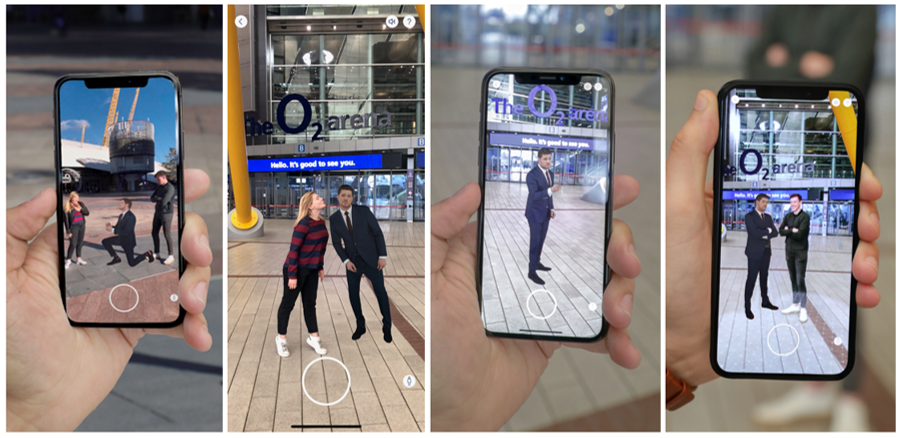
Apparently Bublé has a big gig at London's O2 Arena this Saturday, which makes the timing of this AR experience very convenient. Almost as if some people in marketing did it on purpose or something. O2 claims that this is the first time anyone has done this sort of thing with a musician, and the point of the app is to have Bublé appear on screen in a puff of smoke and interact with fans.
Bublé lovers can pose for selfies with the singer, while the phone user alters his position to get the perfect shot. Fans can also interact with the singer as he beckons them over, kisses them, or gets down on one knee to propose.
See the full post here: https://www.geekwire.com/2018/heres-everything-facebook-announced-oculus-connect-virtual-reality-event/
Here are the biggest unveilings from the event:
Oculus Quest: Combining the power of Oculus Rift and the standalone nature of Oculus Go, this “all-in-one” headset is the total package, according to Zuckerberg. The realization of the long-anticipated “Project Santa Cruz,” Oculus Quest also represents the completion of Facebook’s first generation of VR products.
YouTube VR on Oculus Go: The app brings more than 800,000 immersive videos — from concerts to nature scenes — to Oculus Go. As The Verge notes, this announcement means every Oculus device now has some form of YouTube app.
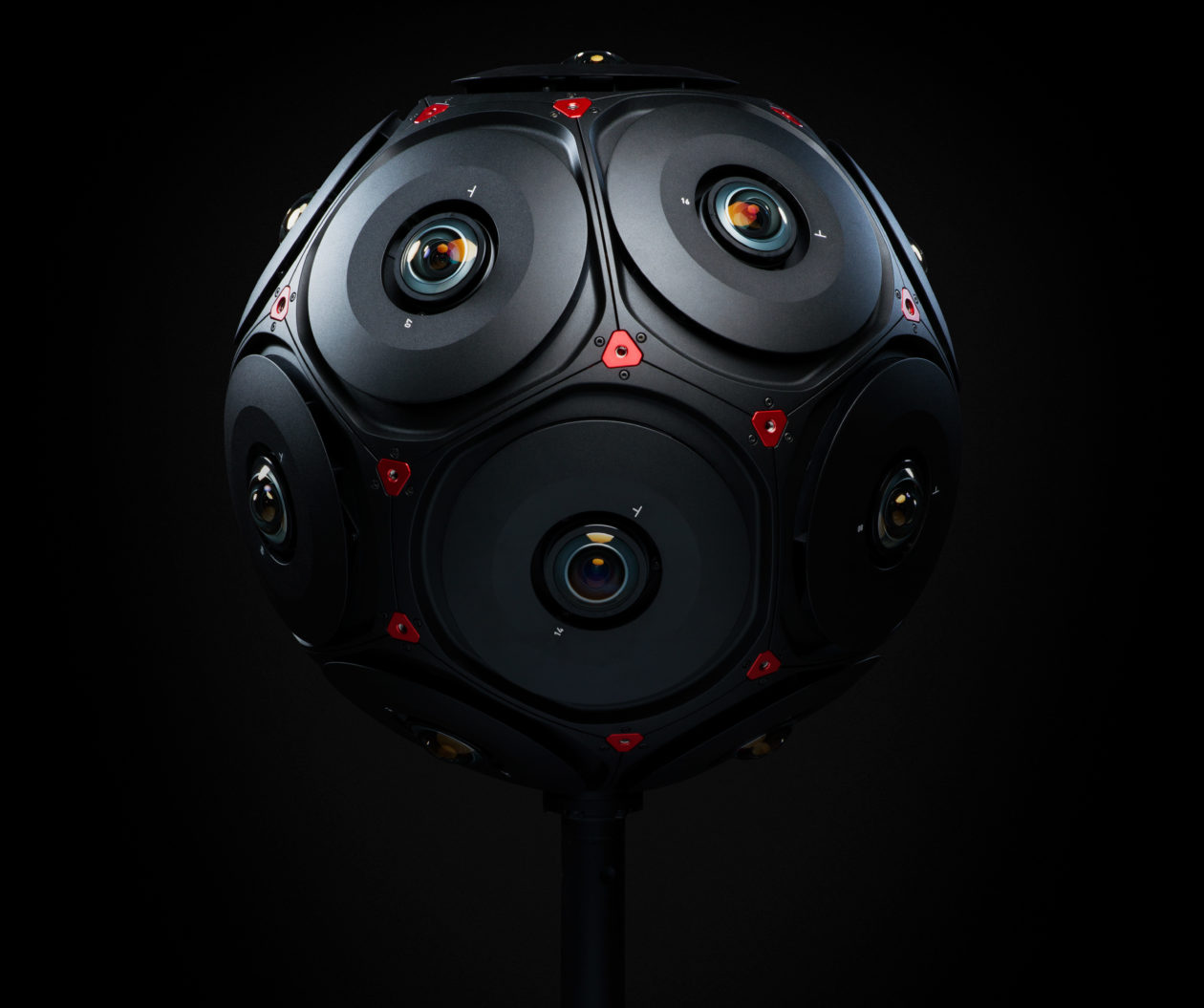
Manifold 360 degree camera from RED: Following up on a promise from its F8 event earlier this year, Facebook unveiled its new 3D/360 degree camerabuilt in partnership with camera maker RED. Facebook didn’t say how much the device would cost or when it would be available.
Oculus Insight: Featured in the Oculus Quest, this tech tracks a user’s position without sensors. It supports the ability to build the experience beyond room scale and also lets users know when they are about to run into a wall.
Casting: As the highly lucrative world of e-sports has shown, people like to watch others play games as much, or even more, than they like to play themselves. Oculus Go will soon support the ability to cast content one user is viewing onto a phone or TV.
New Star Wars VR series: Launching with the Oculus Quest next spring, Vader Immortal: A Star Wars VR Series is a three-part series that takes place between Episode III: Revenge of the Sith and Rogue One. It is written by David S. Goyer, who worked on movies like The Dark Knight and the Blade series.
Oculus Venues with NBA games and more: Announced earlier this year, Oculus Venues transports users to virtual arenas and other, for lack of a better word, venues, to watch events with other users. Facebook today released the fall lineup for Oculus Venues, which includes several NBA games for the first time.
Oculus Rift updates: Facebook did not unveil the next generation Oculus Rift headset, but it did say that the Rift’s Core 2.0 software is rolling out to customers starting today. The updated software includes more personalization features, expressive avatars and the ability for developers to create their own line of items that users can collect for their personal VR living rooms.
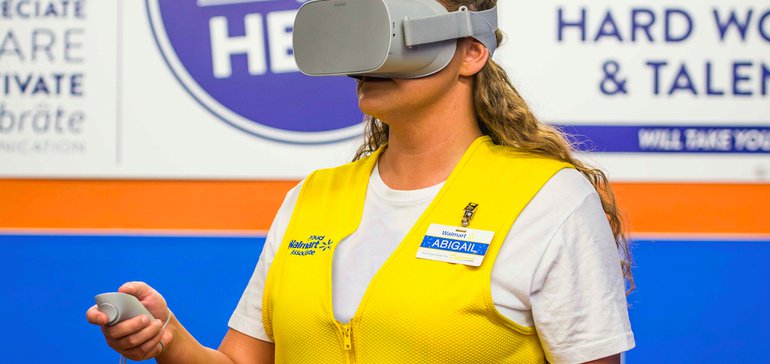
Four headsets will be given to every Walmart Supercenter and two to every Neighborhood Market starting in October. By the end of 2018, every associate will have access to the same training as their managers do at the Academies.
Walmart says its new virtual reality program will help with so-called "soft skills" like customer service and empathy. In addition, the program will help associates with compliance issues, and help them grow familiar with the company's technology, like its Pickup Towers, which will be available in roughly a quarter of the retailer's stores by the end of this year.
“Our job is to really find out where the intersection of this kind of tool and the field sticks,” said Mimi McFaul, Deputy Director of the National Mental Health Innovation Center. “VR basically puts you in a simulated environment that can expose you to a number of different practice environments."
Most of the clinical studies with virtual reality have been done with adults, but there are requests for younger children to get involved. Clinicians hope to use the 3D setting as a way to help patients face their fears and get real time reactions.
While VR cannot completely replace the work of a trained clinician, it’s a tool to help solve problems in mental health or prevent them from developing further.
See the full story here: https://www.thedenverchannel.com/lifestyle/health/virtual-reality-being-tested-on-cu-anschutz-campus-to-treat-mental-illnesses-fears
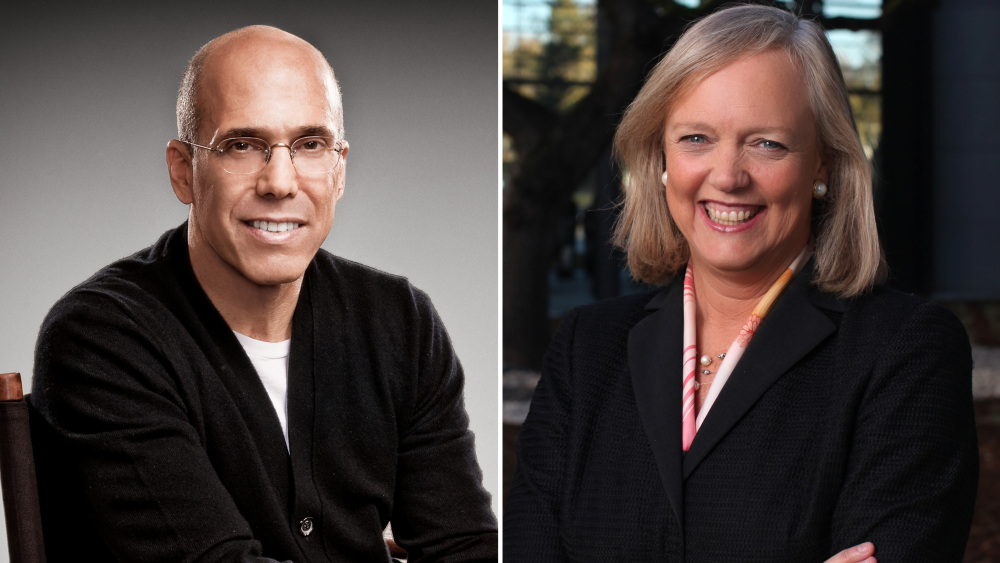
NewTV, incubated by Katzenberg and held by his WndrCo, will seek to charge subscribers $5 per month for content with ads and $8 per month for an ad-free experience on the new service, Whitman said during a presentation at a conference Tuesday organized by AT&T, whose WarnerMedia is an investor in the company.
The pair said they expected to reveal a formal name for the project in coming weeks. Launch of the new service is expected in late 2019 or “the start of 2020,” Whitman said. The company expects to distribute a premium lineup of original, short-form series comprising episodes of 10 minutes each, sometimes less.
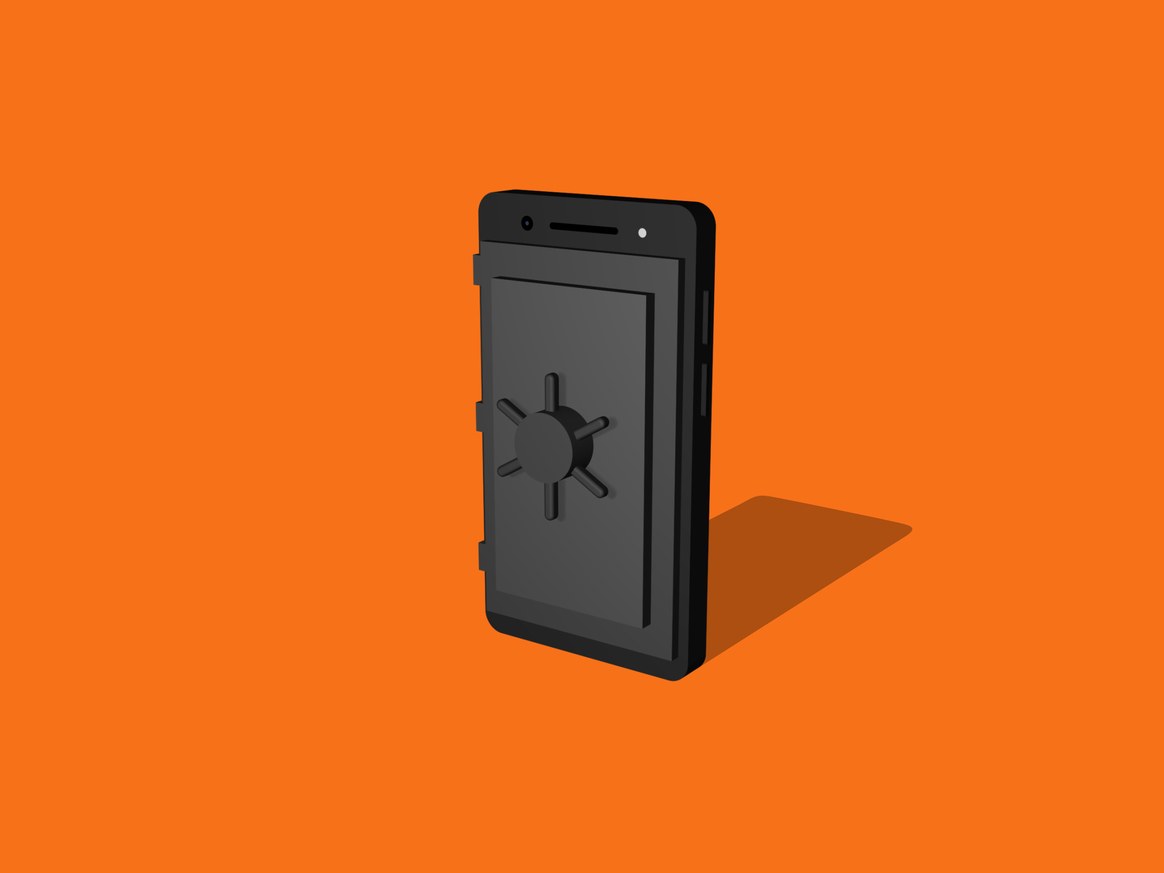
BLOCKCHAIN PHONES ARE coming, that much is certain. The Sirin Labs Finney and the HTC Exodus are both expected by the end of the year, each with its own, sometimes vaguely defined sense of what exactly that term means. HTC’s Phil Chen, who spearheaded Exodus development, has at least started to fill in the blanks of how the Exodus will pull off its most important trick: keeping your cryptocurrency safe.
The Exodus has loftier ambitions than mere storage, of course. “A few years down the road, we see a world where people own their own identities and data, where everyone understands the concept and economics of digital property,” says Chen, HTC's decentralized chief officer. For the moment, though, the primary concern for the Exodus’s intended audience is how well it works as a hardware wallet.
The HTC Exodus aims instead for something of a compromise. It isn’t quite cold storage, but at least it empowers users by allowing them to hold their own keys. It does so by placing them in a so-called trusted execution environment, a part of an ARM chip called TrustZone. The secure enclave sits apart from the operating system, designed to inoculate precious cargo even in the event of a broader breach. Think of it as a smartphone’s panic room.
The concept of a secure enclave isn’t new; Intel has offered one for PCs for some time, and Apple uses one to protect the biometric data—your fingerprint and face—that it uses to unlock the iPhone. Even TrustZone has been around for years, commonly used by studios and such to lock down DRM-protected content.
[If you lose your key] HTC’s proposed failsafe: You can split your key among three to five people you trust, all of whom will need to download an app for this to work. You won’t need their help to assign transactions, but you will if you lose your phone.
Twitter on Tuesday announced a new policy addressing “dehumanizing speech,” which will take effect later this year, and for the first time the public will be able to formally provide the company with feedback on the proposed rule.
The policy will prohibit “content that dehumanizes others based on their membership in an identifiable group, even when the material does not include a direct target.” It expands upon Twitter’s existing hateful conduct policy prohibiting users from threatening violence or directly attacking a specific individual on the basis of characteristics such as race, sexual orientation, or gender.
“Dehumanization is important since it leads to real harm; it's just challenging to define precisely, and it's critical to protect freedom of speech as well,” says Benesch.
After the dehumanizing speech statute becomes a permanent part of Twitter’s rules, the hardest work of actually enforcing it will begin. Unlike, say, a cryptocurrency scam, dehumanizing speech might be difficult to spot—in part because it’s dependent on context and hard to exactly define.
What's more, Twitter may need to decide what to do about high-profile users like President Donald Trump, who once tweetedthat Democrats want illegal immigrants “to pour into and infest our Country.” The company historically has allowed for world leaders whose statements may violate policies but also are newsworthy.