MIT researchers are developing AI for tracking sensors inside the body with wireless signals
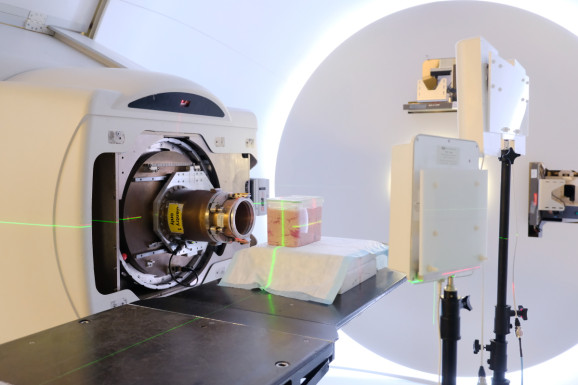 Researchers from MIT’s Computer Science AI Lab (CSAIL) are developing methods for using wireless radio signals to detect sensors inside the human body. The ReMix system could be used to find ingestible microchip implants, a technique its creators hope can someday assist in medical imaging, delivering drugs to specific parts of the body, or tracking the movement of tumors.
A study detailing the team‘s findings is being presented this week at the SIGCOMM international conference in Budapest, Hungary.
Initial tests were conducted by placing a microchip inside a fake tumor and then placing that fake tumor into varying forms of animal tissue, like a whole chicken, pork belly, or containers of chicken fat or phantom human tissue.
Today ReMix is able to detect the location of a microchip with 1.4 centimeter accuracy, though Katabi believes the AI needs to be accurate within millimeters to be considered in a clinical setting.
See the full story here: https://venturebeat.com/2018/08/19/mit-researchers-are-developing-ai-for-tracking-sensors-inside-the-body-with-wireless-signals/
‘Weird Al’ Yankovic Goes Virtual Reality in New Multi-Sensory Comedy Short

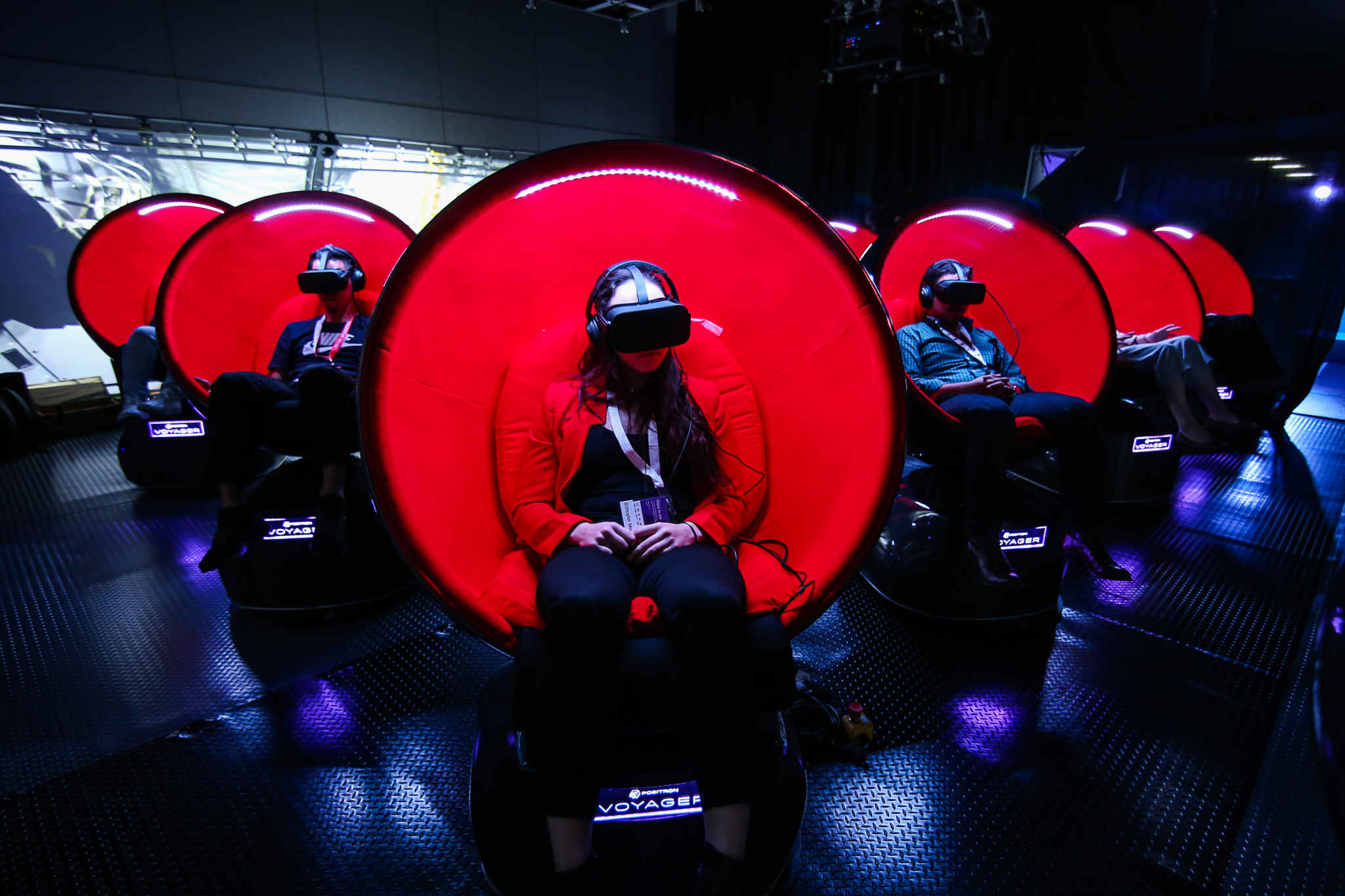 ‘Weird Al’ Yankovic is making his virtual reality (VR) debut in a new comedic short film called “Shady Friend” that is being produced exclusively for the Positron Voyager VR motion chair and that sounds even trippier than most of Yankovic’s vast catalog of oddball hits.
Case in point: The resulting short film will include not only motion, but also scents and haptic elements — which should make for an interesting experience, given the topic. “Shady Friend” is all about a heartbroken hero who accidentally takes some psychedelic drugs his less-than reputable buddy has brought over to his apartment.
This is the first time a VR film has been produced exclusively for Voyager motion chairs, which are so far only available in select theaters and VR centers.
See the full story here: https://variety.com/2018/digital/news/weird-al-yankovic-vr-shady-friend-positron-1202909894/
20 heritage tourism sites in Karnataka to get a layer of augmented reality
 The musical pillars of the Vittala Temple in Hampi, currently out of bounds for tourists, will soon come alive if you point your smartphone at it.
So will the history of Nandi Hills, Devanahalli Fort, Belur-Halebid, Shravanabelagola, Gol Gumbaz and the Bahmani tombs. These are among the 20 heritage sites that will have virtual tours and augmented reality (AR).
As a pilot, AR interventions are already active in heritage sites in the city such as Cubbon Park, Bangalore Palace, Tipu Sultan’s Summer Palace, Bangalore Fort, Lalbagh and some old structures on MG Road. The development of the 20 identified tourist sites is budgeted at ₹120 crore, which includes technological and physical amenities.
Vivek Jain, founder of AR platform FlippAR that is helping the tourism department with this initiative, said that with researched content in place, the team will identify specific areas of interest in every location.
See the full story here: https://tech.economictimes.indiatimes.com/news/technology/20-heritage-tourism-sites-in-karnataka-to-get-a-layer-of-augmented-reality/65482413
Why I’m leaving UI for UX
 1. Soft skills vs technical skills

As a UI designer, we are constantly trying to stay up-to-date with the latest new tool or software,
In contrast, UX skills can withstand the test of time. Soft skills, honed through user research and stakeholder collaborations, are transferable to future jobs.
2. User needs vs aesthetics
3. Better career progression
UX is all the buzz in town. From large multinational companies to new startups, every company is hiring a UX designer. Since the field is relatively new, there are more opportunities for designers wanting to switch into UX.
Rather than hiding in a cubicle working on the design of a user interface, UX requires collaboration and communication with stakeholders beyond the comforts of the desk. Teaming up with stakeholders to achieve business goals can help you get noticed in the company.
4. More resources needed to practice UX
5. UX is not limited to a digital outcome
6. Once you’ve UX-ed, you‘re never turning back
Learning about UX has made me more aware of the pleasure I derive from a well-designed product. It annoys me when I chance upon a complicated form to fill or a poorly placed navigation or button.
See the full post here: https://www.techinasia.com/talk/leaving-ui-for-ux
Beat Saber Tournament Looks To Become World’s Largest VR Arcade Event
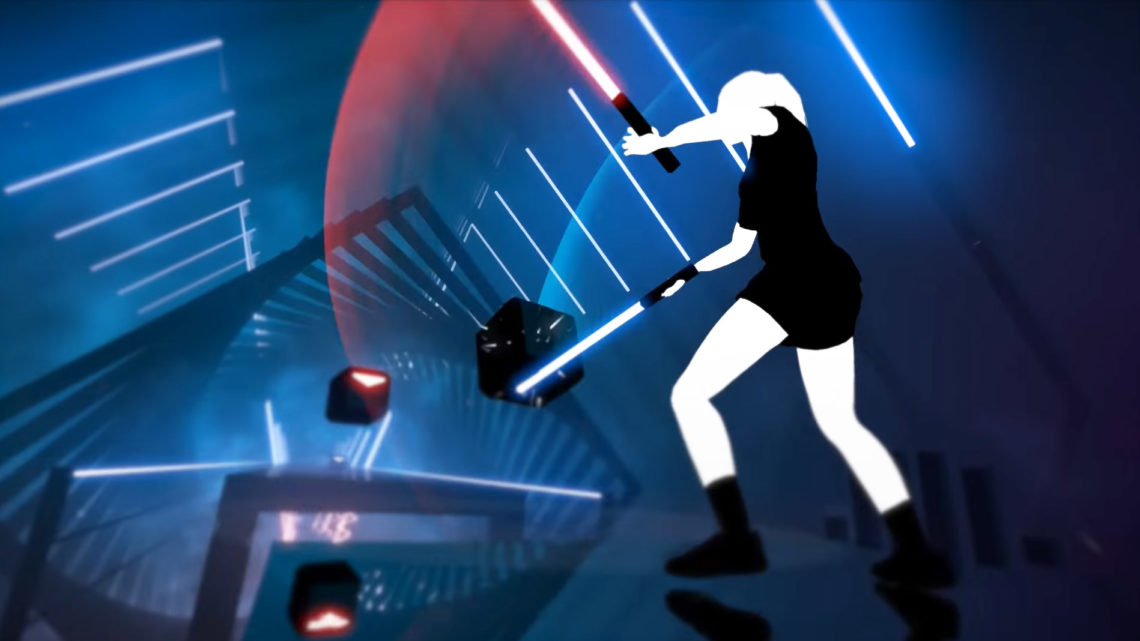 To finally determine who’s top dog in this world of neon sword-dancing, the Virtual Athletics League has teamed up with SpringboardVR and LIV to host the International Beat Saber Tournament, a global competition open to the public taking place at participating VR arcades August 17th.
The 1-day competition features two formats in which participants can compete. The easiest event format available, Rolling High Score allows the public to compete throughout the enitirety of the day. The venue manages an ongoing scoreboard, keeping track of the highest scores for final submission at the end of the day. Competitors in this format are required to play the tracks “$100 Bills” and “Escape” on expert difficulty with “no fail mode” engaged.
Dedicated Events, on the other hand, require participating arcades to commit their entire venue to the Beat Saber competition for at least two full hours. Players are free to perform any track they’d like on expert mode up until the finals, where the remaining two competitors will duke it out over “$100 Bills” and “Escape.”
Grace Quan: We don’t know what skills Canada will need in the future — and that’s the point
 As a 2016 survey by the Business Council of Canada revealed, among the 90 major Canadian companies surveyed, the top three most important competencies for mid-level hires were non-technical: leadership, people/relationship, and collaboration/teamwork. One of the biggest challenges for companies right now is finding the right combination of attributes in an employee, and that problem will only become greater in the future.
...we know that one thing we’ll need is a high degree of adaptability: the ability to navigate new territory and grow accordingly. To support this type of workforce, we need to focus as much on how emerging workers develop as what they’re taught. We need development strategies that are broad and flexible enough to meet the needs of an unknown future.
For example, co-ops, internships, or field experience — broadly known as work-integrated learning — are increasingly important to the digital economy and to any company looking to innovate.
See the full story here: https://vancouversun.com/opinion/op-ed/grace-quan-we-dont-know-what-skills-canada-will-need-in-the-future-and-thats-the-point
Royal Swedish Opera’s Virtual Reality Recording Nominated for Film Festival Awards
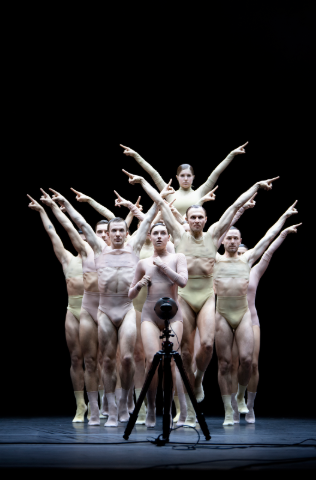 The Royal Swedish Opera has announced that its production of Sharon Eyal work “Half Life,” which was recorded using Virtual Reality, has been nominated for awards at the prestigious Venice International Film Festival, as well as the Biennale de Lyon festival.
“Half Life VR,” as the recording of the production is called, allows the audience to experience the dancers from 60 vantage points that offer details that otherwise could not be seen from their seats.
See the full story here: http://operawire.com/royal-swedish-operas-virtual-reality-recording-nominated-for-film-festival-awards/
Magic Leap Is Now David Versus Apple’s Goliath, & Microsoft Goes Hollywood
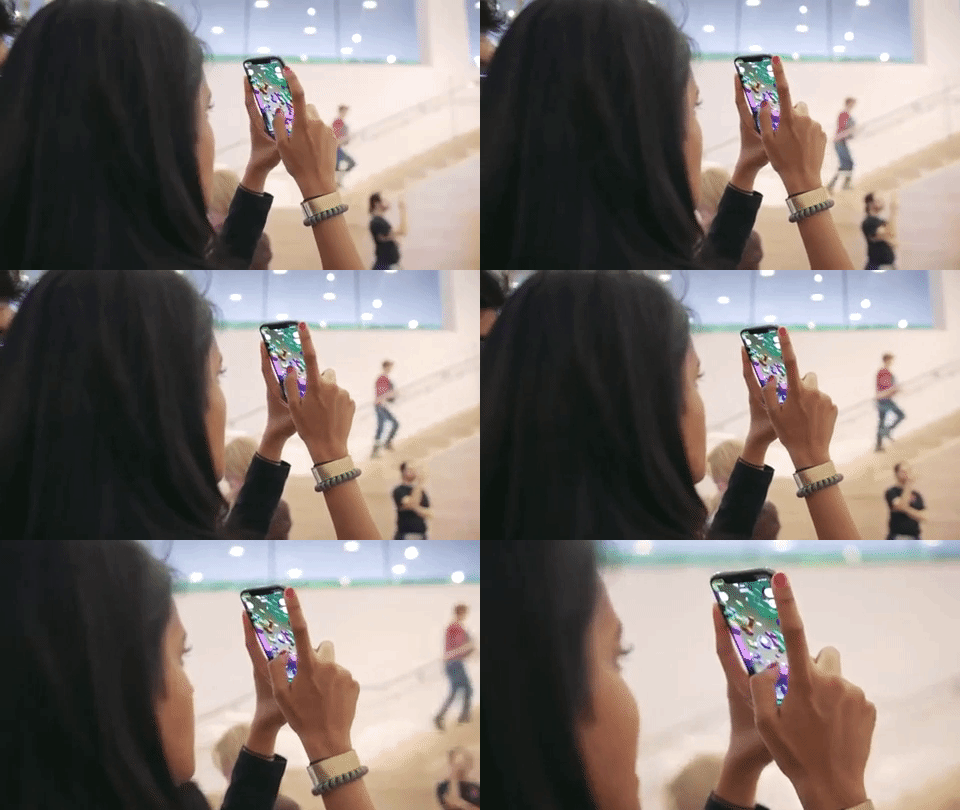 While Magic Leap has gained attention for its ability to raise capital, the company (now with an actual product on the market) still faces an uphill climb against the titans of the industry.
Namely, there's the looming presence of Apple, who 18 months ago didn't even have an AR product or service to its name. Now, the trillion-dollar company leads the mobile AR app ecosystem, and its own AR wearable will reportedly arrive sooner than expected. And there's Microsoft, who didn't begin prototyping HoloLens until after Magic Leap's emergence from stealth and still beat Magic Leap One to market. Now Microsoft is moving even faster by nurturing the same developer market that Magic Leap is concentrating on by launching yet another Microsoft Mixed Reality Capture Studio.
A multitude of AR startups, like Ubiquity6, have similar hopes of bringing their technology to developers and customers, though they don't have near the war chest that Magic Leap has accumulated. But, like Magic Leap, Ubiquity6 now has new funding that makes it a company to watch in the AR space.
See the full story here: https://next.reality.news/news/market-reality-magic-leap-is-now-david-versus-apples-goliath-microsoft-goes-hollywood-0186584/
Inside Remnant, an Interactive Story Told Through Mixed Reality and Food
 About 41 guests were invited to partake in Remnant’s culinary adventure, which unfolded over several hours and three courses. The interactive elements were introduced slowly as the night progressed. During the appetizer course, projection mapping, sound effects, and actors were used to establish the narrative, while the chefs served up canapes and other comforting, familiar snacks to set the tone.
The second course incorporated augmented reality. Guests were given iPads and used them to interact with virtual objects on the tables. The actors encouraged them to forage and hunt for food within the app, which led to the meal’s main course — deer carpaccio served on a pair of antlers, with a red sauce that looked like blood, and a roasted deer leg served with vegetables.
For the final course, Laidacker and Sarkeesian turned the restaurant into an escape room, complete with puzzle boxes for each table to solve. Finishing the puzzles unlocked the story’s ending — and the dessert. Then, at the end of the night, each guest received a little box containing a fresh croissant and jam for the next morning, a delicious reminder of the meal and narrative they just encountered.
See the full story here: https://variety.com/2018/gaming/features/mixed-flour-remnant-dinner-1202902258/
Brussels to act against tech groups over terror content
 The European Commission has decided to abandon a voluntary approach to get big internet platforms to remove terror-related videos, posts and audio clips from their websites, in favour of tougher draft regulation due to be published next month.
“We cannot afford to relax or become complacent in the face of such a shadowy and destructive phenomenon,” said Mr King.
One EU official said the commission’s push for an EU-wide law targeting terrorist content reflected concern that European governments would take unilateral action. Germany this year enforced a high profile “hate speech” law that targets anything from fake news to racist content. Companies must remove potentially illegal material within 24 hours or face fines of up to €50m.
The EU still opts for self-regulation by platforms on more subjective areas such as hate speech and fake news.
See the full story here: https://www.ft.com/content/a4068e88-a22a-11e8-85da-eeb7a9ce36e4