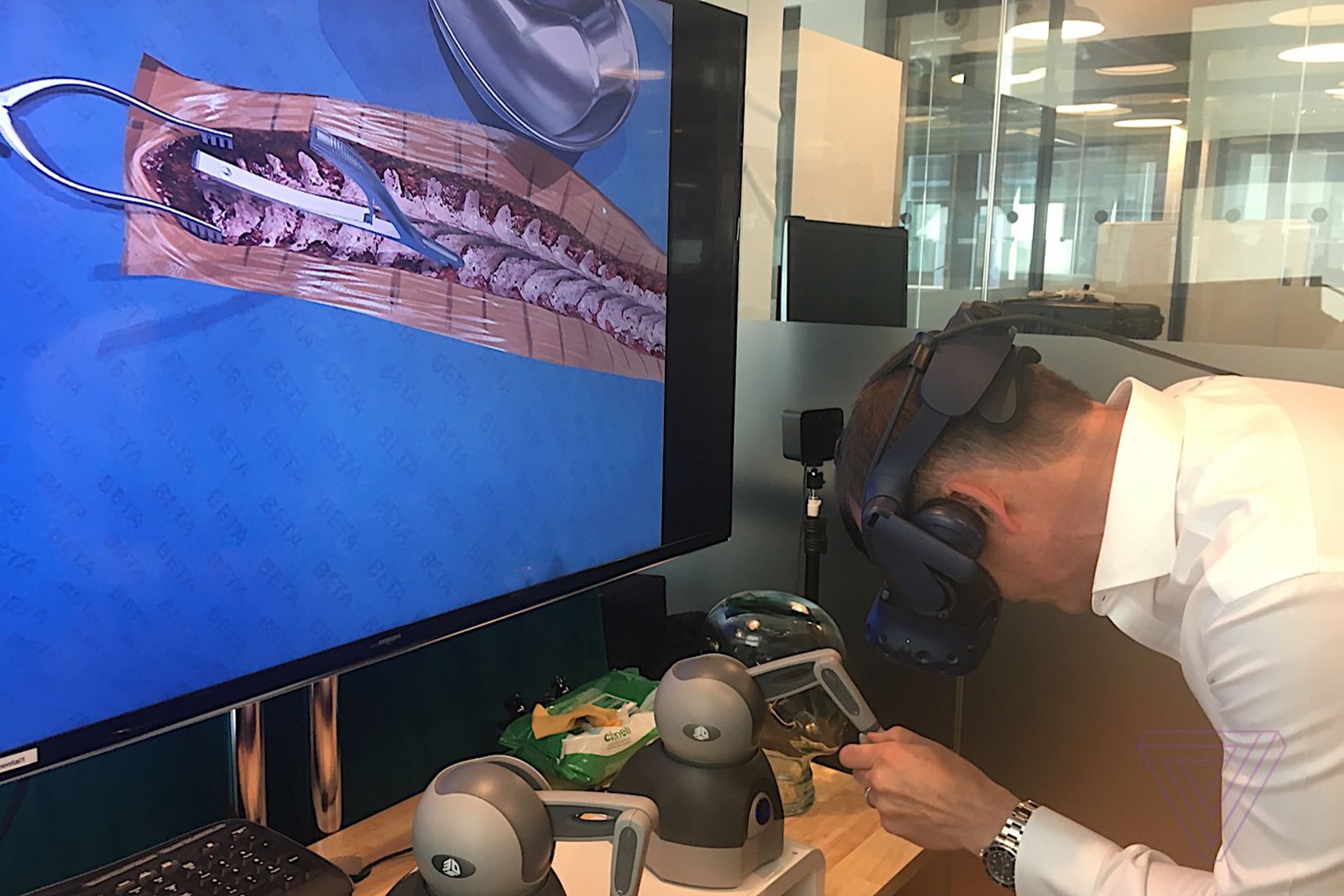
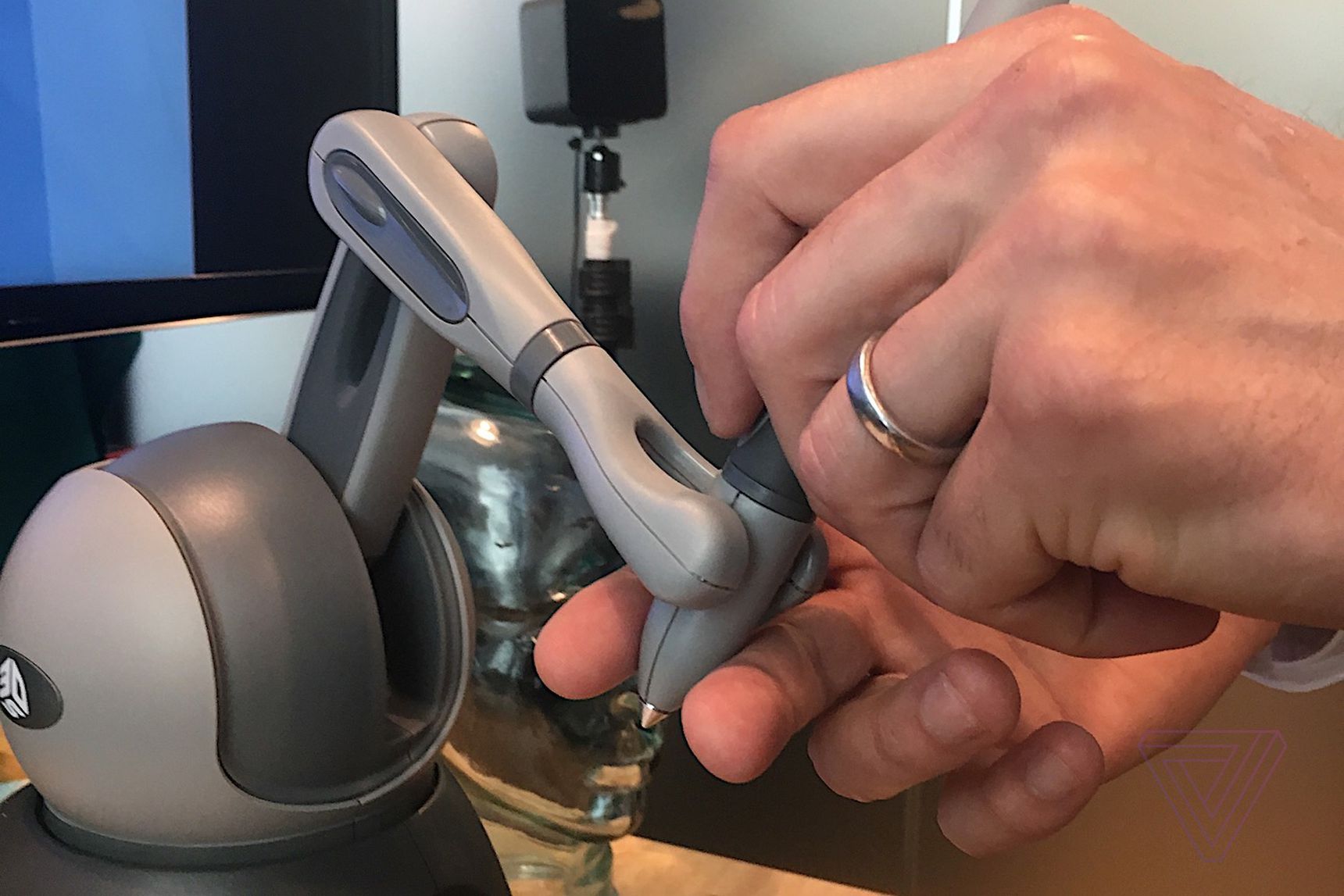
But at the headquarters of London startup FundamentalVR, I got to try out what might be the surgical training tool of the future. It uses cheap virtual reality components combined with haptic feedback to give doctors as realistic a training experience as current tech will allow. Wearing an HTC Vive headset and wielding a pair of pen-shaped 3D manipulators, I sawed off a knee bone and bored holes in the spine of an unprotesting virtual patient. And while I don’t quite feel confident enough to don scrubs and head to the nearest OR, the simulation felt to me like much more than a novelty. It felt like a learning experience.
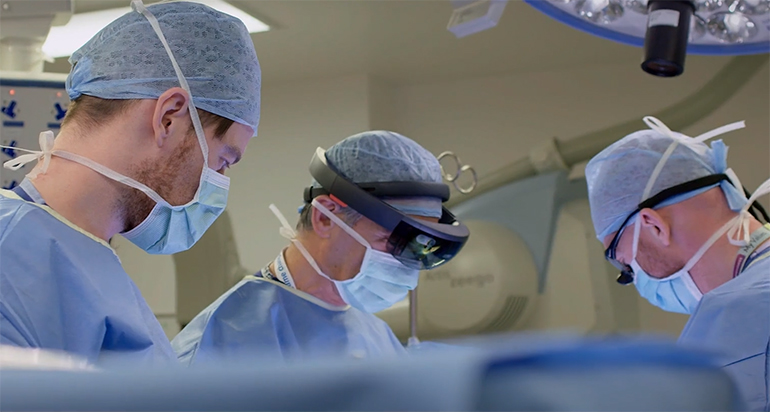
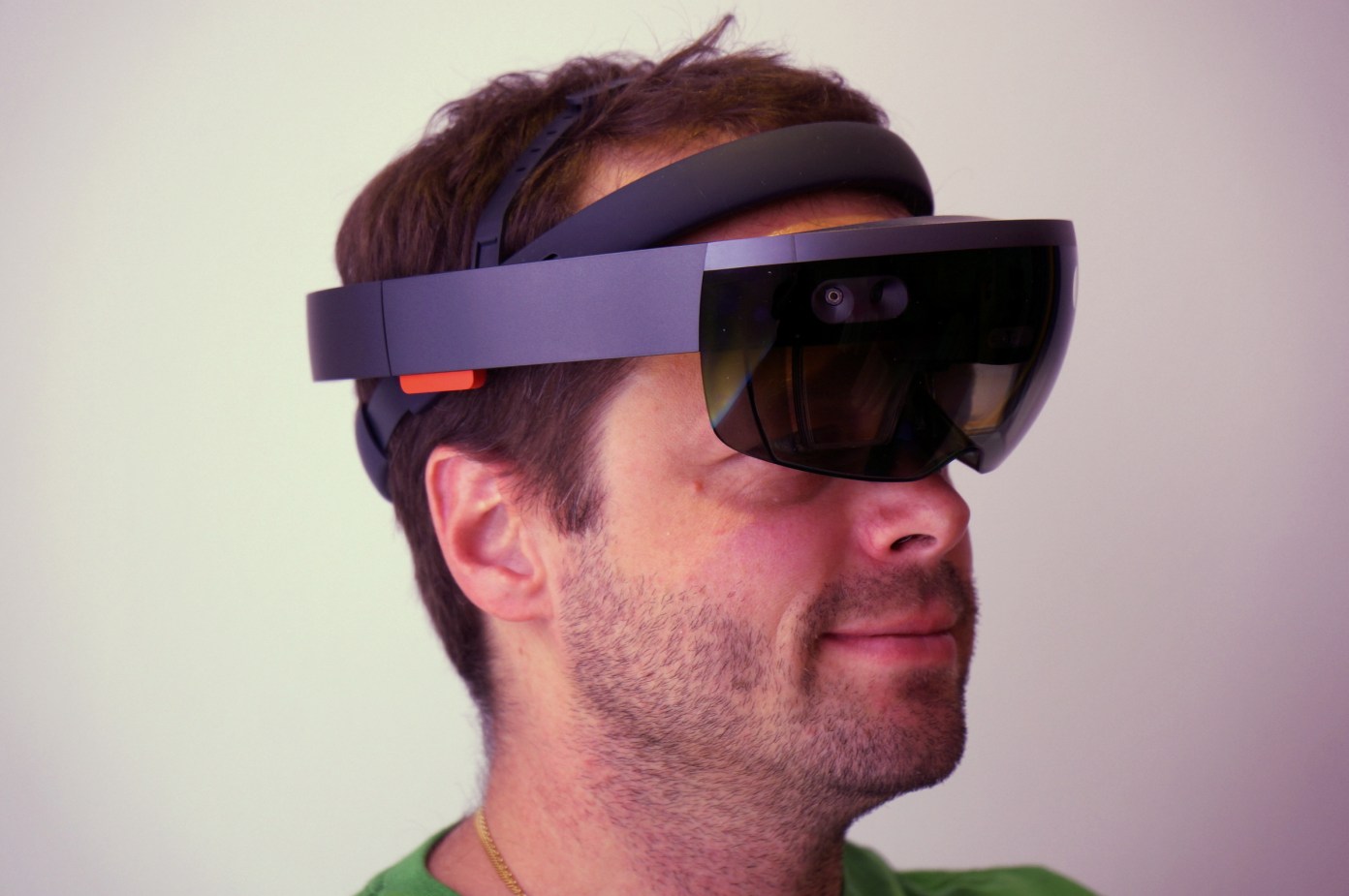
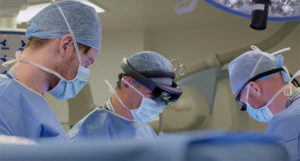 HoloLens technology is being paired with Microsoft’s Surface Hub, a kind of digital whiteboard. The idea is that the surgical team can gather together around a Surface Hub to review patient information, discuss the details of a procedure, and select what information should be readily accessible during surgery. During the procedure, a surgeon wearing a HoloLens would be able to review a CT or MRI scan, access other data in the electronic medical records, and to be able to manipulate these so as to get a clear picture of what is being worked on and what needs to be done.
“Imaging a patient’s heart from the inside and from the outside is absolutely essential,” said Rafael Guerrero, a cardiac surgeon at Alder Hey. “I have to visualize that 3D view in my head in order to do this operation.
See the full story here: https://www.medgadget.com/2018/08/hospital-introducing-hololens-augmented-reality-into-the-operating-room.html
 “ARROUND’s disruptive mobile marketing solution is the world’s first decentralized advertising network based in augmented reality.”
“Because we’re building a 3D map, we can run campaigns for specific brands, and guide consumers into shops where these brands are on offer, directly to the shelf where they can receive a discount or some kind of incentive to make the purchase. This is really the first time that big data, brands and the public have been brought together in this way,” claims Neil Bryant.
The platform will release its own token, the ARR, to support all transactions within the platform. While all prices will be in fiat currencies, all transactions will be undertaken in tokens. Blockchain guarantees the intellectual property and privacy rights as well as the commercial interests of everyone involved.
[PhilNote: the pitch...] Despite a number of traditional players as well as ICO projects entering the commercial space, Bryant is confident that ARROUND stands out: “None of our competitors offers what we can. There are companies that make AR apps to order, some ad networks are looking into AR adverts, there are social networks that are playing with AR, and there are ICOs that are trying to build AR environments like Second Life did with VR, but none of them have a complete package, or have a foundation based on blockchain like ours.”
ARROUND is currently raising funds through a token sale. The company has already raised $1 million in its Pre-sale and is now well on the way to meeting its $5 million soft cap.
“A few years ago, everyone thought VR was the future. But, in fact, AR is a perfect example of technology adapting to real-world situations. Right now, the future looks very bright for AR and for ARROUND,” says Bryant.
See the full story here: https://www.chipin.com/arround-blockchain-decentralized-augmented-reality-ecosystem/
 The key here is that computers and smartphones have been designed for interaction through their traditional input mediums: keyboards, mice, touchscreens, buttons. Their applications have also been designed to provide better options and features when the user is directly staring at their display screens.
How many times do you use Siri on your iPhone every day? Probably very little. And even less on your MacBook. And let’s face it, listening to your email while cooking dinner doesn’t make sense, because you’ll either end up becoming distracted from your email or your cooking (the latter is worse).
In order to make their AI assistants and chatbots more relevant, companies try to broaden their features without taking into consideration the limits of deep learning and neural networks. But some of the promises that companies make are simply not achievable with current blends of AI. Consequently, those features either end up making too many mistakes and frustrating users, or the companies that develop them are forced to hire humans to make up for the shortcomings of their AI.
That’s why the role of AI assistants such as Alexa, Siri and Google Assistant is much more important in smart speakers. The more capable their artificial intelligence is, the more useful the smart speakers become.
But smart speakers are meant for specific environments, in your car, home or office. You don’t carry them around with you.
A recent report by The Information reveals that only 2 percent of the users of Amazon Echo use the smart speaker for shopping.
Here’s what I think: Trying to give AI assistants human-like appearances and characteristics is not a good idea, because it would create false impressions and expectations. Let’s not forget that we’re still in the era of narrow AI, no matter how impressive our achievements have been.
Instead of wasting energy on creating humanoid models to interact with users in emotional ways, Magic Leap should focus on creating an AI assistant that can perform distinct tasks and commands, even if it doesn’t even have a graphical appearance. This is especially crucial for augmented reality headsets, because it’s a mix of virtual elements and the real world. AI assistants should help augment our interactions with the real world, not distract us from the tasks we’re accomplishing.
See the full story here: https://bdtechtalks.com/2018/08/13/augmented-reality-artificial-intelligence-assistants/
 When the Los Angeles–based artist Nancy Baker Cahill created the augmented reality app 4th Wall in February, she wanted to share her art with a wider audience and give her works’ viewers more agency. In its initial iteration, the app enabled people around the world to see Baker Cahill’s works on paper and virtual reality drawings, which often focus on the human body as a site of struggle, as augmented reality—that is, transposed onto her viewers’ environment via their Androids, iPhones, and iPads.
“I’ve always been interested in imagining new models for public art,” she told ARTnews. “My long-term goal is that [4th Wall] will be a large-scale, public AR art exhibition that is ever-changing.”
On Friday, 4th Wall, which is available free of charge, launched a new feature, “Coordinates,” which allows users to activate site-specific pieces by Baker Cahill and five participating artists—Tanya Aguiñiga, Beatriz Cortez, Kenturah Davis, Micol Hebron, and Debra Scacco—through their smartphones and tablets. With the exception of Hebron’s and Scacco’s works, all of the AR projects on “Coordinates” are based on already existing artworks.
See the full story here: http://www.artnews.com/2018/08/13/new-model-public-art-coordinates-feature-4th-wall-app-allows-users-view-artist-designed-ar-projects/
 Virtual reality (VR) may effectively alleviate pain and anxiety for unmedicated women experiencing contractions during the first stage of labor, according to a study published in Anesthesia & Analgesia.
The use of VR was examined in 27 laboring women who were giving birth for the firsttime and anticipating a vaginal delivery. Unmedicated study participants with or without VR were observed for equivalent times during contractions in the first stage of labor. Women were asked to rate their pain intensity using numeric rating scales, to rate the amount of time spent thinking about pain (cognitive pain dimension), as well as pain unpleasantness (affective pain dimension) and worst pain intensity (sensory pain dimension).
Participants in the VR ns no VR group had lower numeric rating scale scores for worst pain intensity (slope −1.5; 95% CI, −0.8 to −2.2), lower affective pain affective pain (slope −2.5; 95% CI, −1.6 to −3.3), cognitive pain (slope −3.1; 95% CI, −2.4 to −3.8), and anxiety (slope −1.5; 95% CI, −0.8 to −2.3).
In total, 82% of participants reported that they very much/completely enjoyed using VR during labor, and 70% said they would be very/completely interested in a new VR development specifically for labor.
See the full story here: https://www.clinicalpainadvisor.com/acute-pain/virtual-reality-first-stage-labor-contractions-pain-dimensions-anxiety/article/787825/
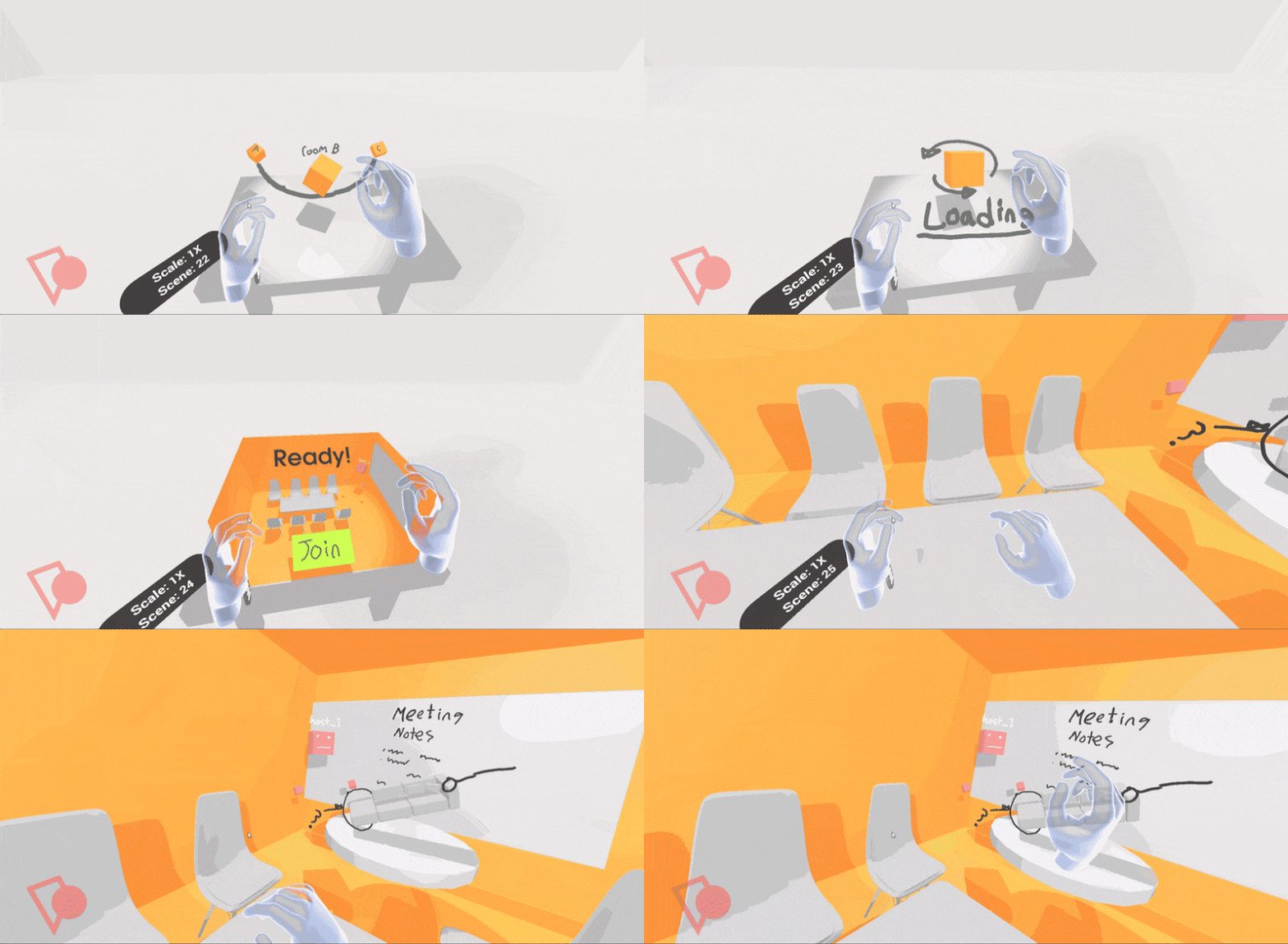
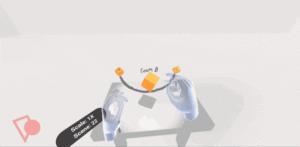 Our name is Moment, we are backed by Boost VC, McCune Capital (Jason Cahill), Jesse Kao (former Point72 Hedge Fund Investment Analyst) and we are making it possible for any designer in the world to become a magician who can pull objects out of thin air. I am creating Moment alongside my incredible co-founders, Michael Markman (CEO), James Korin(CTO), and Joe Dolan (Lead Engineer). It is a mind-opening prototyping tool for designers working on virtual reality, augmented reality, physical spaces, and more. If you are currently working in any of these fields, and you want to join our beta, please let us know.
1. Prototype Interactions
Create inside the VR.
By removing these barriers with an immersive prototyping tool, we believe that creators, no matter their skill set or technical level, will be able to quickly “wireframe” their ideas, send them to any member of their team or client’s team, and get quick and useful feedback.
See the full story here: https://medium.com/@helensitu/how-the-next-generation-of-human-experiences-will-be-designed-92556ce6e53d
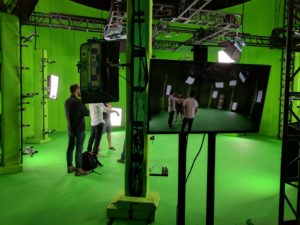 Our goal is to curate MR solutions and make them accessible, reliably, so that creators from any field can place incredibly realistic people and objects into their immersive experiences with captures that feel authentic to the real thing.
We begin this journey with the incredible Mixed Reality Capture Studios team from Microsoft.
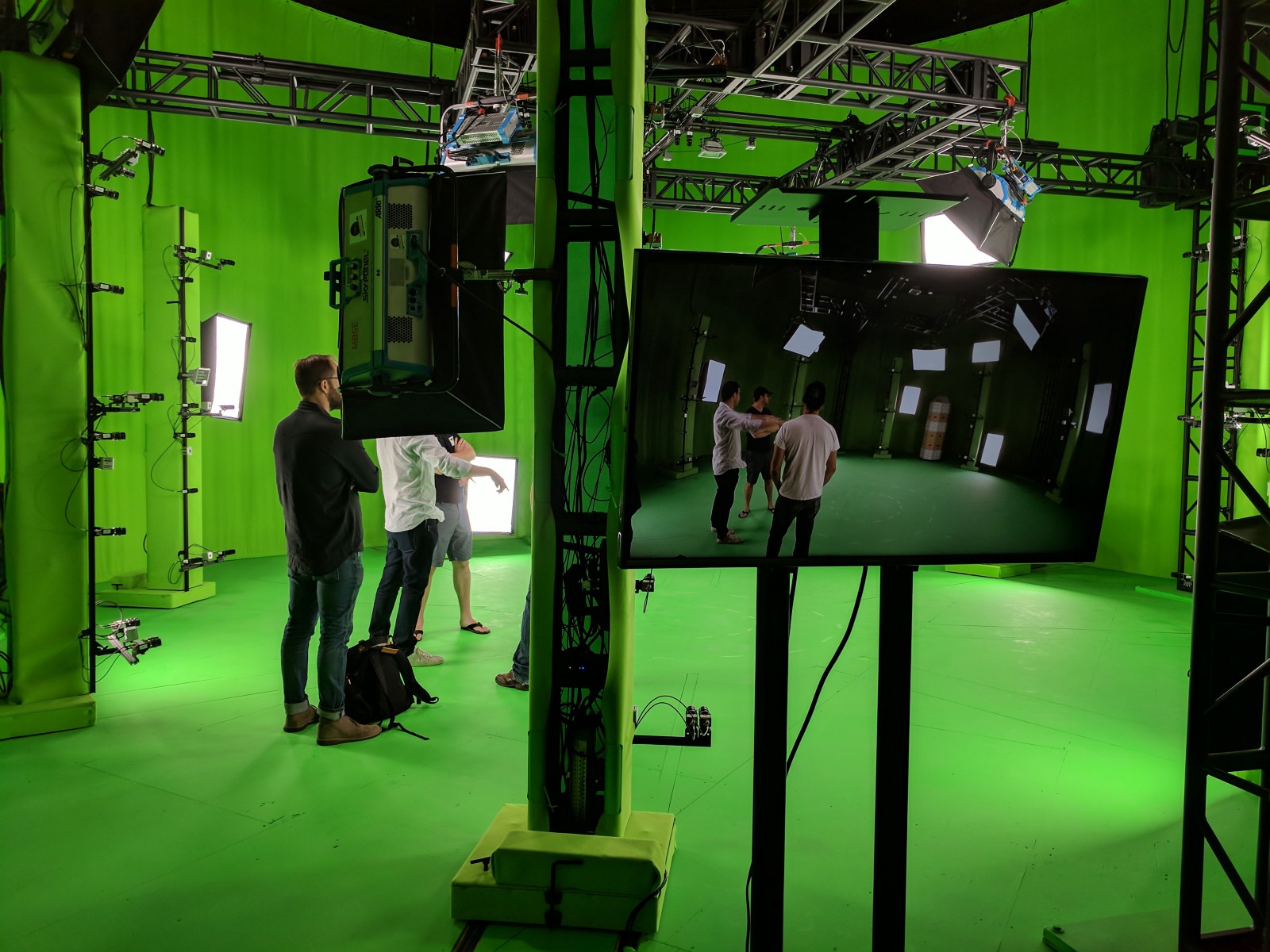
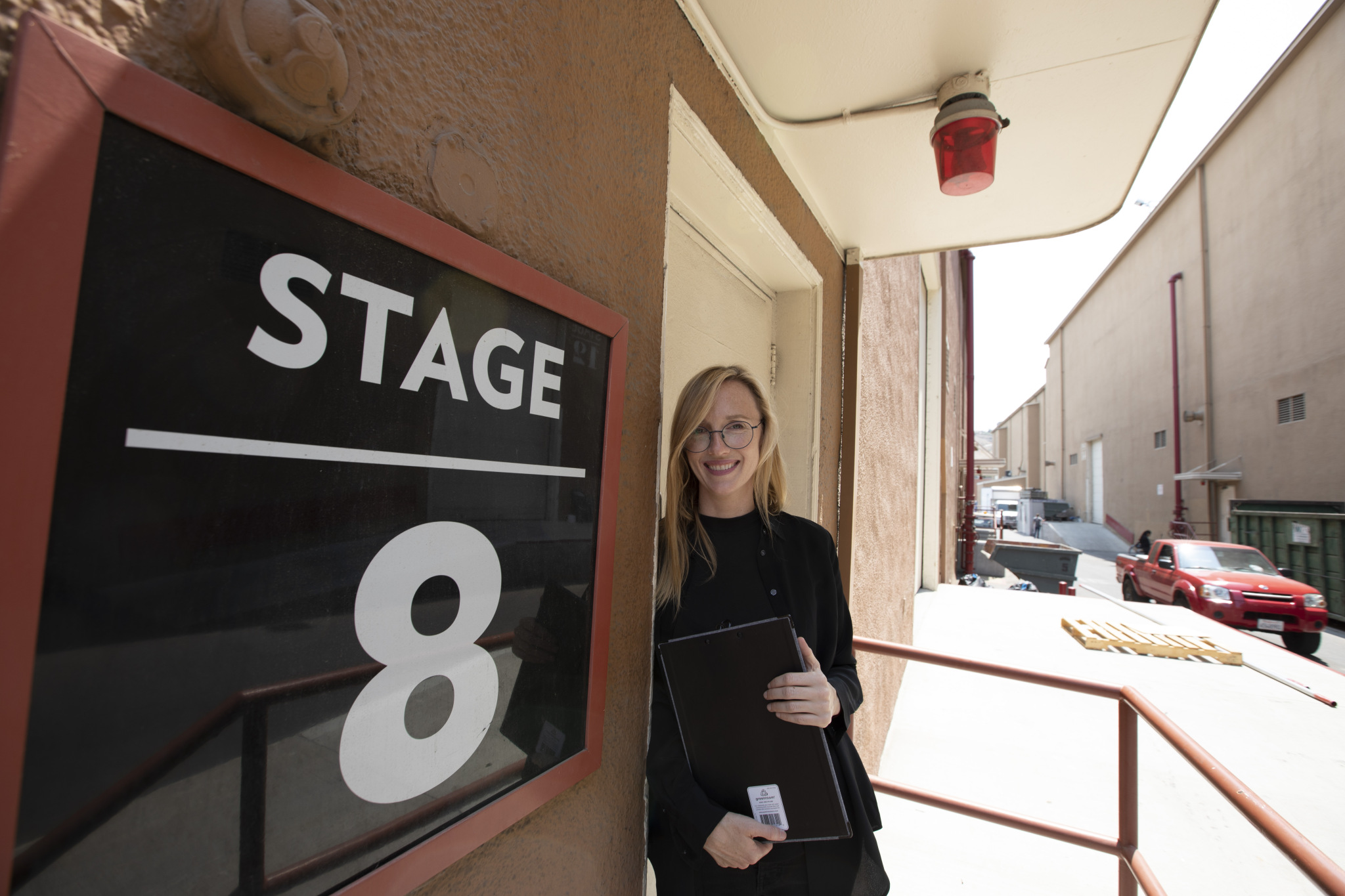
Metastage has built our capture system with top of the line everything: 106 12mp capable cameras, state of the art processing, and designed the system to be as versatile as possible for creators.
The heart of the operation is the capture stage itself, which measures 35 feet in diameter, capable of capturing a space of up to 10 feet in diameter volumetrically. The stage is equipped with 106 cameras (53 RGB and 53 infrared) future-proofed with 12 megapixel sensors, even though the software currently only accommodates 4 megapixels.
 See the full story here: https://medium.com/@christinaheller/ive-got-some-exciting-news-80d02195ef29
Also https://variety.com/2018/digital/news/metastage-mixed-reality-capture-studio-1202903828/