Latest tech at new Middlesbrough travel agent books holidays through virtual reality
 Thomas Cook is the newest retailer to open its doors in Hillstreet Shopping Centre, taking over the former Horology Centre unit from its current Linthorpe Road location.
This will be the company’s 17th ‘discovery’ store, which opened on August 1, and offers customers online appointment-booking systems, video content and virtual reality experiences.
The company says discovery stores have been designed to reflect how customers research and book holidays today, bringing to life all aspects of a holiday including the hotels, destinations and the flight experience through VR technology.
See the full story here: https://www.gazettelive.co.uk/news/teesside-news/latest-tech-new-middlesbrough-travel-14989157
Speaking to the people who live out love affairs in virtual reality
 Max* met his partner around 18 months ago, when they struck up conversation in a bar. The pair found they had lots in common; small talk turned to flirting, flirting turned to dating, dating turned into an exclusive relationship, and the couple are now engaged and planning a “traditional wedding” with a guest list including each of their closest friends.
“The relationship developed just like a real world one, and the feelings we have for each other are exactly the same,” says Max, who speaks to me between his real life part-time job as an office administrator and the ten-hour shifts he puts in daily on VR Chat. “I didn’t start using VR Chat with the intention of meeting someone – it just happened by chance, and now the part of my life that is about romantic relationships feels fulfilled.”
But while virtual relationships and the feelings underpinning them can be real and intense for those involved, the users I spoke to all referred to the real world implications of virtual love. Max and his fiancee live on different American coasts but are determined to make their relationship last by meeting up offline in the near future. Hybridninja7 explains that a previous relationship that didn’t work out due to “time zone differences and real life situations getting in the way”. And, as highlighted in a recent Reddit post, virtual relationships entered into by those already in monogamous IRL relationships can raise all the same feelings and issues as traditional infidelity.
The ethics here are complex, and still the subject of much debate, says Dr Trudy Barber, a Senior Lecturer in Media Studies at the University of Portsmouth who specialises in VR and sexuality. “The foundation should always be respect” she says.
“A few years ago, people saw online dating as a strange, perverted new trend and now it’s part of normal behaviour” says Dr Barber. “The future is haptic and it’s immersive. The avatar will become part of everyday life”.
See the full story here: http://www.dazeddigital.com/science-tech/article/40892/1/vrchat-sex-love-virtual-reality-affairs-and-relationships
AR Is Transforming Tech. What Can It Do for Cities?
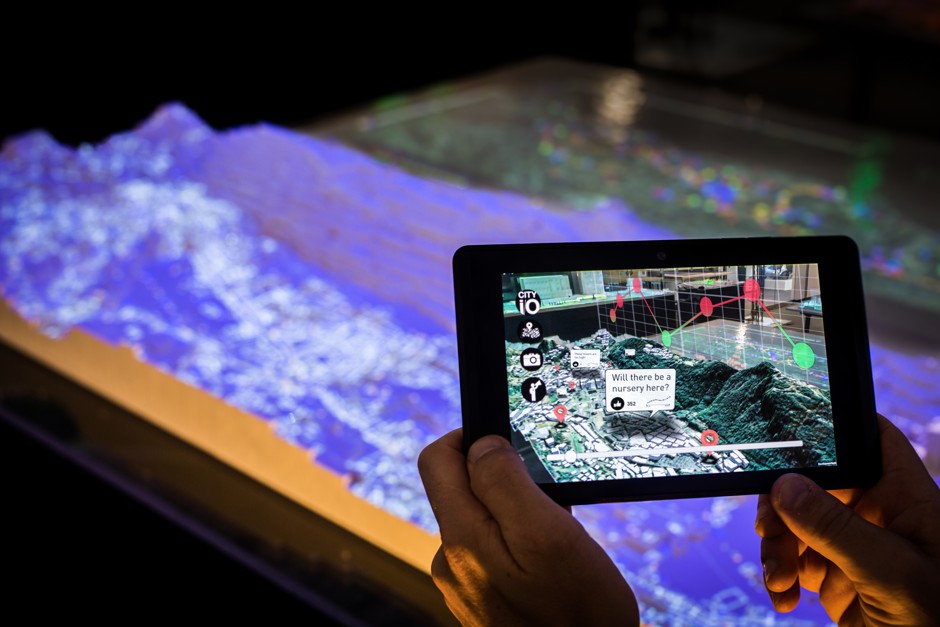 In 2016, as a part of its City Science initiative, the Massachusetts Institute of Technology (MIT) Media Lab collaborated with the City of Hamburg on a project called Finding Places, using optically-tagged LEGO bricks, simulation algorithms, and augmented reality to model potential locations for refugee accommodations. MIT researchers held dozens of community engagement meetings with local leaders and community members, where participants gathered around displays of the city that adjusted in real-time to user interactions, showing key statistics and transformations of urban areas.
Ariel Noyman, a researcher with the City Science project at the MIT Media Lab, has argued that “physical, tangible tools are better for understanding what happens in a city.” AR can vivify once-static data: “If we add an office building, that might be another 700 people leaving in cars and more congestion,” he said. However, there’s a huge difference between hearing this statistic and seeing it played out. “We want people to be able to physically visualize congestion,” he continued.
This year, both Apple and Google enabled AR as default in their devices, a sign that AR is “going to be something that we use seamlessly more and more,” Noyman said. If the trend continues, these kinds of large-scale civic engagement projects will become more and more feasible, as will other applications in local government.
A number of startups have already created AR tech with these capabilities, if not yet these city applications. Blippar’s AR City mobile app embeds directions as well as info on local restaurants, hotels and more into users’ view of the city landscape. A motorcycle helmet from BMW visualizes route guidance and flashes warnings about roadwork into riders’ vision. White Raven’s AR for connected vehicles displays info on nearby entertainment and retail offers as the driver passes by. It’s only a matter of integrating more existing data into these systems.
A number of other institutions including the University of Washington, American University, and Shanghai University have begun exploring government applications
Earlier this year, the City of New Rochelle won $100,000 via the Bloomberg Mayors Challenge to use augmented reality for participatory development, and is now competing for the $5 million grand prize.
See the full story here: https://www.citylab.com/life/2018/08/ar-is-transforming-tech-what-can-it-do-for-cities/566618/
Infographic: How Augmented Reality has changed selfies forever
See the full infographic here: https://techaeris.com/2018/08/03/infographic-ar-changed-selfies-forever/
Upcoming ARCore Update Brings Augmented Reality To Chrome OS
An APK teardown of the latest build of Google’s ARCore augmented reality platform revealed a rather large list of newly supported Android devices including the upcoming Pixel 3 and 3 XL but smack dab in the middle of the pack was a reference to a codename we have become very familiar with here at Chrome Unboxed.
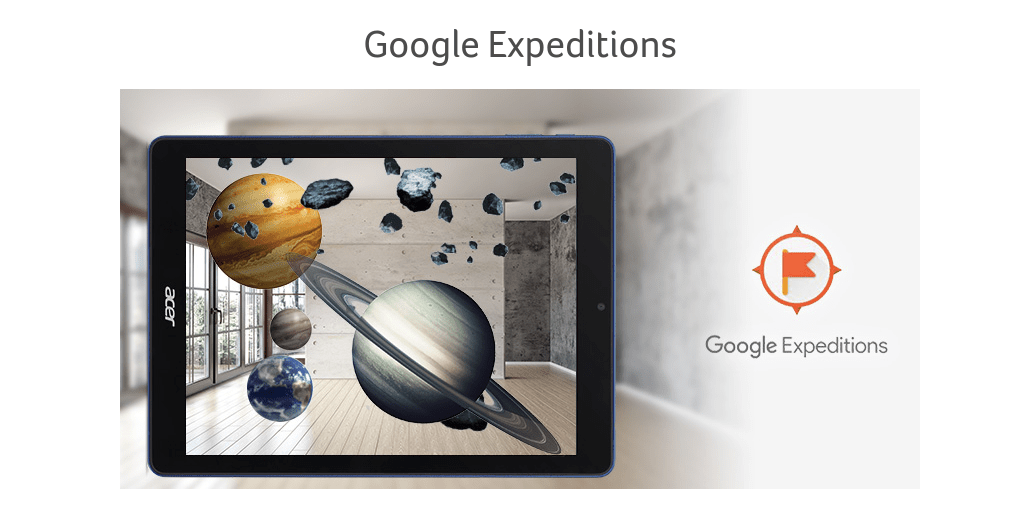 Augmented Reality has been field-tested in schools for the past year and now Google has rolled out AR for Expeditions on iOS as well as Android. So, it only makes sense that an education Chrome device would join the ranks of supported devices.
While education is likely the priority for AR at the moment, I wouldn’t be surprised to see more Chrome devices added to this list in the near future as Android becomes more comfortable in its new Chrome OS home.
See the full story here: https://chromeunboxed.com/news/arcore-update-brings-ar-chromebooks-acer-tab-10
Apple Invents an Augmented Reality Windshield that will even Support FaceTime Calls between Different Vehicles
 ...yet another European Patent application from Apple that was published on Wednesday August 1, 2018.
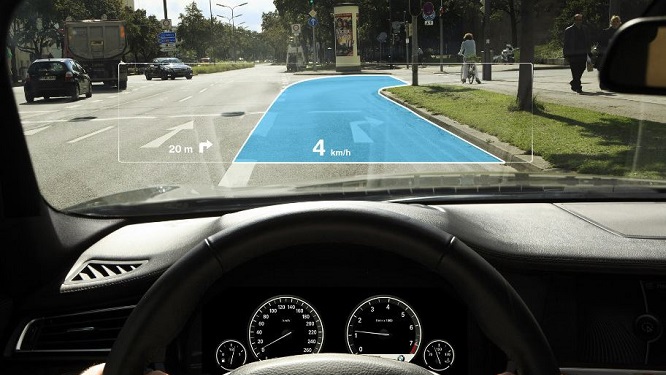
The detailed patent covers a future augmented reality windshield system which also is known as a Heads up Display. Apple describes every aspect of their AR display system in painstaking detail. It even describes occupants of an autonomous vehicle having a FaceTime session between different vehicles. The system will even be able to detect and make adjustments so that a panicky occupant could remain calmer in the autonomous vehicle.
Apple notes that in many situations, a graphical overlay can be provided on an environment that is perceived through a transparent surface, including a window.
Panicky Occupant Detection
Apple notes that in some embodiments, monitoring a stress level, cognitive load, etc. of an occupant can include monitoring one or more various features of an occupant, including eye motion, body posture, body gestures, body temperature, breathing rate, eye blink rate, head motion, eye motion, heart rate, some combination thereof, etc.
The augmented reality display system can dynamically adjust the augmented reality display, including which display elements are presented in the display, based on the monitored stress level, cognitive load level, etc. of one or more of the monitored occupants.
Supply Chain News: Amazon Files Patent for Augmented Reality Putaway, Critics Again Erroneously Worry about Big Brother
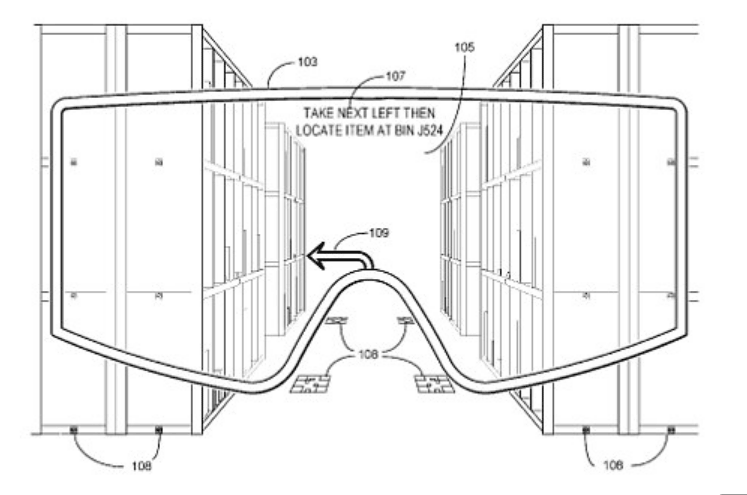 SCDigest is not sure how Amazon could claim an invention here – other companies such as 3PL DHL and a number of technology vendors have been developing real AR applications for a number of years before the Amazon patent filing...
The patent describes a "wearable computing device" that would overlay turn-by-turn directions on the goggles' screen, showing employees where to out awat certain objects in one of Amazon's fulfillment centers. "
The goggles would connect to a computing device that's worn on the employee's body, which powers the turn-by-turn data.
...
Of course, as almost anyone who knows anything about how a distribution center works understands, such activity and productivity tracking at a detailed employee level has been around for more than two decades.
Most modern DCs use wireless terminals, often called radio frequency (RF) devices, for associates to confirm via a bar code scan that they are in the right location for say an a order pick or a product putaway.
See the full story here: http://www.scdigest.com/ontarget/18-08-06-1.php?cid=14531
Disney is Developing a “Moving Floor” to Enhance the Feeling of Walking in Virtual Reality
First off, the patent suggests using a vibration technology that will create more or less friction to the user’s feet. This will allow the platform to influence the direction of the user so that they will not contact any walls or other users.
Another method is using a number of rotating disks that can be tilted to influence the direction of the user. Each disk can be rotated independently or as a whole to help guide the user from any obstruction in the physical room.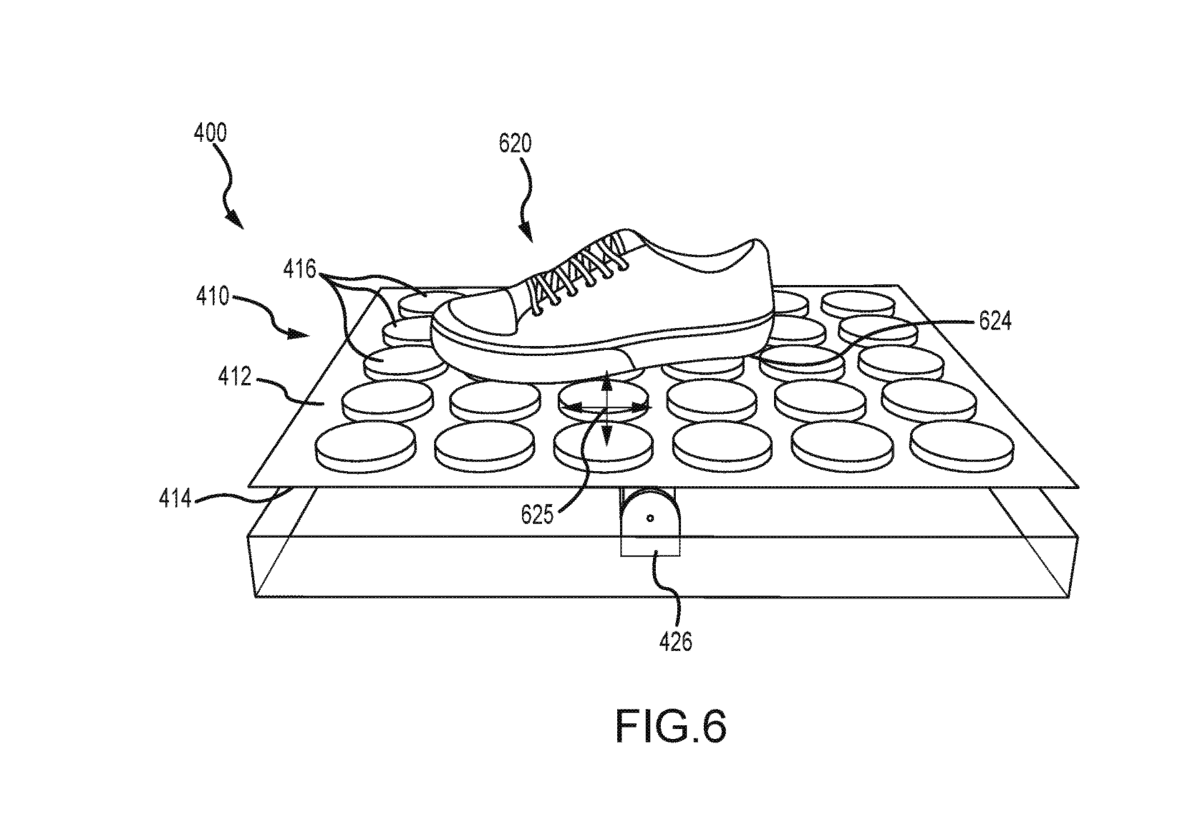
Finally, there is a solution that involves magnets on the user’s shows and on a “treadmill” beneath the floor. As the user walks, that would move the magnetic treadmill, so the user could walk forever and stay in the same spot in the room.
See the full story here: https://wdwnt.com/2018/08/disney-is-developing-a-moving-floor-to-enhance-the-feeling-of-walking-in-virtual-reality/
UCLA researcher uses virtual reality to understand how animals perceive space
 When healthy, we don’t appreciate this gift. However, spatial memory is one of the first functions to deteriorate in several neurological conditions including epilepsy and Alzheimer’s disease. That is why UCLA neurophysicist Mayank Mehta devotes his career to studying how the brain, and especially the cells in the region called the hippocampus, learns to create our perception of space and time.
As Mehta notes, all animals (including humans) “agree 100 percent on concepts of abstract space and time.” And all animals calculate where they are in space in the same way or else they would bump into each other and the objects around them.
Such universal perception of space-time is possible because a set of hippocampal neurons, called “place cells,” fire in an orderly fashion as any animal navigates a jungle, a living room or a maze, laying down a map of space-time without even trying.
How do they turn light, sounds, smells, for example, into a universal perception of space and time?
To resolve this question, Mehta concluded, one would need to tease apart the different sensory stimuli that constitute space-time. This is impossible to do in the real world, but it can be accomplished readily in the virtual world.
In one experiment, the researchers compared the rats’ ability to locate rewards hidden in a real world maze — where rats can use sights, sounds and odors to navigate — with their ability to locate rewards in a virtual maze, where they’re limited to using only visual cues.
First though, an interdisciplinary team that included UCLA students in neuroscience, psychology, computer science, engineering and physics had to build the virtual apparatus from scratch. They designed the hardware, including a ball-shaped treadmill, and trained the rats to become comfortable in virtual reality and to play virtual games.
The findings were surprising. The rats in the virtual maze found hidden rewards as skillfully as rats in a real maze. Rats, it turned out, can see quite well.
These studies demonstrate that the brain needs inputs from multiple sensory factors to construct a working spatial map, Mehta said. If the vision says you are moving in space, but the sounds and smells tell otherwise, as is the case in virtual reality, the neural activity becomes very strange.
See the full story here: http://newsroom.ucla.edu/stories/ucla-researcher-uses-virtual-reality-to-understand-how-animals-perceive-space